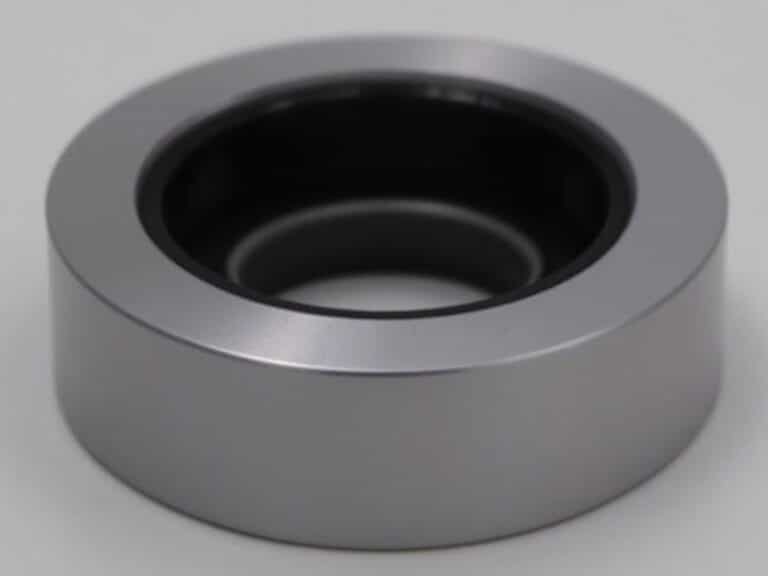

You pull out a failed mechanical seal, and the O-ring is black. No markings. No part number. Is it Viton, EPDM, or Buna?
I’ve been in this exact situation more times than I can count. The first time it happened, I grabbed a black O-ring from my parts bin, installed it, and watched the pump leak again three weeks later. Turns out I’d put EPDM in an oil application. That seal never stood a chance.
Here’s the problem: you can’t tell elastomer types apart just by looking at them. They’re often the same color, same size, same general feel. But install the wrong one, and you’re looking at chemical attack, swelling, cracking, or complete seal failure.
What Are the Three Main Elastomer Types You’ll Encounter?
Buna, EPDM, and Viton make up the vast majority of mechanical seal elastomers you’ll see in industrial applications. Each has specific strengths and weaknesses that determine where it belongs.
| Property | Buna (NBR) | EPDM | Viton (FKM) |
|---|---|---|---|
| Temperature Range | -40°F to +250°F | -55°F to +275°F | -20°F to +400°F |
| Best For | Oils, fuels, hydraulics | Water, steam, weather | High heat, chemicals |
| Avoid | Ozone, strong acids | Petroleum, mineral oil | Hot water, steam |
| Cost | Lowest | Medium | Highest (8x EPDM) |
| Specific Gravity | 1.3–1.35 g/cm³ | 1.15–1.25 g/cm³ | 1.9–2.2 g/cm³ |
How Do You Recognize Buna (Nitrile/NBR)?
Buna is the workhorse of mechanical seals. It’s the most common elastomer you’ll find in industrial pumps, and it’s also the cheapest.
You’ll typically find Buna in applications handling petroleum products, hydraulic fluids, and lubricating oils. If the pump is moving anything oil-based at moderate temperatures, there’s a good chance the seal has Buna elastomers.
Buna handles temperatures from -40°F to about +250°F. Push it past that range, and it starts hardening and cracking. I’ve seen plenty of Buna seals fail in hot oil applications because someone didn’t account for temperature spikes during startup.
The key identifier: if the application involves oil or fuel and doesn’t run particularly hot, it’s probably Buna.
How Do You Recognize EPDM?
EPDM is the go-to elastomer for water and steam applications. It handles hot water up to 275°F and maintains flexibility down to -55°F.
You’ll find EPDM in water pumps, steam systems, HVAC equipment, and food processing where water-based cleaning is common. It’s also excellent for outdoor applications because it resists ozone, UV, and weather exposure better than the other two.
But here’s where people get burned: EPDM swells and fails rapidly in petroleum products. I watched a colleague spend two hours chasing a leak on a lube oil pump. The previous tech had installed EPDM seals. They’d swollen to nearly twice their original size within a month.
The key identifier: if it’s a water or steam application, expect EPDM.
How Do You Recognize Viton (FKM)?
Viton is the premium option. It handles temperatures up to 400°F and resists most aggressive chemicals, fuels, and oils.
You’ll find Viton in high-temperature applications, chemical processing, and anywhere the fluid would destroy Buna or EPDM. It’s also common in aerospace applications, where it’s often brown rather than black.
Viton costs about eight times more than EPDM. That price tag means you won’t find it in standard water pumps or basic industrial applications unless someone over-specified the seal.
The key identifier: high temperatures, aggressive chemicals, or aerospace/military specs usually mean Viton.
How Can You Identify the Elastomer Using the Bounce Test?
The bounce test is the most reliable non-destructive method for identifying elastomers in the field. It exploits the different rebound characteristics of each material.
Step 1: Gather Your Testing Equipment
The proper tool for this is called a KEVN (from Global O-Ring and Seal) or an ORID (O-Ring Identification Device). It’s a cylinder with a calibrated weight inside and markings on the tube.
Don’t have one? You can improvise with a metal ruler. Hold it vertically and drop the edge onto the O-ring cross-section. The bounce height won’t be as precise, but you can still distinguish between materials with practice.
You’ll also need a clean, flat, hard surface. A concrete floor or metal workbench works well.
Step 2: Perform the Bounce Test
Place the O-ring flat on your hard surface. Position the tester (or ruler edge) directly over the O-ring’s cross-section.
Raise the weight to the top of the tube and release it. Watch carefully—you’re looking at the height of the first bounce only.
For the ruler method, hold the ruler about 6 inches above the O-ring and drop it edge-first. Note how high it rebounds.
Step 3: Interpret Your Results
Each elastomer has a different resilience, which translates to bounce height:
- High bounce = Nitrile (NBR/Buna). This material is springy and rebounds quickly.
- Medium bounce = EPDM. Moderate resilience, clearly lower than Nitrile.
- Low bounce = Viton (FKM). Dense material with minimal rebound.
- Very low bounce = Kalrez (FFKM). Almost no bounce at all.
I keep a KEVN tool in my toolbox. It’s paid for itself many times over by preventing wrong material installations.
How Can You Identify the Elastomer by Weight?
Viton is nearly twice as dense as Buna or EPDM. If you have a scale and can calculate volume, the weight difference is unmistakable.
Step 1: Weigh the O-Ring
Use a precision scale that reads to at least 0.1 grams. Digital kitchen scales work in a pinch for larger O-rings.
Clean the O-ring first. Any oil, water, or debris will throw off your measurement.
Record the weight in grams.
Step 2: Calculate the Volume
You need the O-ring’s cross-section diameter and inside diameter. Measure both with calipers.
The torus volume formula is: V = (π²/4) × d² × D
Where d is the cross-section diameter and D is the mean diameter (inside diameter plus cross-section diameter).
Alternatively, use water displacement. Submerge the O-ring in a graduated cylinder and note the volume increase in milliliters (1 mL = 1 cm³).
Step 3: Compare to Known Specific Gravities
Divide weight by volume to get specific gravity:
| Material | Specific Gravity |
|---|---|
| EPDM | 1.15–1.25 g/cm³ |
| Buna (NBR) | 1.3–1.35 g/cm³ |
| Viton (FKM) | 1.9–2.2 g/cm³ |
Viton’s density stands out immediately. If your calculation comes back around 2.0 g/cm³, you’ve got Viton. If it’s closer to 1.2–1.3 g/cm³, you’re looking at EPDM or Buna.
Distinguishing between EPDM and Buna by weight alone is tricky since their densities overlap. Use the bounce test or application context to confirm.
How Can You Identify the Elastomer by Application Context?
When you don’t have test equipment handy, the application itself often tells you what elastomer should be installed. This is my go-to method when I’m troubleshooting in the field without my toolbox.
What Fluid Is Being Sealed?
The fluid being pumped is your biggest clue:
- Petroleum, oil, fuel, hydraulic fluid → Buna or Viton. Never EPDM.
- Water, steam, hot water → EPDM. Never Viton (despite what some people think).
- Aggressive chemicals, acids, solvents → Viton or Kalrez.
- Food/beverage processing (water-based) → EPDM, often FDA-compliant grades.
I’ve seen techs assume Viton works everywhere because it’s the “premium” material. That’s wrong. Viton actually performs poorly in hot water and steam applications. EPDM is the correct choice for those.
What Temperature Is the Application?
Temperature narrows down your options quickly:
- Cold environments (below -40°F) → EPDM. It maintains flexibility where others get stiff and brittle.
- Moderate (up to 250°F) → All three are viable. Check the fluid type.
- High temperature (above 275°F) → Viton only. Buna and EPDM can’t handle it.
Remember that chemicals become about twice as aggressive for every 20°F rise in temperature. A fluid that’s compatible at room temperature might attack the elastomer at operating temperature.
What Does the Equipment Documentation Say?
Before you guess, check the paperwork:
- Pump manual – Usually lists seal specifications including elastomer type.
- Seal specification sheets – The original seal order should specify materials.
- Maintenance records – Previous replacements may be documented.
- Nameplate or housing stamps – Some seals have material codes stamped on them.
Five minutes of document searching can save hours of troubleshooting.
How Do You Read Elastomer Material Codes?
The pump industry uses a standardized coding system for mechanical seal materials. If you can find the code, you can identify the elastomer immediately.
What Do the Common Letter Codes Mean?
The American mechanical seal coding system uses a five-character code. The first character indicates the elastomer:
| Code | Material |
|---|---|
| B | Buna (Nitrile/NBR) |
| V | Viton (FKM) |
| E | EPDM |
| N | Neoprene |
| T | PTFE (Teflon) |
| Y | Kalrez (FFKM) |
So a seal coded “BCFZF” has Buna elastomers. A “VCFZF” uses Viton.
Where Can You Find Material Codes?
Look in these places:
- Stamped on the seal housing – Check the metal surfaces of the gland plate or seal chamber.
- On the rotary unit or stationary seat – Smaller text, may need magnification.
- In equipment documentation – Bill of materials, parts lists, maintenance manuals.
- On original packaging – If you still have the box the seal came in.
- On purchase orders – Your purchasing department may have records.
When I take a seal apart for inspection, I photograph any codes or markings before cleaning. It’s saved me multiple times when the original documentation was missing.
What Are the Visual Clues That Can Help?
Visual inspection can provide hints, but never use it as your only identification method. I’ve seen all three elastomers in identical black O-rings.
Does Color Tell You Anything?
Color can narrow your options in specific cases:
- Brown often indicates Viton, especially in aerospace applications following AS568 standards.
- Black is common for all three types. It’s not a reliable indicator.
- White or gray may indicate EPDM or silicone.
- Bright colors (green, red, blue) usually indicate specialty grades for specific industries.
Some manufacturers color-code their elastomers intentionally. Others don’t. Never assume color equals material.
What Does the Surface Texture Tell You?
Texture provides subtle hints:
- Viton often has a smooth, slightly glossy surface.
- EPDM typically shows a slightly rough, matte finish.
- Buna usually has a smooth, matte surface.
These differences are subtle enough that I wouldn’t stake a repair on texture alone. Use it as supporting evidence alongside other methods.
Quick Reference: Which Elastomer for Which Application?
Keep this table posted in your maintenance shop for quick reference:
| Application | Best Choice | Avoid | Notes |
|---|---|---|---|
| Petroleum/oil | Buna or Viton | EPDM | Buna is cheaper; Viton for higher temps |
| Water/steam | EPDM | Viton | Viton fails in hot water |
| High temperature (>275°F) | Viton | Buna, EPDM | Only Viton handles the heat |
| Low temperature (<-40°F) | EPDM | Viton | EPDM stays flexible in cold |
| Chemicals/acids | Viton | Buna | Check compatibility charts for specific chemicals |
| Budget-conscious, general use | Buna | — | Most economical option |
| Outdoor/UV exposure | EPDM | Buna | EPDM resists ozone and sunlight |
When in doubt, check the application first. The fluid and temperature requirements will guide you to the correct elastomer.
If you still can’t identify the elastomer, contact your seal supplier with the pump make, model, and application details. A quick phone call costs nothing.