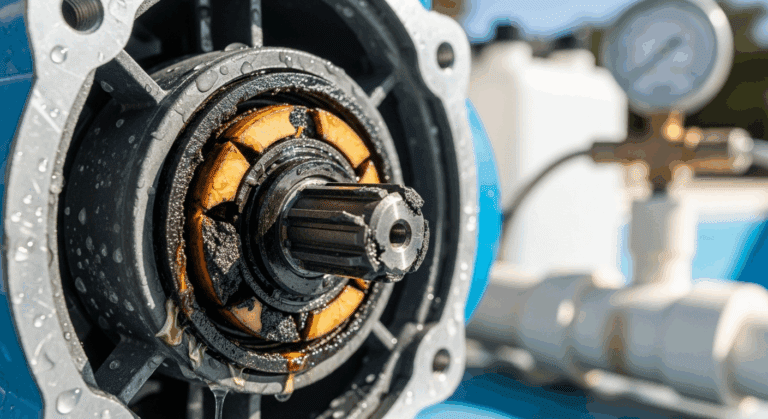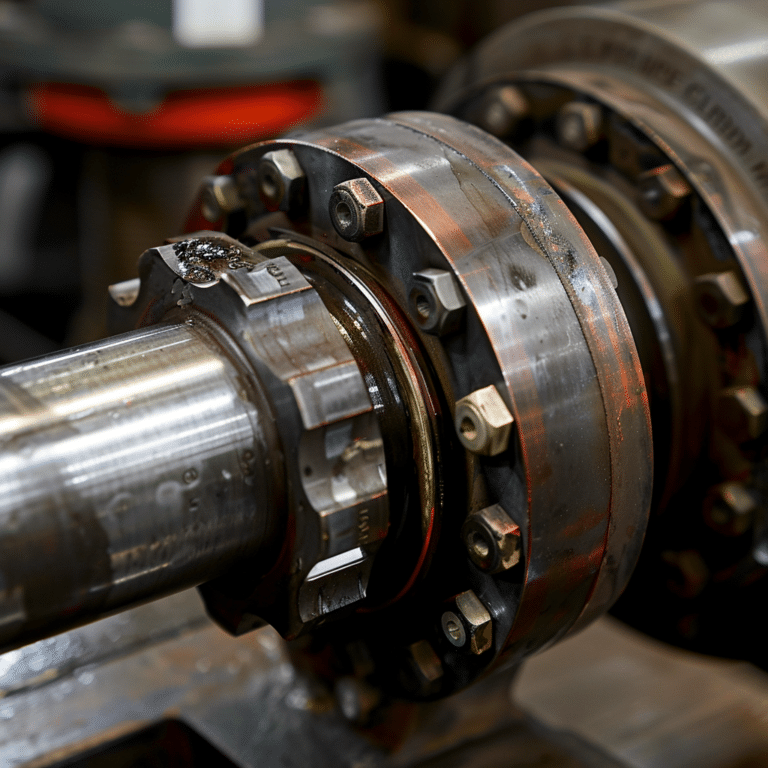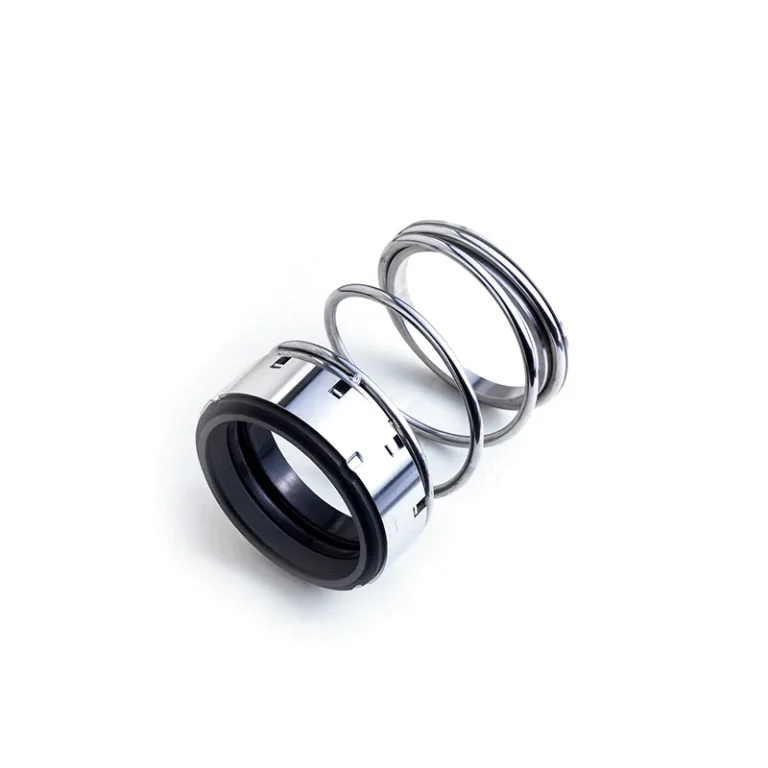
“Any major seal brand works if selected, applied, and operated correctly.” That statement is true — and completely unhelpful when procurement needs you to justify choosing one over the other. Both John Crane and Flowserve make excellent seals. But their engineering DNA pushes them toward different application strengths, and those differences turn a brand-loyalty debate into a defensible purchasing decision.
Where John Crane and Flowserve Actually Differ
The fundamental difference is not quality — it is corporate architecture. John Crane operates as a seal-focused company under Smiths Group, holding roughly 17% of the global mechanical seals market. Every R&D dollar goes into sealing technology: face materials, gas seal designs, monitoring systems. Flowserve, formed from the 1997 merger of Durco and BW/IP, sells pumps, valves, and seals as integrated flow-control solutions. Their seal R&D serves a broader equipment ecosystem.
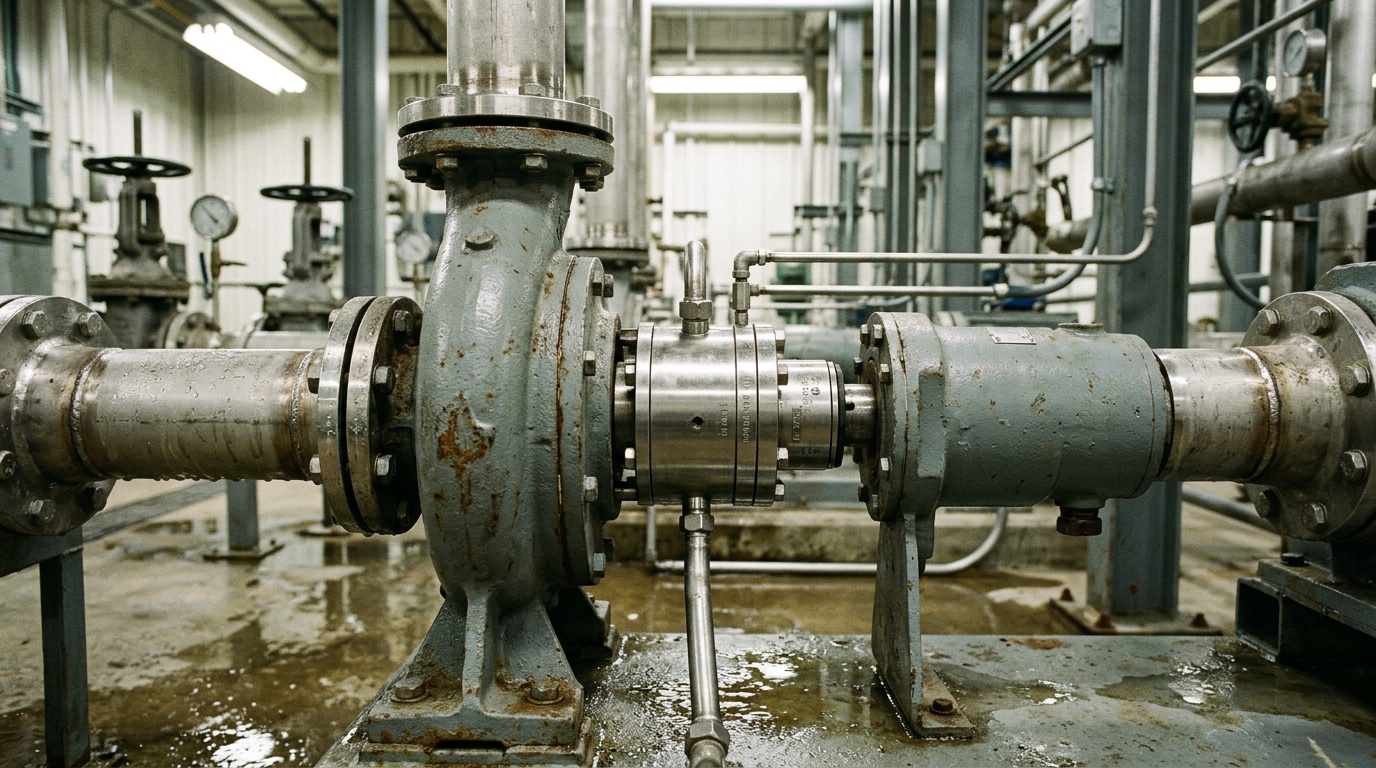
Across the industry, this distinction plays out at the procurement level. Facilities that standardize on Flowserve pumps gain single-vendor procurement for pump-seal packages, reducing qualification overhead and simplifying spare parts inventory. Facilities running mixed pump fleets benefit more from John Crane’s seal-specific expertise, which is vendor-agnostic by design. Both rank among the most reliable mechanical seal brands — the question is not which is better, but which fits your operation.
The hidden cost most buyers miss is not the seal itself — it is the qualification and integration burden. A Flowserve cartridge seal designed for a Flowserve pump drops in with validated dimensions and documented clearances. That same application using a John Crane seal may require an adapter sleeve or custom gland, adding engineering hours that erode any price advantage. Conversely, a facility running Sulzer or KSB pumps will find John Crane’s broader OEM cross-compatibility more practical than sourcing Flowserve seals that were engineered around Flowserve pump geometries.
Proprietary Technologies Worth Paying For
Both manufacturers have proprietary technologies that cannot be replicated by aftermarket suppliers. This is where brand choice genuinely matters — and where the cost premium is justified.
John Crane: Seal Face Innovation
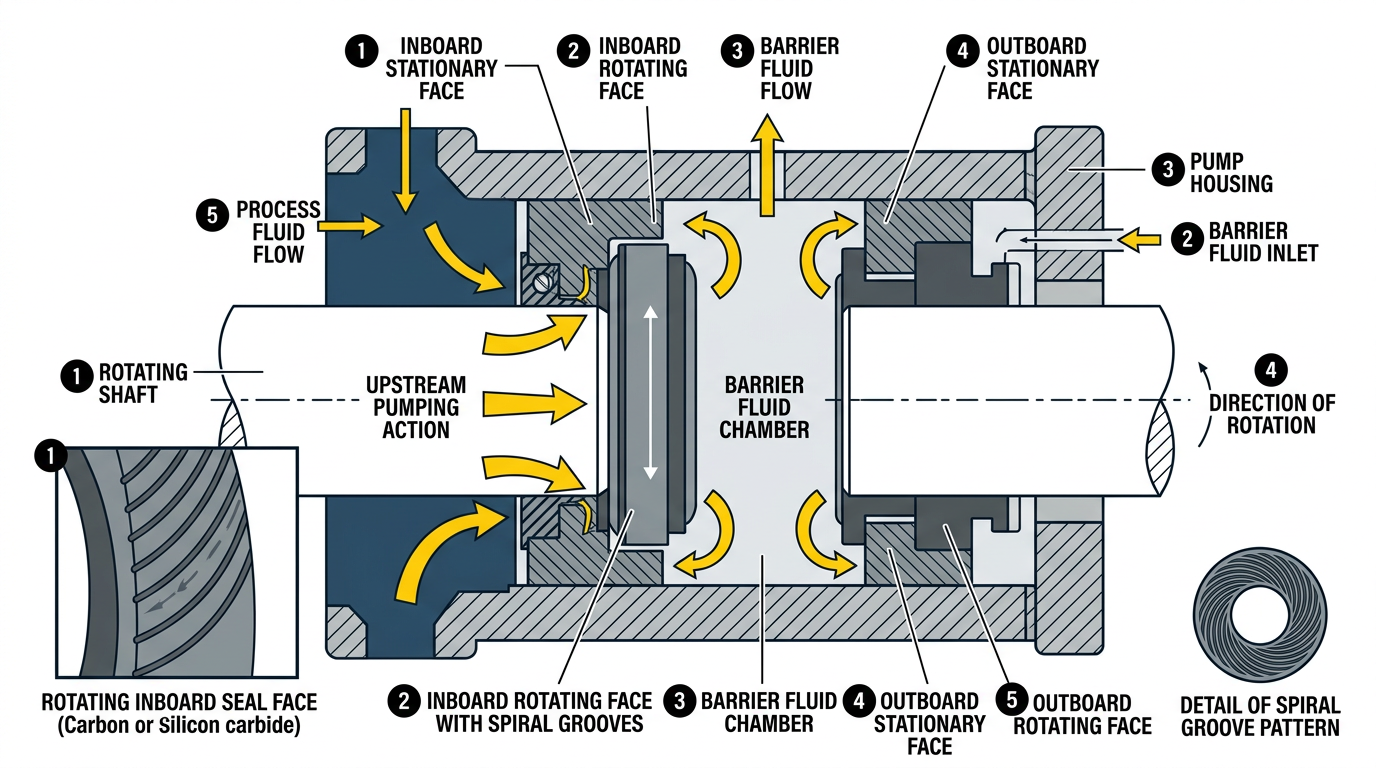
John Crane’s Upstream Pumping (USP) technology borrows spiral grooves from non-contacting gas seals and applies them to liquid-barrier dual seals. The grooves draw in barrier fluid and pressurize it at the tips, creating a lift-off effect with zero face contact. The inboard seal runs without touching, extending seal life by multiples in services that destroy conventional contacting faces. No Flowserve product replicates this mechanism.
The results speak through MTBR data. In an Australian nickel and cobalt mine, Diamond seal face technology delivered a 10X MTBR improvement in abrasive pump service — the kind of gain that changes a maintenance budget, not just a line item. At a northeast oil refinery running HF alkylation, upgrading to a dual gas buffer seal with spiral-groove technology pushed MTBR from six months to one year, with zero seal failures reported after completion. The non-contacting secondary seal vented nitrogen safely to the flare system, solving both the reliability and fugitive emissions problem simultaneously.
Flowserve: Thermal Management and Slurry Capability
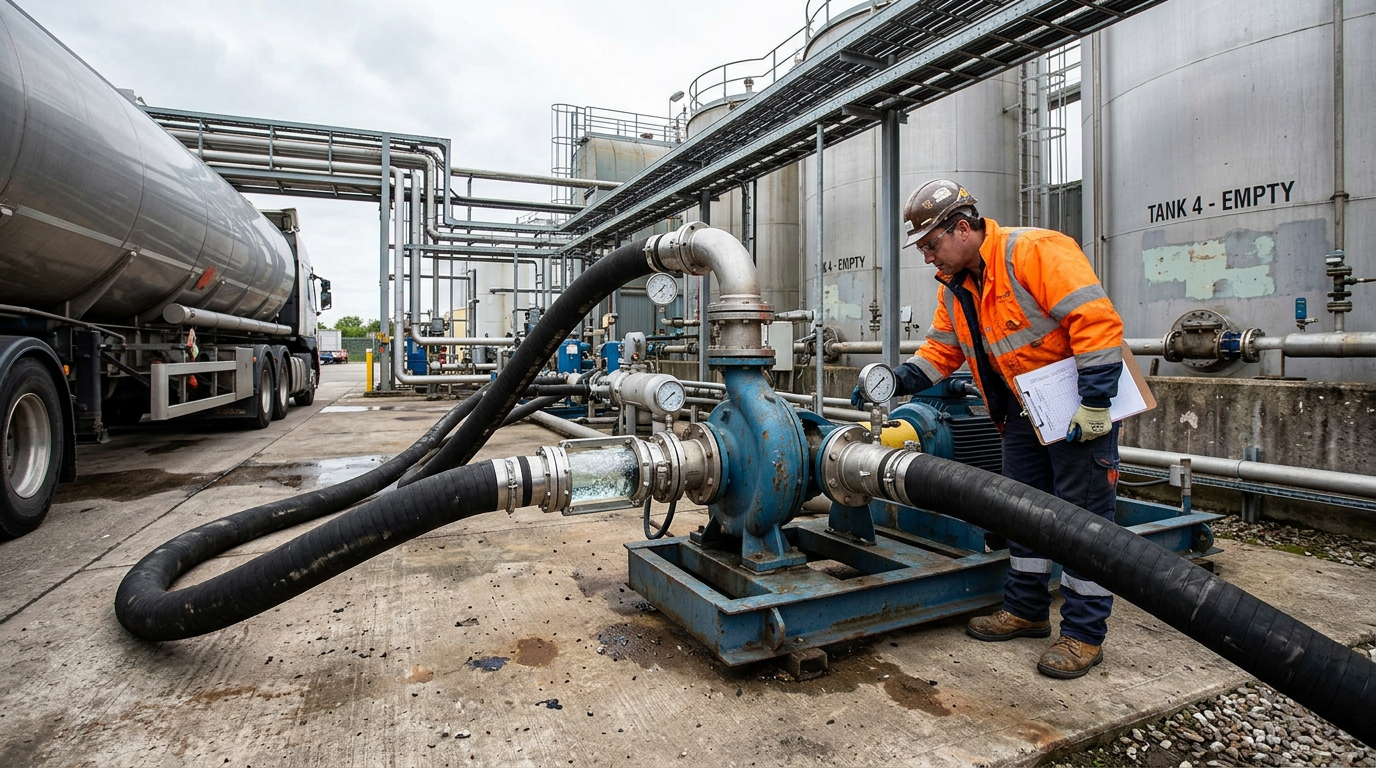
Flowserve’s ISC2 series uses patented thermal management technology that allows seals to survive dry-running events for over 90 minutes at 3600 RPM. Since most on-site dry-run incidents last under 30 minutes, this provides genuine insurance for batch and transfer operations where dry running is not a matter of if, but when. For facilities running intermittent pumps or tanker unloading operations, this single capability can justify standardizing on Flowserve.
Their SLC slurry seal, with diamond-coated faces, handles concentrations up to 60% w/w as a single seal — eliminating the complexity and cost of dual seals with pressurized barrier systems in heavy slurry service. Running a single seal instead of a dual arrangement removes the barrier fluid reservoir, circulation pump, and associated piping. On a typical slurry application, that translates to lower capital cost and fewer maintenance touchpoints over the seal’s life.
Which Brand Fits Your Application
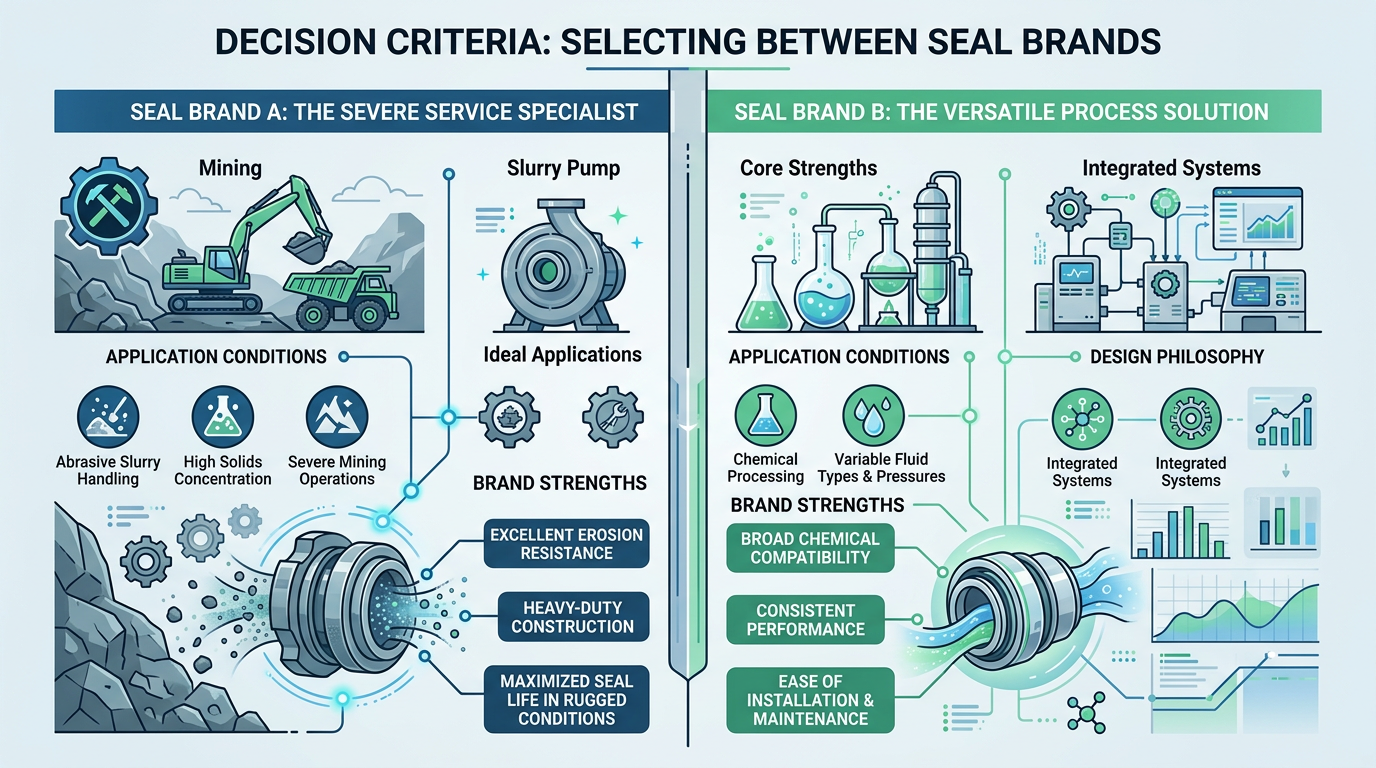
Rather than declaring one brand superior, match your operating conditions to each manufacturer’s proven strengths.
Choose John Crane when:
- You run abrasive or mining pump applications where Diamond seal face technology has demonstrated order-of-magnitude MTBR improvements
- Your facility handles hazardous media (HF acid, toxic gases) requiring non-contacting secondary seals with spiral-groove technology
- You operate a mixed pump fleet and need a seal supplier whose products are designed to fit across OEM platforms
- Dry gas seal applications are part of your rotating equipment scope — John Crane’s gas seal portfolio is the deepest in the industry
Choose Flowserve when:
- Frequent dry-running risk exists in your process (tanker unloading, batch transfer, intermittent pump operation)
- Heavy slurry service demands single-seal solutions to avoid barrier fluid management complexity
- Your facility already standardizes on Flowserve pumps and values integrated pump-seal procurement with matched engineering data
- You prefer a single vendor for pumps, valves, and seals to simplify your supply chain and reduce the number of technical contacts
For general-purpose pump applications running clean or mildly contaminated fluids at moderate conditions, the technical differences between these two top seal manufacturers narrow considerably. The decision then shifts from technology to commercial factors: lead times, local service coverage, and volume pricing.
When Brand Choice Matters Less Than You Think
For standard applications — ANSI pumps, clean water, moderate pressures — aftermarket seals cross-referenced to both John Crane and Flowserve models deliver equivalent performance at lower cost. Cross-reference catalogs cover 25+ John Crane models and 13+ Flowserve models with documented interchangeability.
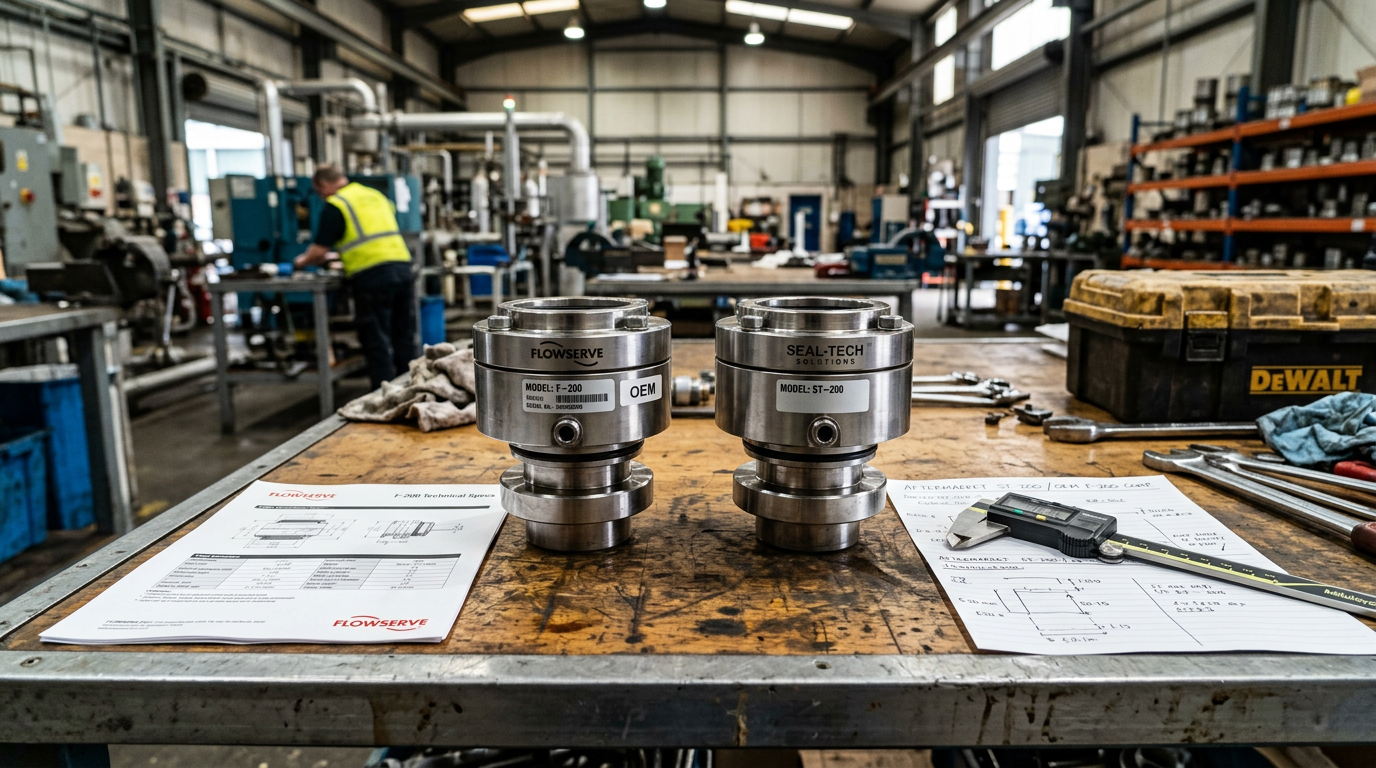
The practical threshold is straightforward. If your application uses a standard cartridge seal without proprietary face technology, the OEM vs aftermarket decision matters more than the JC vs Flowserve debate. Cowseal’s OEM-compatible replacement seals, for example, cover the most common configurations from both manufacturers at a fraction of OEM pricing — without sacrificing material quality or dimensional accuracy.
Where aftermarket falls short is proprietary technology. No aftermarket supplier replicates John Crane’s USP spiral-groove mechanism or Flowserve’s ISC2 thermal management. For those applications, you are buying the OEM’s R&D, not just the hardware. Trying to save on the seal price in a hazardous HF alkylation service or a dry-run-prone batch operation is a false economy that will cost multiples in unplanned downtime.
Making the Right Choice
The JC-versus-Flowserve question is really two different questions. For proprietary technology applications — abrasive mining, HF containment, dry-run-prone batch operations — the brand with the proven niche technology wins, and no amount of price negotiation changes that calculus. For everything else, evaluate total cost of ownership: seal price, installation compatibility with your existing pumps, spare parts lead times, and local service coverage. The seal that fits your specific operating envelope will always outperform the one with the better reputation.