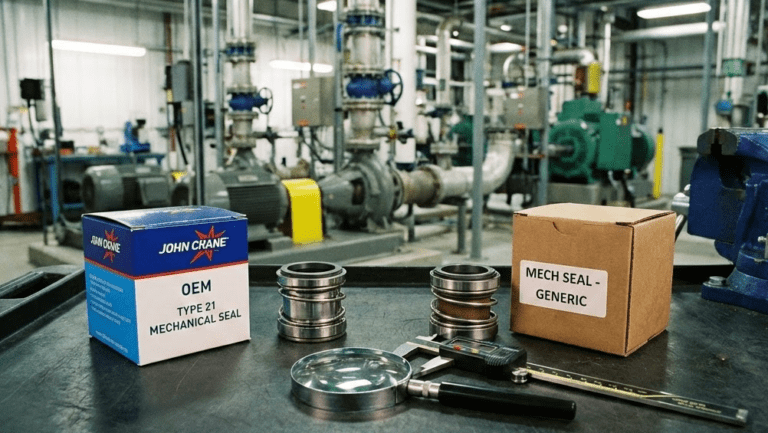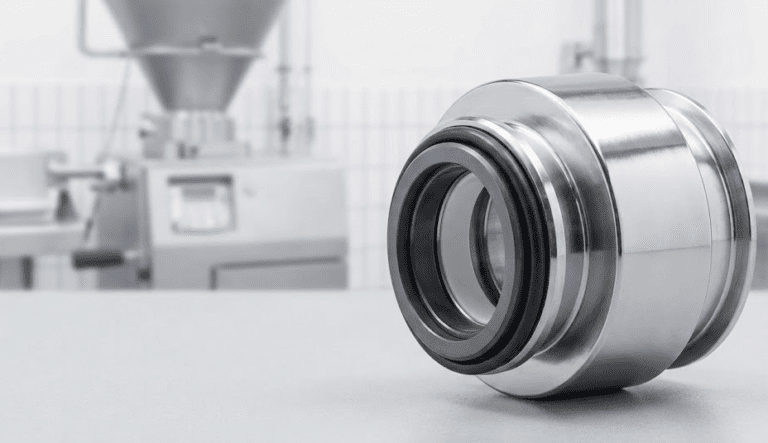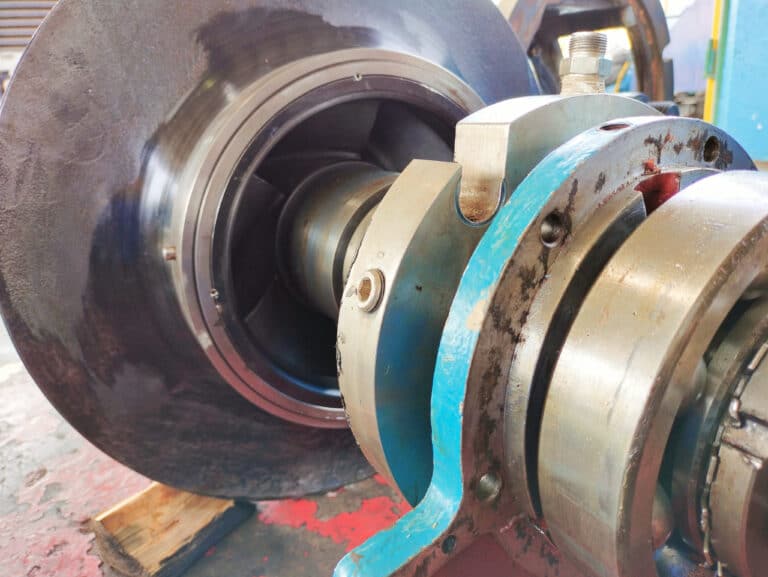

Your pump is leaking and the next planned shutdown is weeks away. Production says you cannot stop. Before you start wrapping packing or adjusting flush lines, stop. The five minutes you spend assessing whether a temporary fix is even safe will determine whether that fix holds for weeks — or makes things worse by morning.
Most temporary seal repairs fail not because the technician chose the wrong method. They fail because nobody checked whether the failure mode was repairable in the first place. A seal leaking from face wear and a seal leaking from shaft damage require completely different responses — and one of them requires immediate shutdown regardless of production pressure.
The Go/No-Go Assessment
Before you touch anything, check four things: leak rate, fluid hazard class, shaft condition, and seal support system status. This assessment takes five minutes. Skipping it costs you a seal, a shaft, and possibly a safety incident.
Leak rate thresholds determine your first decision. API 682 sets the acceptance benchmark at 5.6 grams per hour per seal face pair. In practical shop-floor terms, that translates to roughly 10 drops per hour or less as acceptable leakage. If you are seeing three drops per minute or faster, you have crossed into major-leak territory — some US states treat that rate as a regulatory shutdown threshold.
Fluid type is a hard stop. Hazardous, toxic, or flammable services are not candidates for temporary repair. Period. The risk of escalation from a managed leak to an uncontrolled release is too high. If you are handling ammonia, acids, or hydrocarbons above their flash point, shut down and replace.
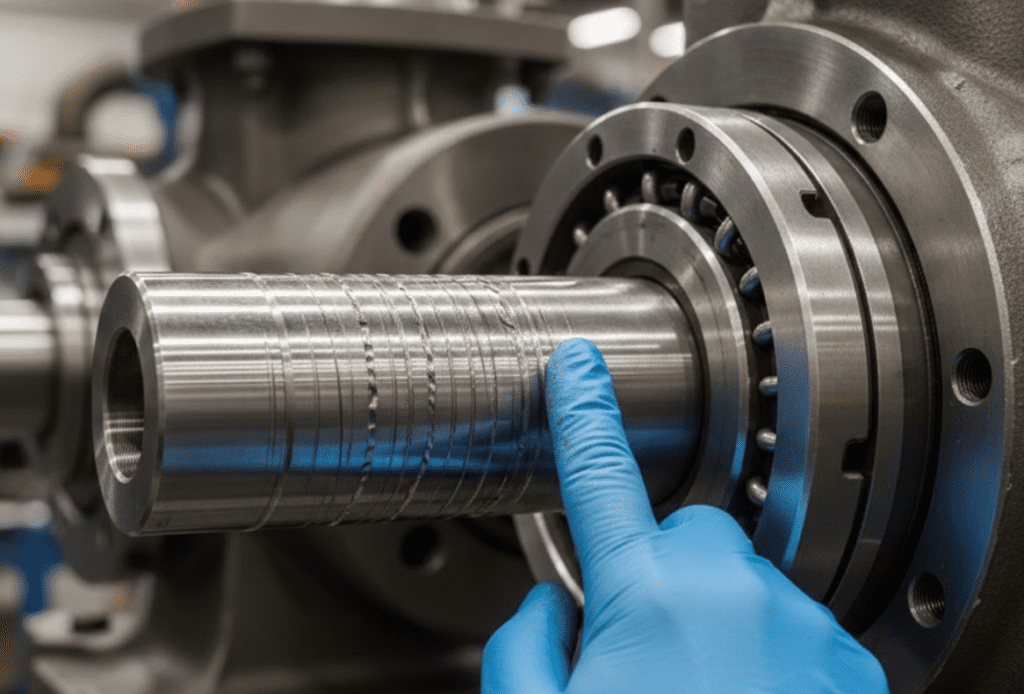
Shaft condition kills temporary fixes. Scratches, nicks, or grooves running lengthwise under the seal will seep no matter what you do to the seal faces. The shaft surface needs to be mirror finish under the seal. If you can catch a fingernail on the shaft, your temporary repair has a shelf life measured in hours, not weeks.
Check the support system before blaming the seal. A mechanical seal acts as a fuse in the pump system. When the fuse blows, the problem is usually in the circuit — not the fuse itself. I worked on a Goulds 3196 in a cold storage facility where the customer had already replaced the seal once. It failed again within a year. When we actually assessed the system, we found worn pump components, misaligned piping with tight 90-degree elbows, and significant equipment misalignment. Replacing the seal was just replacing the fuse without checking the circuit.
The most common mistake I see is operators grabbing a wrench the moment they spot a drip. If the seal is leaking, restrain yourself from the natural tendency to tighten. Over-tightening puts undue stress on seal internals and accelerates failure from mechanical shock. Try loosening instead — it works more often than you would expect.
Seal Support System Adjustments
The safest temporary interventions target the support system, not the seal faces. You can adjust flush pressure, improve cooling, or add a quench without pulling the pump apart.
Flush pressure is the first lever to pull. Set flush fluid pressure at 15 psi above maximum stuffing box pressure. If flush pressure is too low, process fluid migrates between the seal faces during transients and adheres during shutdown. On restart, those deposits crack components. I have seen this exact pattern on automotive pump applications where flush pressure was never properly set after commissioning — repeated seal failures until someone finally checked the gauge.
Quench systems buy time on atmospheric-side leaks. A quench introduces clean fluid on the outboard side of the seal to wash away leakage, cool the faces, and prevent coking or crystallization. A flow rate of 1/8 to 1/4 gpm is typically sufficient, targeting 10-15 fps velocity through the flow area. For pumping temperatures above 350 degrees F, switch to a steam quench.
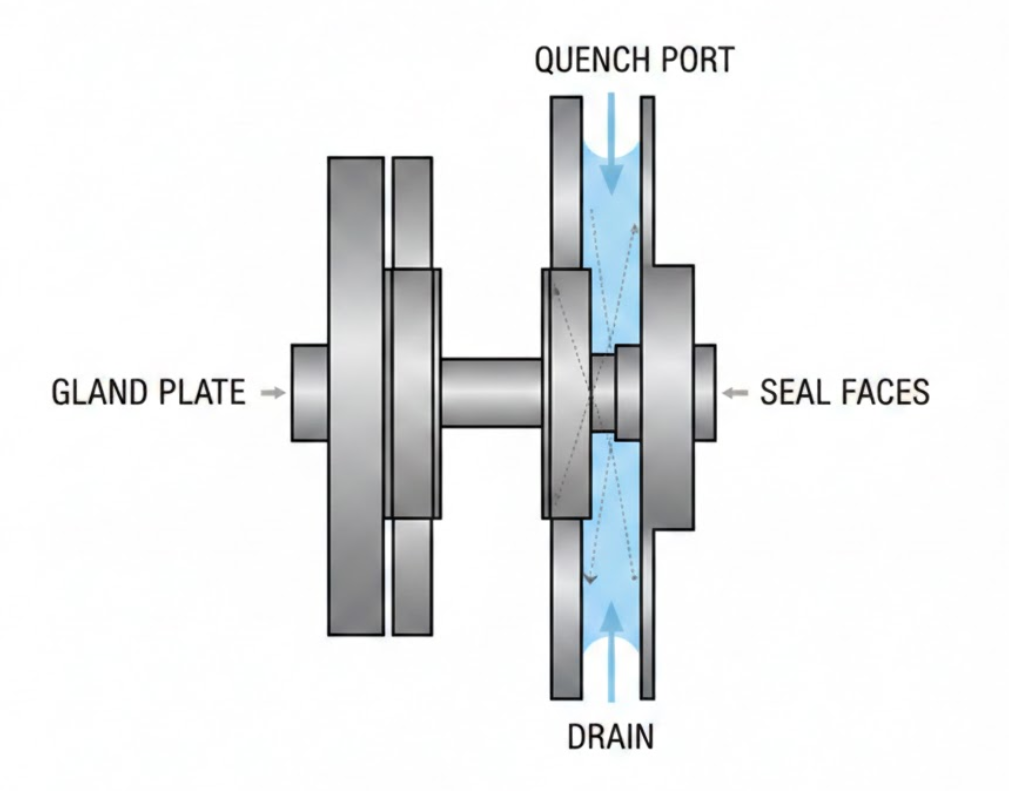
Cooling flow adjustments extend face life. If your seal has a Plan 23 thermosyphon or Plan 21 cooled flush, verify the heat exchanger is not fouled and that flow is actually circulating. A plugged cooler line is one of the most overlooked causes of accelerated seal deterioration — and one of the easiest temporary fixes.
Before you start any support system work, make sure you have verified the current operating parameters against the original seal data sheet. Running blind on pressures and flows is how temporary fixes become permanent problems.
Emergency Packing Conversion
When the seal has failed beyond support system intervention, a temporary packing conversion can keep the pump running for days or weeks. This method is limited to water and non-hazardous services only.
Remove the failed seal components and install braided packing rings into the stuffing box. Set the gland follower snug but not tight — you want a controlled drip, not a dry pack. Any drip rate beyond 40-60 drops per minute is excessive and means the packing needs adjustment or the shaft is too damaged.
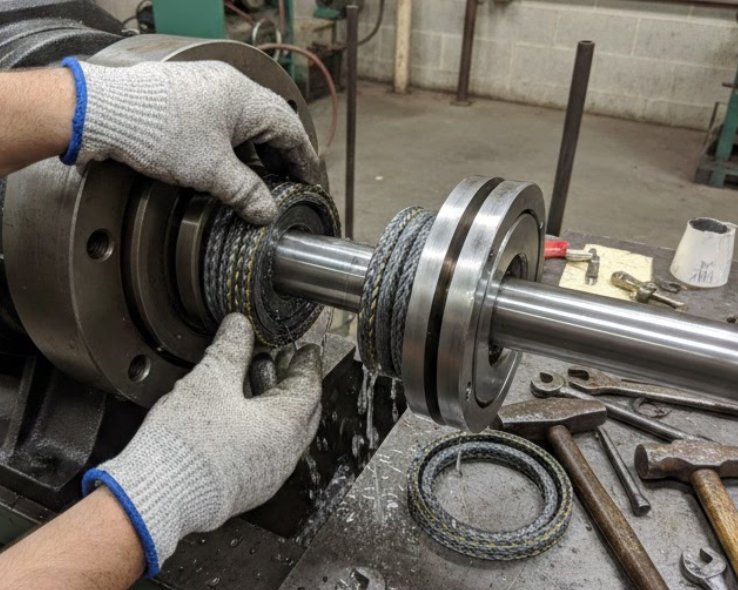
This is a last resort. Packing generates much more heat than a mechanical seal, requires continuous adjustment, and wastes flush water. But it keeps the pump running when the alternative is an unplanned shutdown. When you eventually schedule the replacement, a cartridge seal cuts changeover time compared to a component seal — worth planning for if you want to shorten the next shutdown window.
Monitoring a Temporarily Repaired Seal
A well-monitored temporary fix buys you weeks. An unmonitored one buys you hours before things escalate.
Check leak rate every shift. Establish a baseline immediately after your temporary intervention and track the trend. Single seals in normal service leak 10-50 ml/hr; dual seals should stay under 10 ml/hr. Any sudden increase — not gradual — signals the fix is failing.
Monitor temperature at the gland plate. A rising trend means the seal faces are losing their fluid film. If gland temperature climbs more than 15-20 degrees F above your post-repair baseline, plan to shut down sooner than scheduled.
Listen for changes. Increased vibration or a high-pitched squeal from the seal area means face contact has changed. Dry running can shatter a seal within 30 seconds under the right conditions — you will not get a second warning.
Document everything. Record your initial assessment, the intervention you performed, and every monitoring reading. This data is critical for the full repair procedure — it tells the repair team what failed, how it progressed, and what underlying system issues need correction.
If you skip this step, you will be back in a week doing the same emergency repair on the same pump with the same result.
Planning the Permanent Fix
A temporary repair is not a solution. It is a bridge. The monitoring data you collected tells you exactly what the permanent repair needs to address — and if you did the go/no-go assessment properly, you already know whether the root cause is the seal, the support system, or the pump itself.
Order the replacement seal now, not when the temporary fix fails. Check shaft condition, alignment, and piping layout against specifications before the scheduled shutdown. Pre-planning consistently saves more time than it costs during the repair window. The goal is to never need a temporary fix on this pump again.