Are you paying three times more for seal materials that deliver zero additional performance in clean water service? Most seal selection guides recommend premium configurations without distinguishing between aggressive chemical duty and the benign conditions inside a clean water pump. That disconnect leaves buyers overspending on materials they don’t need — or, worse, cycling through cheap seals that fail every few months because the real problem was never the seal itself.
Across the industry, we’re seeing a shift in how maintenance teams evaluate seal costs. The conversation is moving away from unit price and toward total cost of ownership (TCO), and clean water applications are where that shift matters most.
What Makes a Seal Cost-Effective in Clean Water Service
A seal’s true cost extends well beyond the purchase order. Installation labor, unplanned downtime, replacement frequency, and root-cause maintenance all factor into what you actually spend per year of sealed operation.
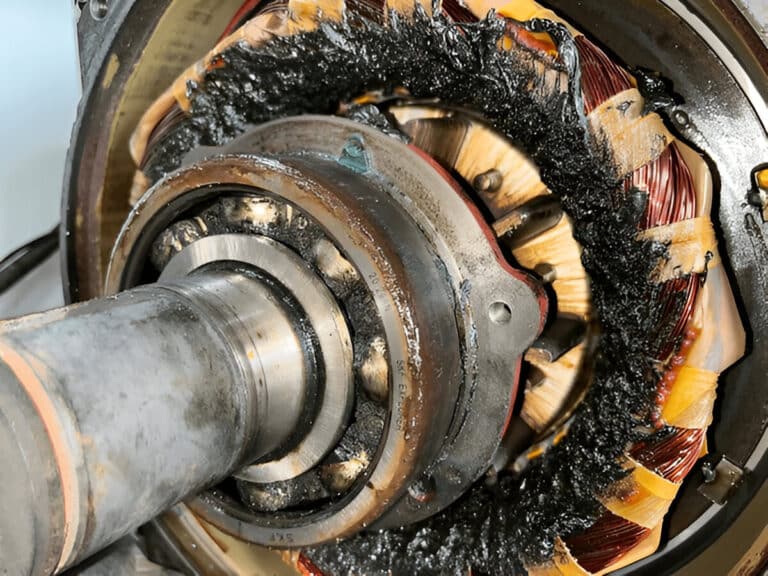
The hidden cost most buyers miss is upstream equipment condition. Heinz Bloch’s analysis of 11,000 mechanical seal failures across 148 industrial plant sites found that 13% of all failures traced back to bearing maintenance issues — not seal quality. Buying a more expensive seal doesn’t fix a worn bearing or a misaligned shaft. Those failures will keep recurring regardless of seal price point.
For clean water pumps operating within normal parameters — pH 7-9, temperatures below 225F, minimal dissolved solids — the sealing environment is about as benign as it gets. The performance gap between a mid-range seal and a premium seal narrows to almost nothing. The cost-effective approach starts with matching materials and configuration to what the application actually demands, not what a worst-case spec sheet suggests.
TCO Components That Matter
- Purchase price: Often the smallest portion of total seal cost over the pump’s lifecycle.
- Installation labor: Component seals require precise setting; cartridge seals cut installation time by half or more.
- Downtime cost: Even a few hours of unplanned shutdown can exceed the price of several seals.
- Replacement frequency: A $200 seal lasting three years costs less than a $50 seal replaced every eight months.
- Root-cause maintenance: Seal failures caused by bearing wear, shaft runout, or misalignment won’t stop until the underlying issue is fixed.
Where Carbon-Ceramic Beats Silicon Carbide
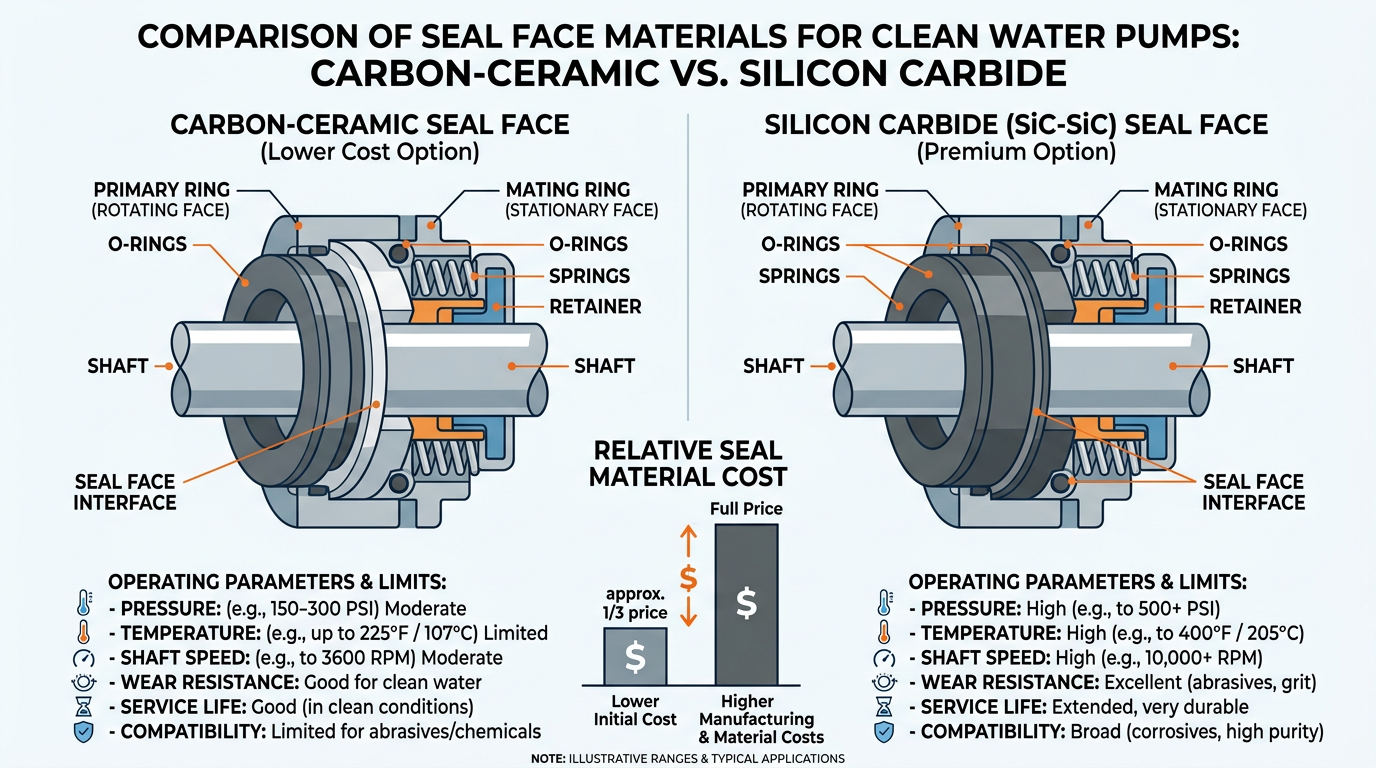
Carbon-ceramic face combinations handle clean water within pH 7.0-9.0, up to 400 ppm dissolved solids, and 20 ppm undissolved solids. That covers the vast majority of HVAC, municipal, and process water pumps.
Silicon carbide (SiC) seals cost three times more than standard carbon-ceramic. The upgrade is justified in exactly three scenarios: high pH systems above 9.0, contaminated or silica-laden water, and glycol applications. SiC handles 60 times the dissolved solid content of standard seals — impressive capability, but irrelevant when your water quality already falls within carbon-ceramic’s operating window.
I’ve reviewed procurement records at facilities running SiC seals on clean water loops for years without questioning the spec. When comparing mechanical seal products across suppliers, the material combination drives most of the price difference. Switching those clean water pumps to carbon-ceramic delivered the same seal life at roughly a third of the material cost. No performance difference. No increase in leak rate. The premium was paying for chemical resistance the application never needed.
When to Upgrade Materials
The decision points are specific, not subjective:
- pH above 9.0: Alkaline systems attack carbon faces. SiC justified.
- Dissolved solids above 400 ppm: Abrasive wear accelerates. Harder faces extend life.
- Glycol or antifreeze service: Chemical compatibility requires upgraded elastomers and face materials.
If none of these conditions apply, carbon-ceramic is the cost-effective standard. Specifying SiC on a clean water pump is like buying a chemical-rated gasket for a domestic water line — technically fine, but economically wasteful.
Matching Configuration to Application
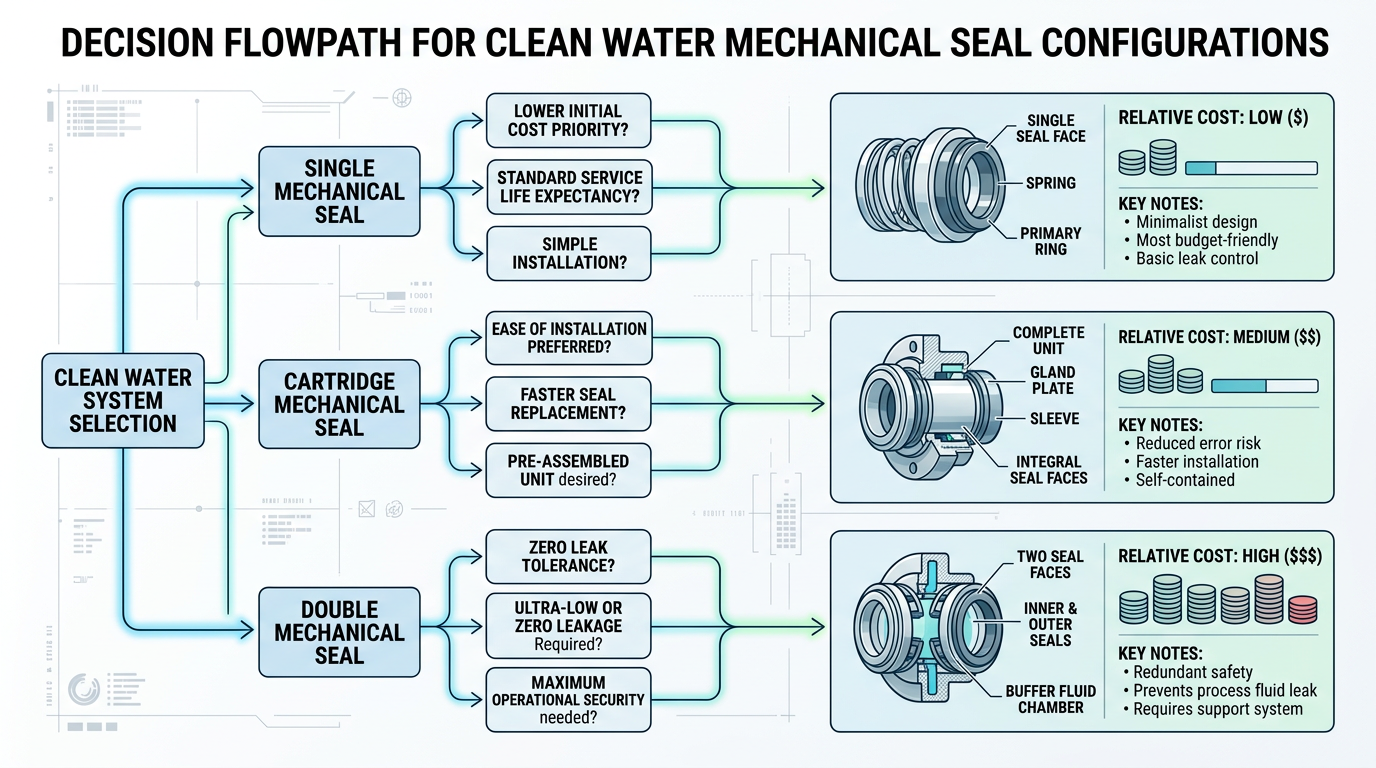
Type 1 mechanical seals — single internal seals — handle roughly 80% of clean water pump applications. Low cost, straightforward maintenance, and reliable performance in non-hazardous service make them the default for most water systems.
Double seals add a second set of faces with barrier fluid between them. They potentially deliver five times the seal life in severe environments — but clean water is not a severe environment. Unless regulations mandate dual containment or your replacement frequency exceeds two seal changes per year on the same pump, the additional cost and maintenance complexity of double seals rarely pays back in clean water duty.
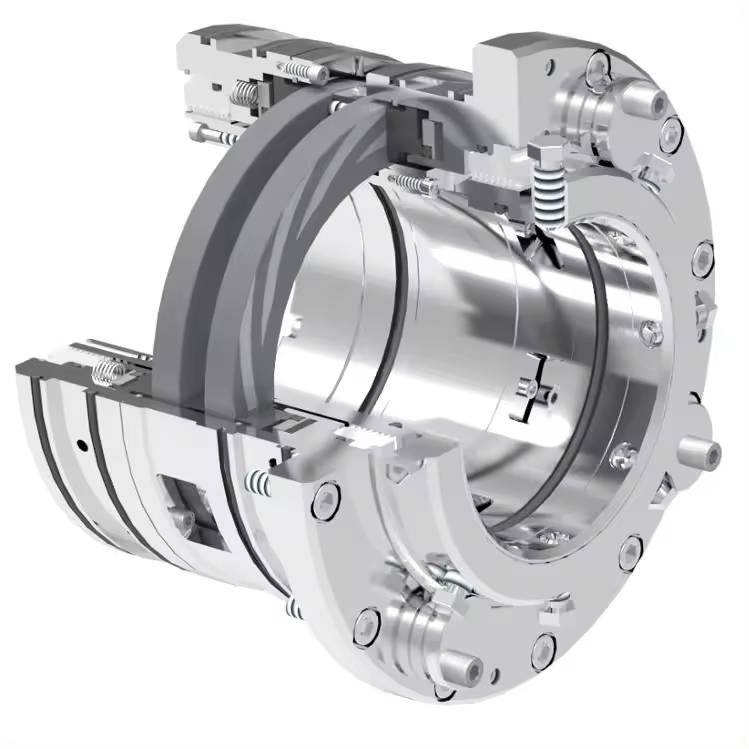
Cartridge seals occupy the middle ground. The pre-assembled design eliminates most installation errors — and based on field data from multiple sites, improper installation is one of the top causes of premature seal failure. The upfront cost runs higher than component seals, but reduced installation time and fewer setting mistakes often offset that premium, especially when maintenance crews handle multiple pump sizes and don’t install seals daily.
Choosing by Application
For most clean water pumps — HVAC circulation, irrigation, process water transfer — single seals deliver the best cost-performance ratio. The seal surface needs to be mirror-smooth, and the shaft must run true. When those basics are met, single seals perform reliably for years.
Consider cartridge seals when installation quality is a concern — high crew turnover, multiple pump models, or limited seal-setting experience. The reduced error rate justifies the cost premium.
Reserve double seals for regulatory requirements or genuinely severe duty. Running them on a clean water circulation pump is over-engineering the solution and over-spending the budget.
When Cheap Seals Cost More
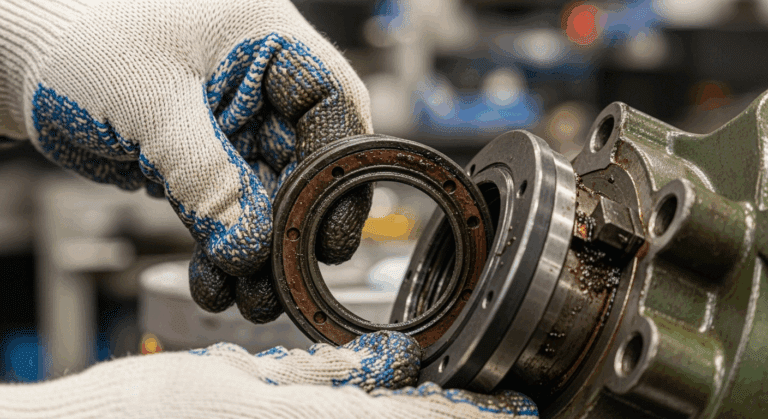
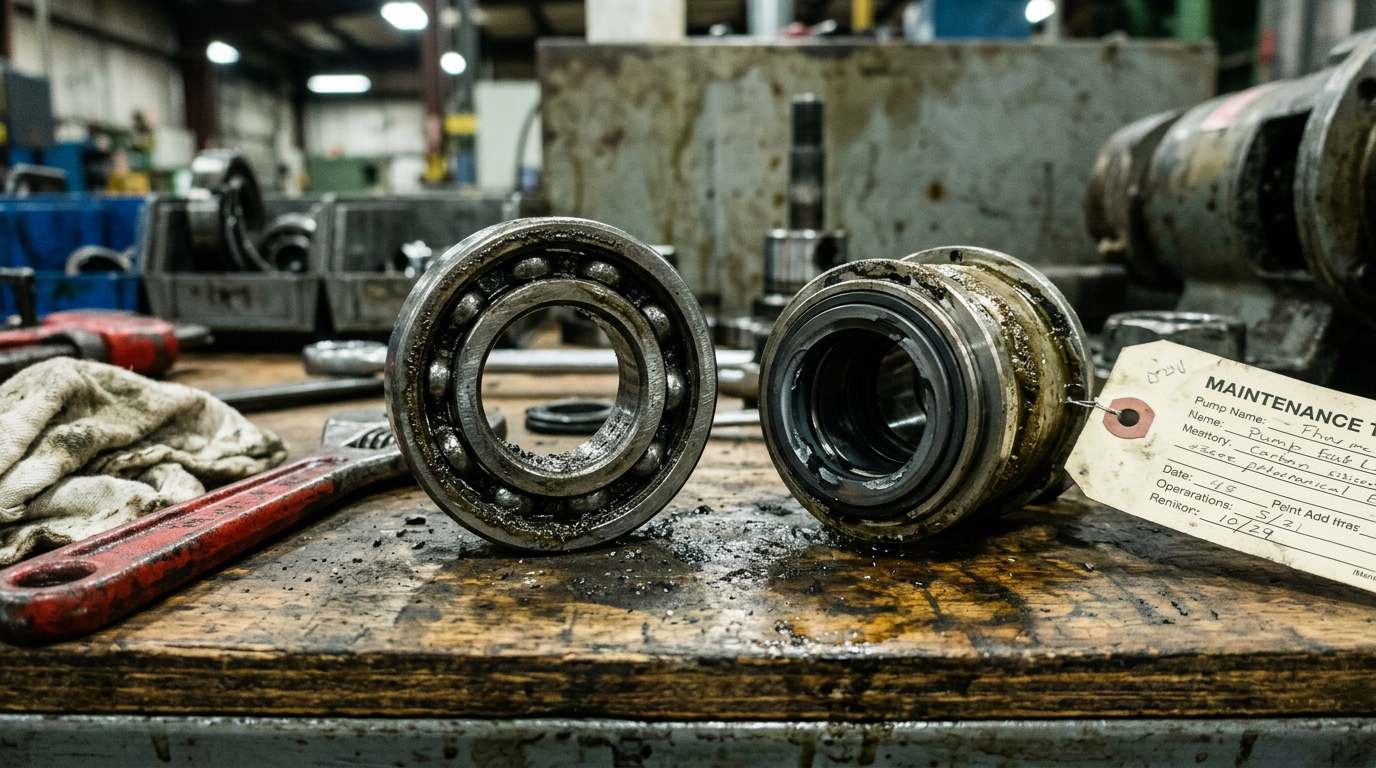
The lowest purchase price and the lowest total cost are rarely the same thing. I’ve seen maintenance teams replace the same seal every six to eight months on a water pump, convinced they were saving money with budget seals. The real problem was a damaged seal plate with a gap from overheating — a $60 fix that would have ended the replacement cycle entirely.
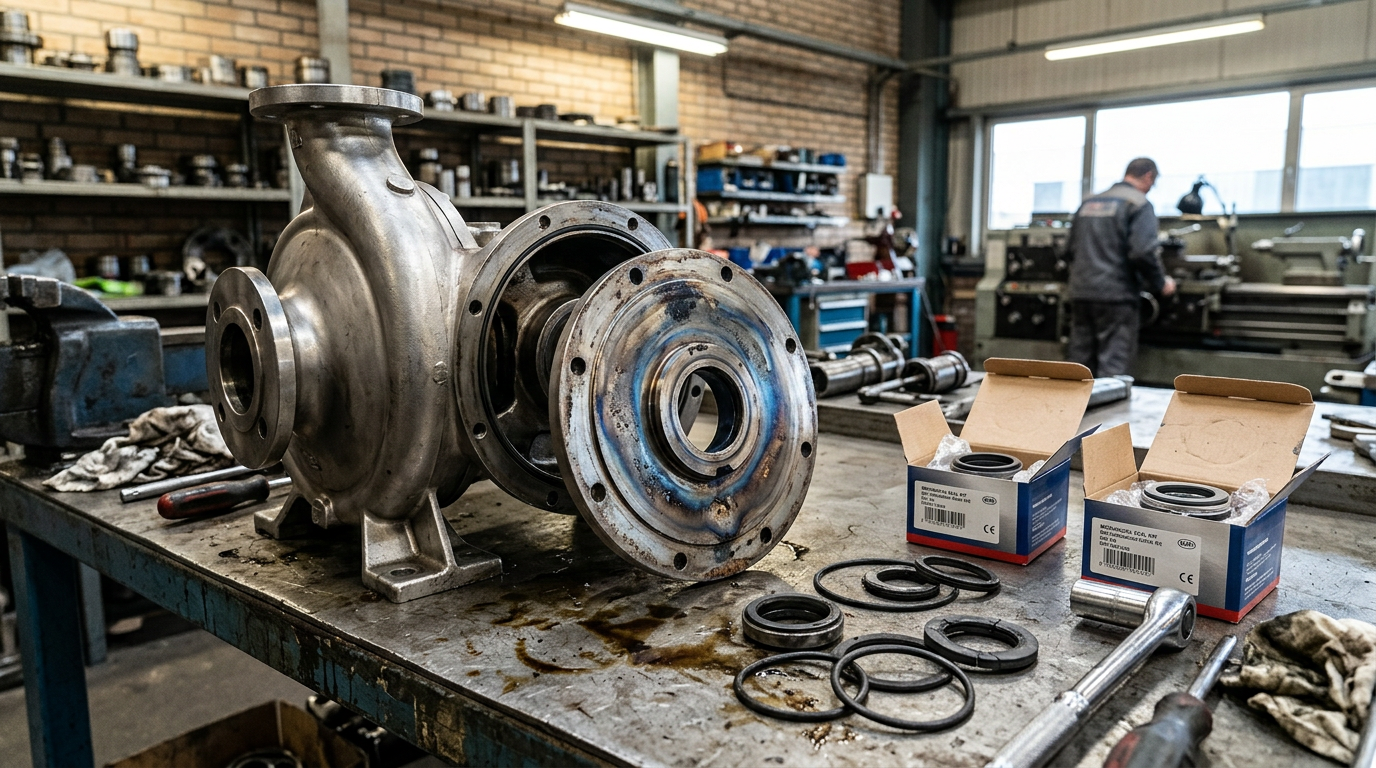
Every repeated seal failure that doesn’t involve a root-cause investigation is money wasted. Before blaming the seal, check shaft runout, verify seal plate condition, and confirm the mounting surfaces are undamaged. A scratched or nicked seal seat will cause any seal — cheap or premium — to leak within months.
Warning Signs of False Economy
- Replacements needed more than once per year: The seal probably isn’t the problem. Investigate bearing condition, alignment, and seal chamber surfaces.
- Multiple suppliers tried, same failure pattern: Root cause is mechanical, not seal quality. Shaft deflection, thermal distortion, or improper setting height are common culprits.
- Seal faces show uneven wear: Contact pattern tells the story. Uneven wear means misalignment or thermal distortion, not a defective seal.
The cost-effective path is always diagnosis first, replacement second. A $60 seal plate replacement or a bearing swap eliminates the recurring cost of seal failures that no amount of “buying better” will solve.
Making the Right Cost Decision
Clean water is the one application where cost optimization is straightforward — the operating conditions are known, the material requirements are well-defined, and overspecification is easy to spot. Match carbon-ceramic faces to clean water within normal parameters, default to single seals unless installation quality or regulatory requirements dictate otherwise, and invest the savings into proper installation practices and root-cause maintenance.
The biggest waste in clean water sealing isn’t buying cheap seals — it’s paying premium prices for capabilities the application will never use. Start with your water analysis, check it against carbon-ceramic’s 400 ppm threshold, and let the numbers make the material decision for you.