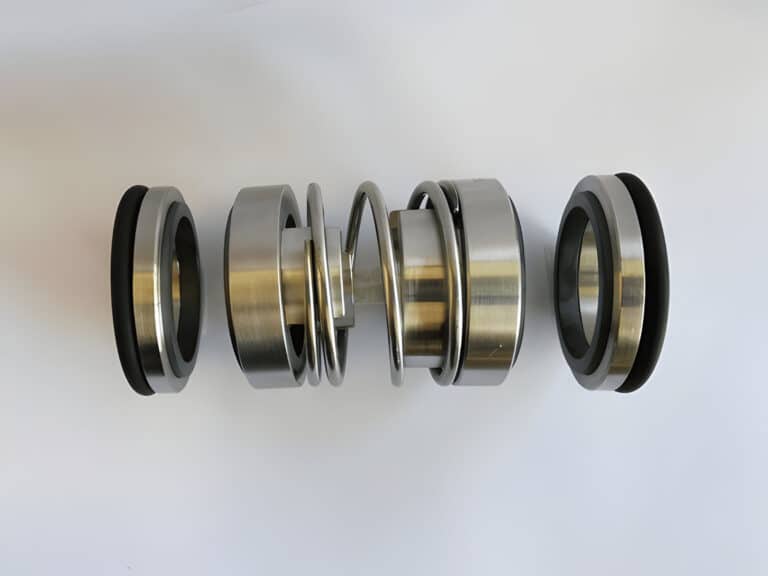

I’ve watched maintenance supervisors break two brand-new seals in one afternoon because they skipped the lubrication step. Knowledge gaps account for the majority of mechanical seal installation errors, and that fact alone should shape how you approach any DIY seal work. Some tasks are genuinely within reach. Others will cost you more in downtime and scrap seals than a service call ever would.
It depends entirely on which repair task you’re attempting. A simple elastomer swap is manageable. Face lapping is not. Here’s how to tell the difference.
What You Can Handle Without Specialized Equipment
Three seal repair tasks fall within the capability of a mechanically competent maintenance team: O-ring and elastomer replacement, cartridge seal changeout, and basic spring replacement.
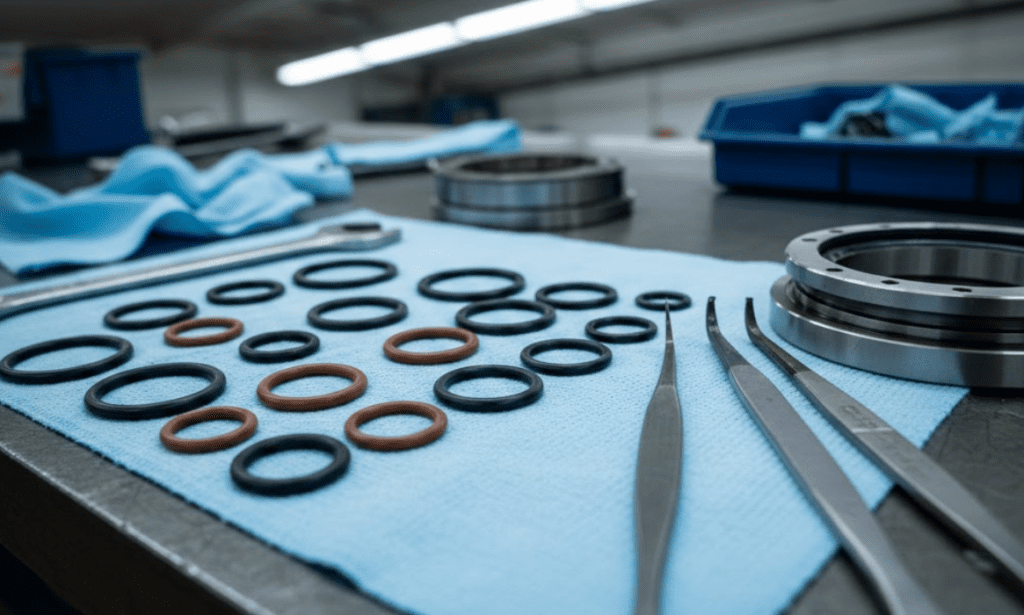
O-ring replacement is the most accessible entry point. You’re removing a worn secondary seal and pressing in a new one. The tolerances are forgiving, the parts are inexpensive, and a failed attempt doesn’t destroy the seal assembly. Have the replacement O-rings and a set of picks ready before disassembly, and photograph every connection before you take it apart. If you’re wondering whether a mechanical seal can be reused after disassembly, the answer depends on face condition — which brings us to the next section.
Cartridge seal replacement is the next tier up. Because cartridge seals arrive pre-assembled and pre-set, you’re bypassing the most error-prone steps — measuring setting height, aligning faces, and adjusting spring compression. If your pump uses a cartridge seal, full replacement is often faster and more reliable than attempting to repair a component seal in place.
Spring replacement is feasible if you can identify the spring type and access the assembly without disturbing the seal faces. Before you start, make sure you have the exact replacement spring. Mixing spring rates changes the face loading and will cause a leak.
One rule applies to all three tasks: never touch the lapped seal faces with bare hands. Fingerprints leave oils that prevent the faces from seating properly. If you skip this step, you’ll be back in a week replacing what you just installed.
Where DIY Repair Fails
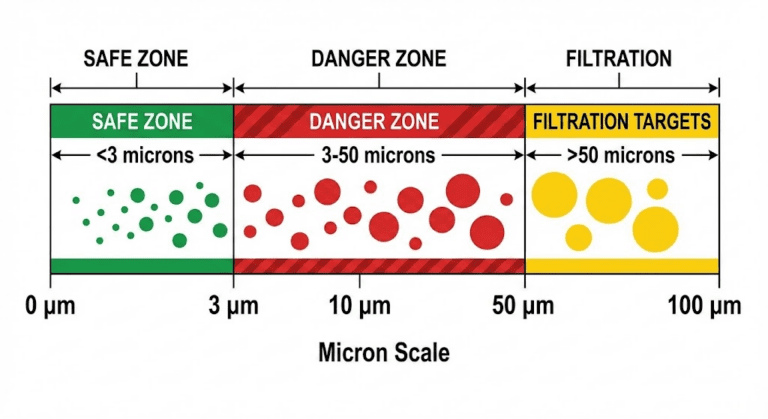
Face lapping — grinding seal faces back to optical flatness — is where DIY repair hits a wall. The tolerance is less than two helium light bands, which translates to 0.0006 mm. A helium light band measures 0.3 microns. To put that in perspective, you need a surface flatter than anything you can verify with shop-floor tools.
Professional lapping requires a flat lapping plate (which itself must be regularly verified for flatness), diamond lapping compound, an optical flat, and a monochromatic light source. Different face materials demand different pressures: carbon at 100 g/cm2, silicon carbide at 200 g/cm2, tungsten carbide at 300 g/cm2. Too much compound floods the cut. Too little causes direct part contact and heat damage.
Even hand lapping by a skilled technician achieves only three light bands — already outside the two-band standard that machine lapping delivers. And hard materials like tungsten carbide take much longer by hand, with no guarantee of acceptable results.
The most common mistake I see is someone attempting to “clean up” a scored seal face with emery cloth or sandpaper. That creates a surface finish measured in scratches, not light bands. The seal may look better, but it will leak immediately under pressure. If you see face damage, you’re looking at a professional mechanical seal repair job — not a shop-floor fix.
Any repair involving set-screw adjustment, shaft sleeve inspection, or non-concentric wear pattern diagnosis also exceeds DIY capability. These require measurement tools and training that general maintenance teams don’t carry.
When Replacement Makes More Sense Than Repair
For a DIY context specifically, the calculation tips heavily toward replacement in most cases.
Repair costs typically range from 10% to 60% of a new seal’s price, depending on damage severity. Face replacement combined with shaft sleeve refurbishment runs 40-60% of original cost — and that work requires professional equipment. When repair costs exceed 50% of a new seal’s price, replace it.
But the cost calculation changes when you factor in DIY quality limitations. A professionally repaired seal is tested against qualification standards that allow no more than 5.6 grams per hour of water leakage. A basic air test — the kind you might run in a maintenance shop — passes seals leaking up to 7,500 grams per hour. A seal that passes your bench check can fail spectacularly in service.
For standard pump seals, replacement with a new cartridge mechanical seal eliminates the risk entirely. Cartridge designs arrive pre-set and pre-assembled, removing the measurement and alignment steps that cause most DIY failures.
Reserve DIY repair for simple elastomer replacement on seals where the faces are confirmed undamaged. Everything else — face work, sleeve work, precision reassembly — benefits from professional equipment and testing that general maintenance shops don’t have.
Making the Right Call
The question isn’t whether seal repair is possible as a DIY project. It’s whether your specific repair task matches your specific equipment and skills. O-ring replacement and cartridge changeout sit firmly in DIY territory. Face lapping and precision assembly do not.
I’ve seen a 40-pump reliability study where inconsistent installation methods across maintenance crews were the primary driver of seal failures. The crews weren’t incompetent — they lacked standardized training for the precision work involved. That gap between general mechanical skill and seal-specific knowledge is exactly where DIY attempts break down.
Before you commit to a repair, inspect the seal faces under good light. If you see scoring, chips, or heat discoloration, you need professional repair or a replacement — not a weekend project. If the faces are clean and you’re only replacing soft parts, go ahead. Just don’t rush it.