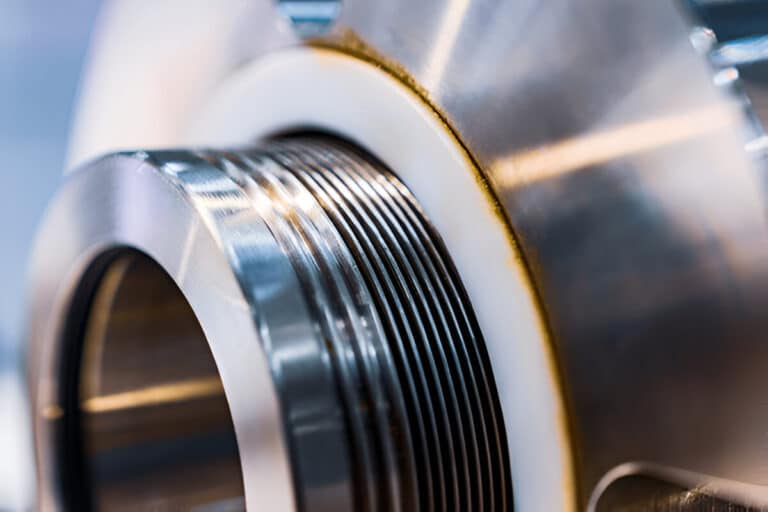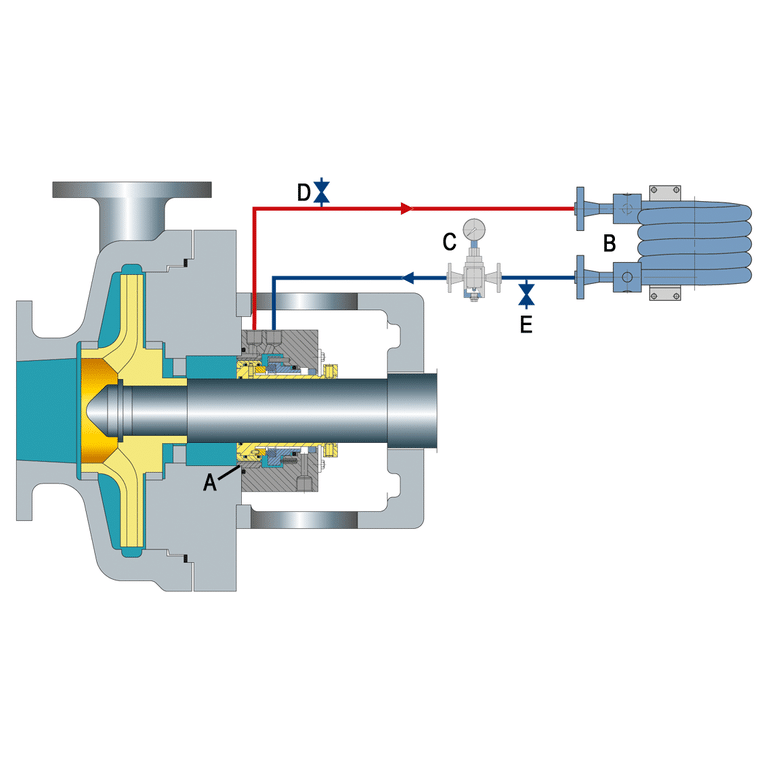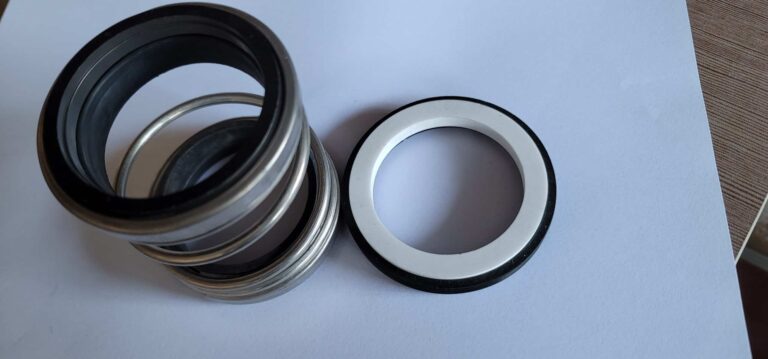

Seal-related repairs account for 60 to 70% of all centrifugal pump maintenance work. Choosing the wrong repair provider does not just waste money on a single seal — it introduces repeat failures that compound across your entire pump fleet.
Across the industry, I see the same pattern: buyers filter repair providers by certifications and equipment lists, then wonder why repaired seals underperform. Certifications verify that a quality system exists. Documentation practices prove that it works. The providers who can show you their paper trail — not just their certificates — consistently deliver better outcomes.
Core Evaluation Criteria
Start with five areas: testing capability, material sourcing, failure analysis process, turnaround reliability, and documentation depth. Most buyers stop at the first two. That is where problems begin.
Testing capability matters, but the type of testing matters more. Every repaired seal undergoes an API 682 air test before shipment. What most buyers do not realize is that this air test permits leakage up to 7,500 grams per hour of water. The qualification test standard allows no more than 5.6 grams per hour — roughly a 1,300x gap. An air test confirms the seal was assembled correctly. It does not confirm operational performance.
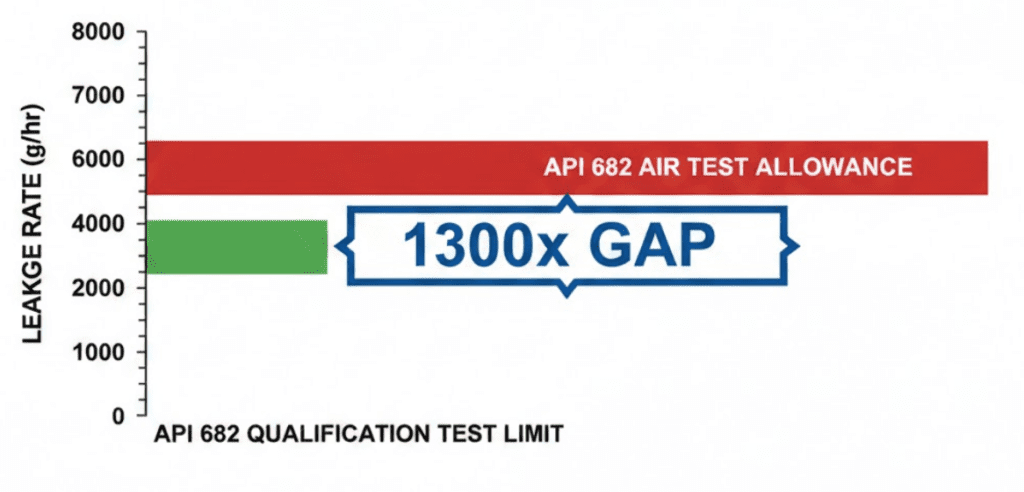
Ask providers what testing they perform beyond the standard air test. Providers who run hydrostatic or dynamic performance tests on repaired seals demonstrate a fundamentally different commitment to quality.
Material sourcing is equally critical. The repair shop replacing your silicon carbide faces or Viton o-rings should be able to tell you exactly where those components came from. Not “we use quality materials” — specific Material Test Certificates (MTCs) and batch traceability back to the raw material supplier.
Turnaround reliability rounds out the initial evaluation. Ask about standard lead times and emergency response capability. A provider quoting two weeks for standard repairs and 24 to 48 hours for emergencies is operating within normal industry ranges. More important than the numbers themselves: can they document actual turnaround performance over the past year? Providers tracking this data take their commitments seriously.
Whether you are evaluating repair providers after deciding to outsource or qualifying a backup shop alongside your in-house team, these five criteria apply equally.
Why Certifications Are Not Enough
ISO 9001 and API 682 compliance should be your first filter, not your last. These certifications are necessary table stakes. They disqualify clearly unqualified providers. But they do not distinguish good providers from mediocre ones.
ISO 9001 certifies that documented processes exist. It does not verify that those processes produce quality outcomes. Certification termination rates run as high as 55% over two decades — meaning more than half of certified organizations eventually lose or abandon their certification. The certificate on the wall tells you where a provider was on audit day. It says nothing about what happens between audits.
The hidden cost most buyers miss is this gap between certification and execution. I have evaluated providers holding current ISO 9001 and API 682 certifications who could not produce a failure analysis report from the last six months. The certifications were real. The quality system behind them was hollow.
For hazardous applications, additional compliance requirements apply. IECEx and ATEX certification become mandatory for seals operating in explosive atmospheres. These are not optional extras — they are regulatory requirements with serious safety and liability implications.
Use certifications to build your shortlist. Then evaluate documentation practices to make your final decision.
Documentation and Traceability as the Real Quality Signal
A repair provider’s documentation practices reveal more about their quality commitment than any equipment list. Here is what to ask for during your evaluation.
Failure analysis reports should be standard practice, not an add-on. Quality providers treat every returned seal as a diagnostic opportunity. A seal sent in dismantled and cleaned is like a crime scene that has been disturbed — the evidence needed to identify root causes gets destroyed. Providers who request operating conditions, failure timeline, and ask you not to disassemble the seal before shipping it are the ones who take failure analysis seriously.
NASH documented a case that illustrates the point well. A coatings manufacturer experienced sudden failure on an EagleBurgmann double seal that had run three years without issues. NASH’s failure analysis revealed the real root cause: the plant had isolated the pressure switch, forcing the seal to run dry. The problem was operational, not a seal defect. Without that documented analysis, the same failure would have repeated.
The value of documentation multiplies across your pump fleet. When a provider maintains detailed repair records across dozens of seals from the same site, patterns emerge that are invisible in one-off repairs — systemic issues like chronic misalignment, recurring contamination sources, or operating conditions that consistently exceed design limits.
Material traceability is the second documentation pillar. Every replacement component should carry a verifiable chain: MTCs confirming compliance with ASTM or DIN standards, Positive Material Identification (PMI) records from XRF analysis, and batch numbers linking each component to its source. Providers who can produce these records on request operate at a different quality level than those who cannot.
Before-and-after photographic records, dimensional inspection logs, and test results for each repaired seal round out the documentation picture. If a provider cannot show you examples of these records for previous repairs, assume they do not exist.
Red Flags That Signal a Low-Quality Provider
Watch for these warning signs during your evaluation process.
No failure analysis capability or interest. If a provider quotes a repair without asking about operating conditions, process fluid, or failure symptoms, they plan to replace worn parts and ship it back. That approach fixes symptoms, not causes.
Vague material sourcing. “We use premium materials” without MTCs, PMI records, or named suppliers is a red flag. Substandard or incorrect materials — wrong elastomer grades, off-spec carbide faces — cause premature failures that look identical to operational problems. The difference only shows up when you trace the failed component back to its source and find the material was never what was specified.
Air test only. Providers who cite passing an air test as proof of quality are meeting the minimum assembly verification. For seals going into critical or hazardous service, this is insufficient.
No reference customers or documented repair history. Established providers should be able to share anonymized performance data or connect you with reference accounts. Reluctance here usually means the data would not help their case.
Pricing well below market. Repair costs vary, but when a quote comes in 40-50% below competitors, something is being cut. Usually it is materials, testing, or documentation — the three areas that determine whether the repaired seal lasts.
Making Your Decision
The evaluation comes down to a practical question: can this provider show me proof of quality, or only promises of it?
Build your shortlist using certifications and equipment capability. Then request documentation samples — a failure analysis report, material traceability records, and test results from a recent repair. The providers who produce these readily have systems that generate them routinely. The ones who hesitate or cannot locate examples are telling you something important.
Start with documentation. Everything else follows from there.