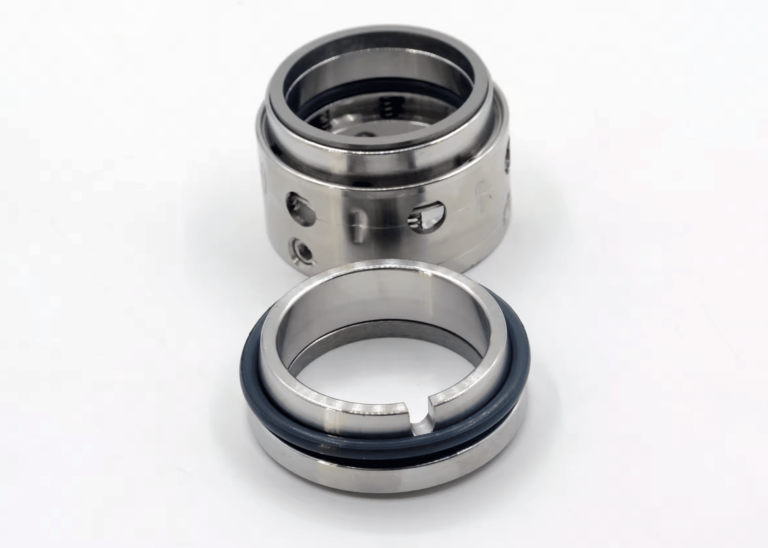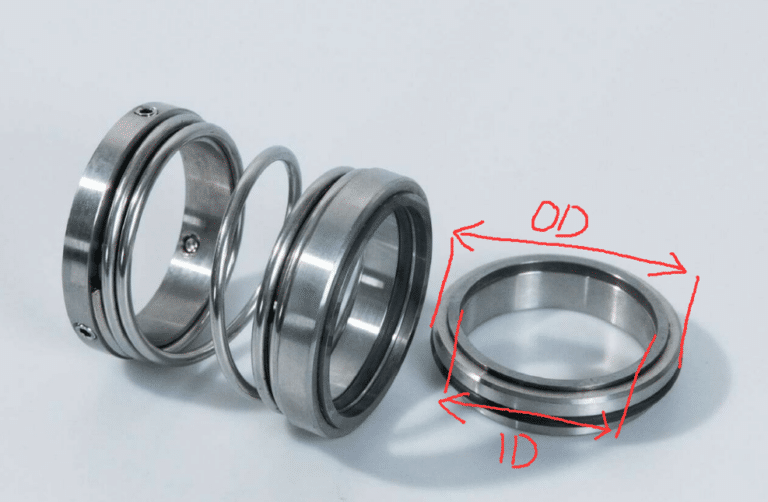

A mechanical seal can pass API 682’s standard air test even with a hole as large as 0.008 inches. That single fact exposes the biggest gap in most repair service contracts: they reference “industry-standard testing” without defining what acceptance actually means. Without that definition, the contract protects no one.
Across the industry, we’re seeing repair contracts that obsess over pricing and turnaround time while ignoring the provisions that determine whether the repaired seal will actually last. The hidden cost most buyers miss is not the repair price itself — it is the absence of measurable quality standards that would give them contractual grounds to reject substandard work.
Five contract elements separate a useful agreement from a worthless one.
Essential Elements of a Seal Repair Service Contract
A complete seal repair service contract covers five categories: scope of work, quality standards, performance metrics, warranty and liability provisions, and pricing structure. Most contracts address only two of these — pricing and turnaround — and leave the rest to assumption.
Consider the financial stakes. A typical hydrocarbon processing facility runs 2,500 pumps with an average seal MTBF of four years, spending roughly $2.5 million annually on mechanical seals alone. Each year, $416 million worth of seals across the industry must be replaced due to pump bearing failures — failures that a properly structured repair contract would track and address.
Without clear contract language on quality and accountability, buyers have no mechanism to distinguish between a provider delivering genuine reliability improvements and one simply replacing parts on a recurring cycle.
Scope of Work and Repair Procedures
The scope of work section must specify every step the repair provider performs, from receiving inspection through final testing. Vague language like “repair to OEM specifications” is unenforceable. The contract should name the exact procedures.
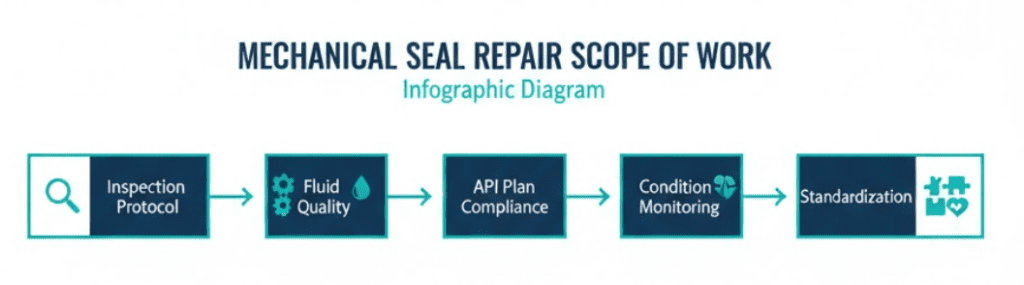
Five core practices belong in every scope of work:
- Inspection protocol. Regular assessment of leakage, temperature, and vibration — with documented acceptance ranges for each parameter.
- Fluid quality management. Contaminants erode seal components. The contract must define flush fluid cleanliness standards and monitoring frequency.
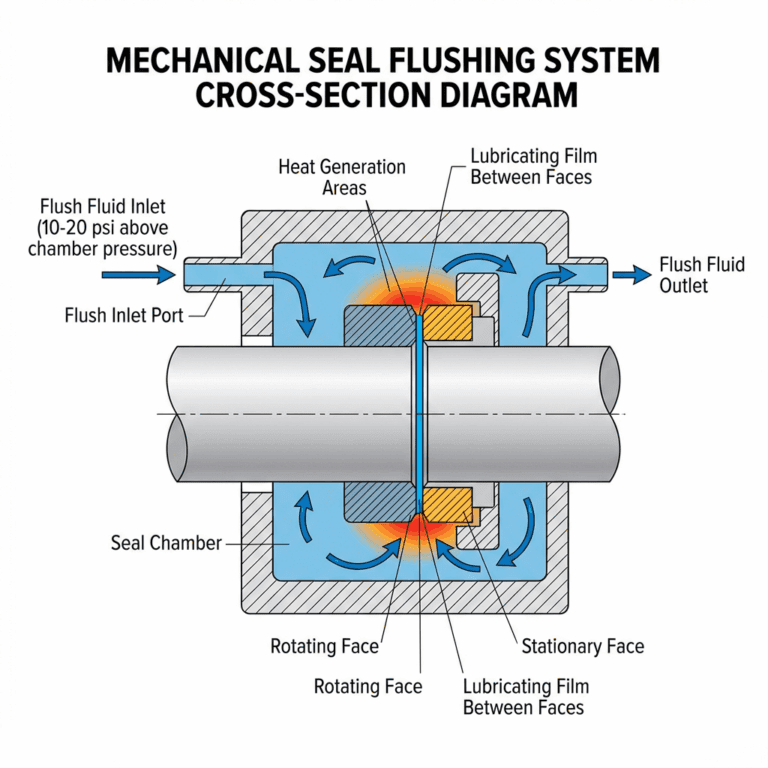
- API piping plan compliance. Proper flush plans provide cooling, lubrication, and contamination control. Specify which API plans apply to each seal type in scope.
- Condition monitoring support. Sensors for early detection of potential issues should be a contract deliverable, not an optional add-on.
- Standardization recommendations. Consolidating seal types across equipment simplifies inventory and training. A good repair provider identifies standardization opportunities as part of their scope.
Repair typically saves 40-60% compared to replacement. That margin creates strong incentive to outsource — but it also means the scope of work must be airtight. A provider quoting attractive pricing on a vague scope will cut corners on the steps that cost time but prevent repeat failures.
Material handling deserves its own clause. Ceramic seal faces require specific lubricants during reassembly. Petroleum-based products on ceramic surfaces cause permanent damage. The contract should specify approved materials and prohibit substitutions without written authorization.
Quality Standards and Acceptance Criteria
This is where most contracts fail. When comparing options, the key factors are not price or lead time — they are the measurable criteria that define an acceptable repair.
An Oceaneering reliability study of 40 offshore production pumps in the North Sea traced persistent seal failures to two root causes: variance in installation methods across maintenance teams, and uncertainty surrounding acceptable seal leakage rates. These are exactly the problems that acceptance criteria should prevent — and exactly what most contracts omit.
Testing Beyond Baseline Standards
API 682 requires pressurized air testing after assembly. The standard allows seals to leak up to 5.6 g/h during liquid operation. AESSEAL demonstrated that a seal can pass the standard air test with a 0.2 mm hole — orders of magnitude larger than the acceptable face gap.
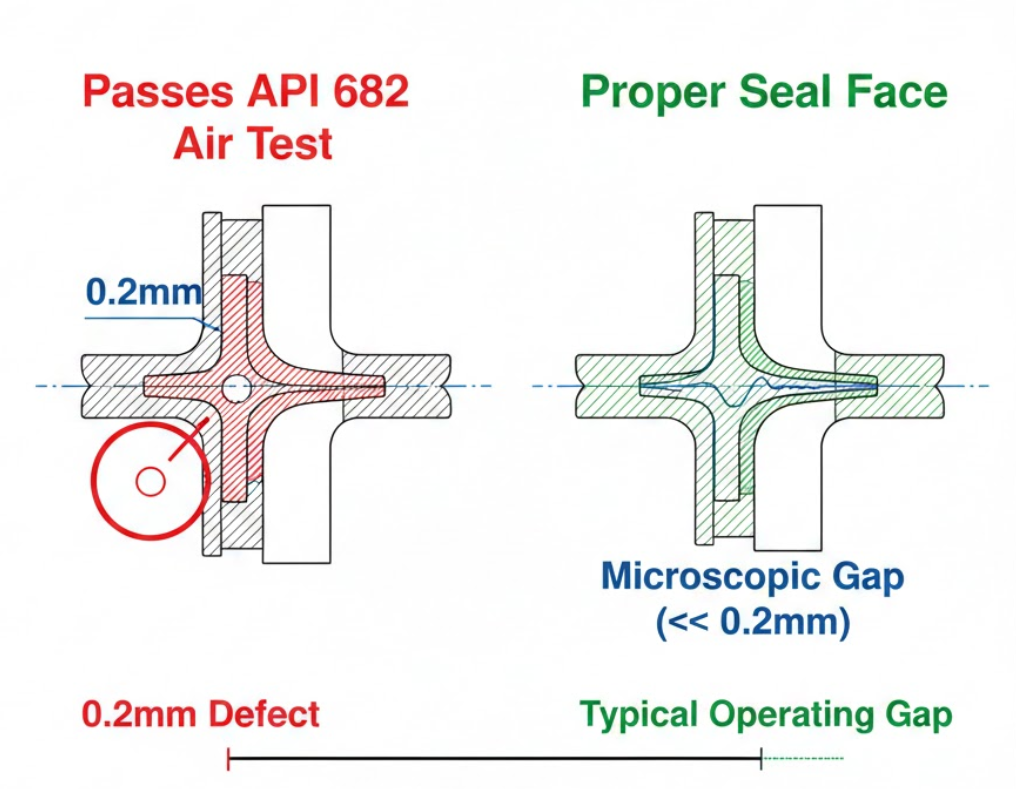
Simply writing “API 682 compliant testing” into a contract is insufficient. Specify:
- Enhanced assembly integrity testing beyond API 682 minimums
- Quantified acceptance thresholds for leak rate, face flatness, and runout
- Documentation requirements — test results, dimensional measurements, and material certifications for every repaired seal
- Rejection criteria — explicit conditions under which a repaired seal is returned for rework at the provider’s cost
Shaft and Installation Conditions
Quality extends beyond the seal itself. An undersized shaft will make any seal leak. Scratches or longitudinal marks under the seal seating area will seep regardless of repair quality. The contract should require shaft condition assessment before reinstallation and define minimum surface finish standards.
Performance Metrics and SLAs
Performance metrics give a contract teeth. Without them, dissatisfaction leads to finger-pointing rather than accountability.
MTBF as a Contract KPI
Best practices since 1990 target mechanical seal MTBFs greater than 100 months when proper instrumentation and procedures are in place. That benchmark provides a concrete target.
However, MTBF is only useful with explicit definitions. The formula — total operating time divided by number of failures — appears simple. In practice, organizations define it differently: some exclude spare equipment from population counts, others count packing adjustments as repairs, and preventive maintenance replacements may or may not register as failures. These variations make the metric unsuitable for contractual obligations unless the contract documents exactly how failures are counted, what equipment is included, and over what measurement period.
I recommend dedicating an entire contract appendix to metric definitions. Ambiguity here costs more than any pricing negotiation.
SLA Escalation Structure
Service level agreements should define three tiers:
- Target performance — the expected standard (e.g., 48-hour turnaround for standard repairs, 95% first-run acceptance rate)
- Minimum acceptable performance — the threshold triggering service credits
- Material breach — the level triggering contract review or termination (e.g., exceeding a defined credit amount over six months, or sustained poor performance across any three months of a nine-month window)
Service credits must qualify as liquidated damages: the amount needs to be reasonable at the time of contracting and bear some relationship to projected actual damages. Punitive credit structures will not hold up legally. Structure them as genuine pre-estimates of loss.
Warranty, Liability, and Dispute Resolution
Warranty provisions protect against workmanship defects. Liability provisions determine who pays when a repaired seal fails and damages downstream equipment.
Warranties and SLAs serve different functions. A warranty addresses whether the repair was performed substantially in accordance with specifications. An SLA provides concrete metrics with specific, graduated consequences. Contracts need both.
Key warranty provisions:
- Warranty period — typically 12-18 months from installation or commissioning, not from shipment
- Scope coverage — workmanship, materials, and conformance to documented specifications
- Root cause analysis requirements — failed seals returned for investigation at the provider’s expense, with written findings delivered within a defined timeframe
- Consequential damage liability — clear allocation of responsibility when seal failure causes pump damage, production loss, or environmental release
When evaluating repair providers, the willingness to accept meaningful warranty and liability terms reveals more about capability than any marketing material. Providers who resist accountability provisions are signaling uncertainty about their own quality.
Pricing Structure
Pricing belongs in the contract, but it should never dominate the negotiation. A contract built around lowest price with weak quality provisions guarantees repeat failures.
Structure pricing around:
- Tiered repair categories — standard, complex, and emergency, each with defined scope and pricing
- Cost protection — annual price adjustment caps tied to material indices
- Inventory provisions — spare seal stocking levels, consignment terms, and emergency supply commitments
For facilities weighing whether to handle repairs internally, the in-house vs outsource decision depends on repair volume and criticality — but once outsourcing is chosen, the contract terms determine the outcome, not the provider’s pitch.
Key Takeaways
Every seal repair contract I review overweights pricing and underweights quality. The contracts that deliver genuine reliability improvement share one trait: they define acceptance criteria with the same precision they apply to cost. Specify what testing standard applies, how performance is measured, who pays when quality falls short, and what triggers escalation. A contract that cannot answer those four questions protects no one.