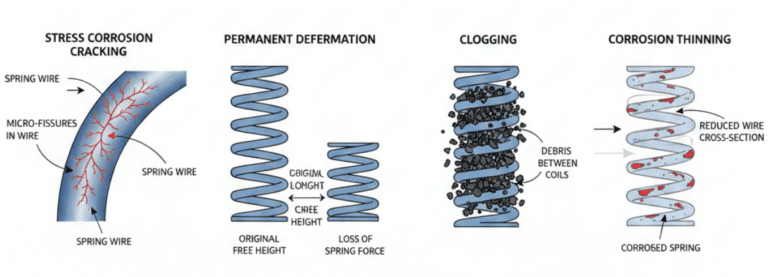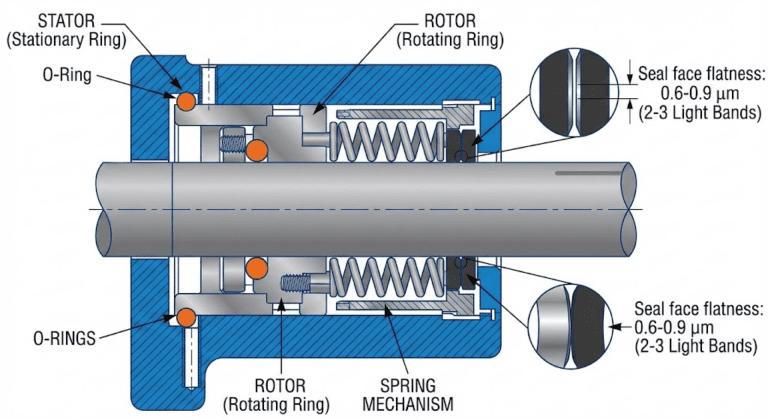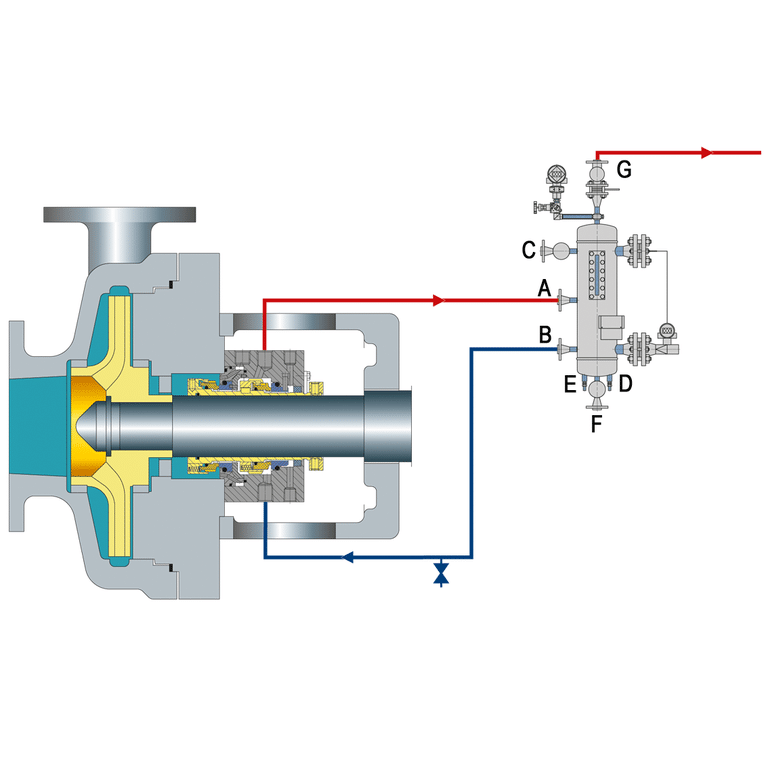

Three slurry pumps in a mining operation shared a common seal water header. When an operator diverted seal water for washdown, one pump’s seal failed. Slurry contaminated the return line, poisoned the central tank, and within hours all three pumps were down. The seals themselves were correctly specified — double arrangements with barrier fluid. The environmental control system was the single point of failure.
I’ve seen this pattern dozens of times: plants invest in premium seal hardware but treat the support system as an afterthought. Selecting a slurry pump seal requires evaluating three interdependent variables — particle characteristics, seal arrangement, and environmental controls. Optimize any one in isolation, and premature failure is nearly guaranteed.
How Particle Characteristics Drive Every Seal Decision
Particles above 75 um (0.003 inches) classify a slurry as settling, and settling slurries demand fundamentally different sealing strategies than non-settling suspensions. Particle size determines whether a cyclone separator can clean recirculated flush fluid — and whether abrasives will embed in seal faces or simply pass through.
Particle hardness shifts wear profiles as much as size does. Silica-based slurries (specific gravity around 2.65) are the industry baseline, but mining operations handling alumina, zirconia, or iron ore concentrates wear seal faces at entirely different rates. A seal face material combination that survives five years on silica sand may last five months on alumina.
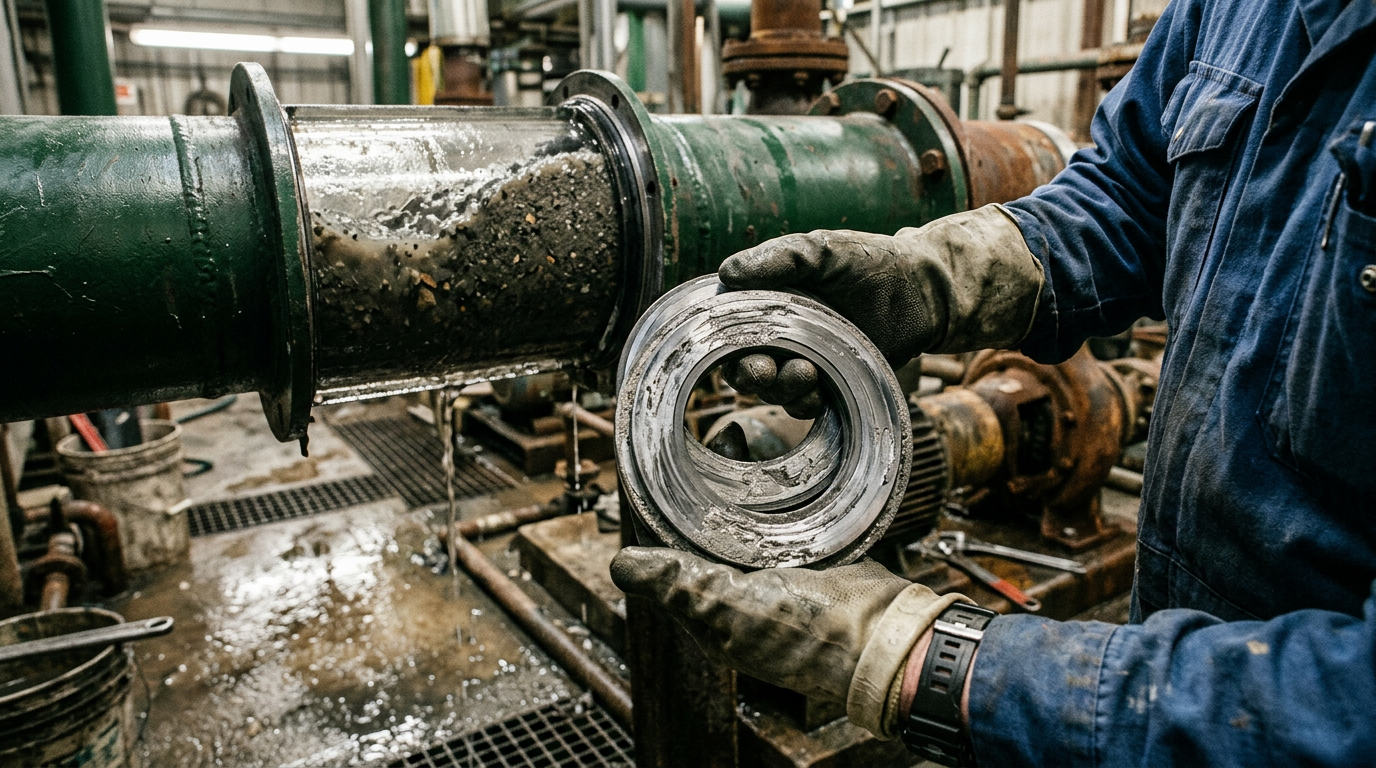
Solids concentration is the third particle variable. Below 10% solids by weight, standard mechanical seal configurations with modest flushing often perform adequately. Above 30%, every component of the sealing system must be purpose-selected. At 55% solids, I’ve seen single flushless seals with silicon carbide faces and grease quench achieve zero leakage at 80-160 psi and 1300 rpm — but only because all three variables were addressed together.
Specify your slurry completely before following any mechanical seal selection guide: particle size distribution, Mohs hardness, concentration, and chemical composition. Skipping any of these makes everything downstream a guess.
Seal Arrangement: Single, Tandem, or Double
The default industry response to abrasive slurry is to specify a double seal with pressurized barrier fluid. This is wrong about half the time.
API 682 defines three arrangements. Arrangement 1 (single seal) handles non-hazardous, moderate-severity service. Arrangement 2 (tandem/dual unpressurized) adds a buffer fluid for monitoring and secondary containment. Arrangement 3 (dual pressurized) isolates the process entirely with barrier fluid at higher pressure than the pumped medium.
The single-vs-double decision is not a severity escalation — it is context-dependent. Double seals add barrier fluid management, which itself introduces failure modes. The cross-contamination cascade I described earlier happened precisely because the barrier system was shared across pumps. Each pump needed isolated Plans 53A and 54 to prevent single-point failure from propagating.
Meanwhile, a quarry operation running thickener underflow at 55% solids converted from packing to a single flushless seal with silicon carbide faces and grease quench. Zero external leakage. Zero maintenance interventions. The key was matching the arrangement to the particle characteristics and environmental control — not defaulting to maximum complexity.
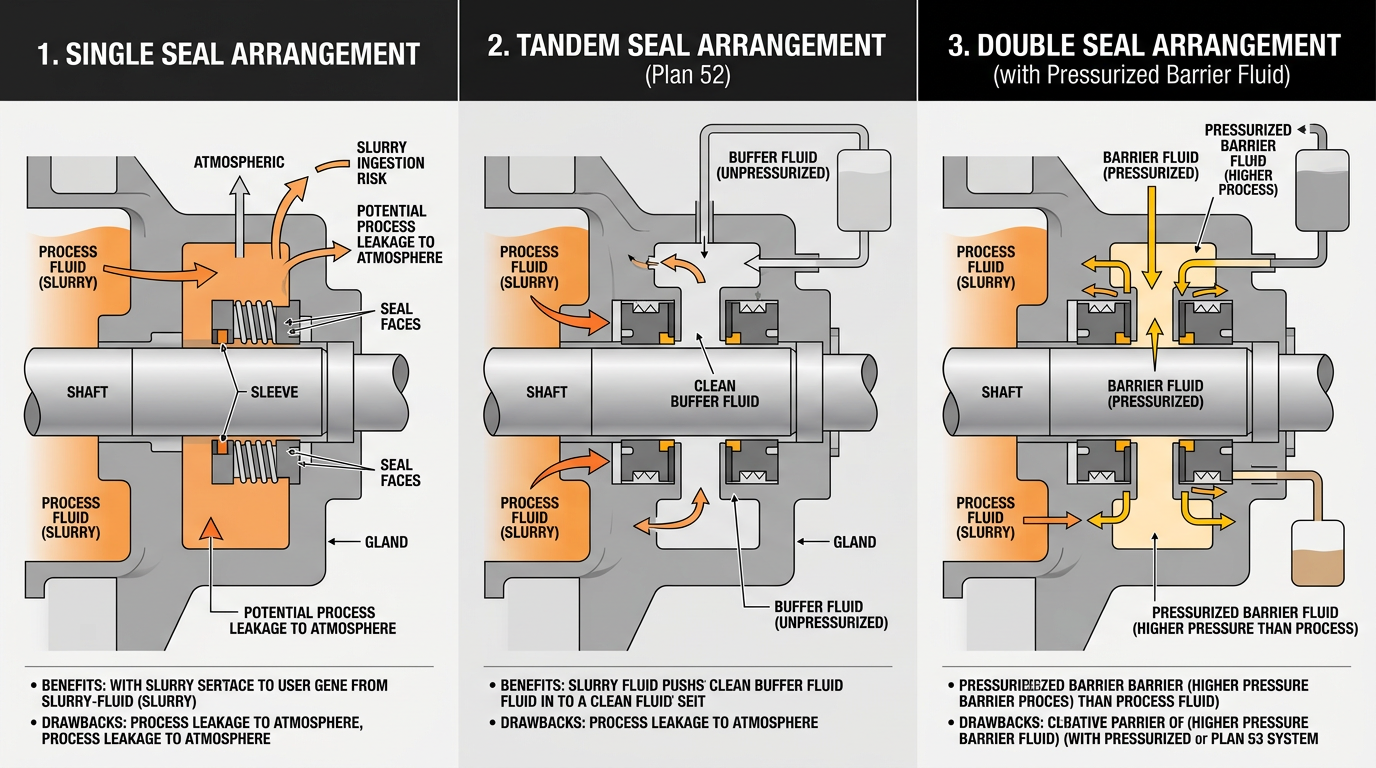
For most slurry applications, start with a single seal and add complexity only when the particle characteristics or regulatory requirements demand it. A properly configured cartridge mechanical seal with the right flush plan outperforms a double seal with inadequate barrier fluid management every time.
Face Material Selection by PV Limits
Carbon faces have no place in abrasive slurry service. The PV limit for carbon-ceramic pairings tops out at 250,000 psi-fpm — half the 500,000 psi-fpm capacity of full carbide systems. In slurry service, where suspended particles act as a grinding compound between the faces, that halved operating envelope collapses fast.
Silicon carbide against silicon carbide is the standard for abrasive service. Both sintered SiC (SSiC) and reaction-bonded SiC (RBSiC) resist abrasive wear, but they are not interchangeable. SSiC offers superior chemical resistance and handles higher temperatures. RBSiC, with its residual free silicon, costs less but degrades in strongly alkaline or hydrofluoric environments. Match the grade to your slurry chemistry, not just the particle hardness.
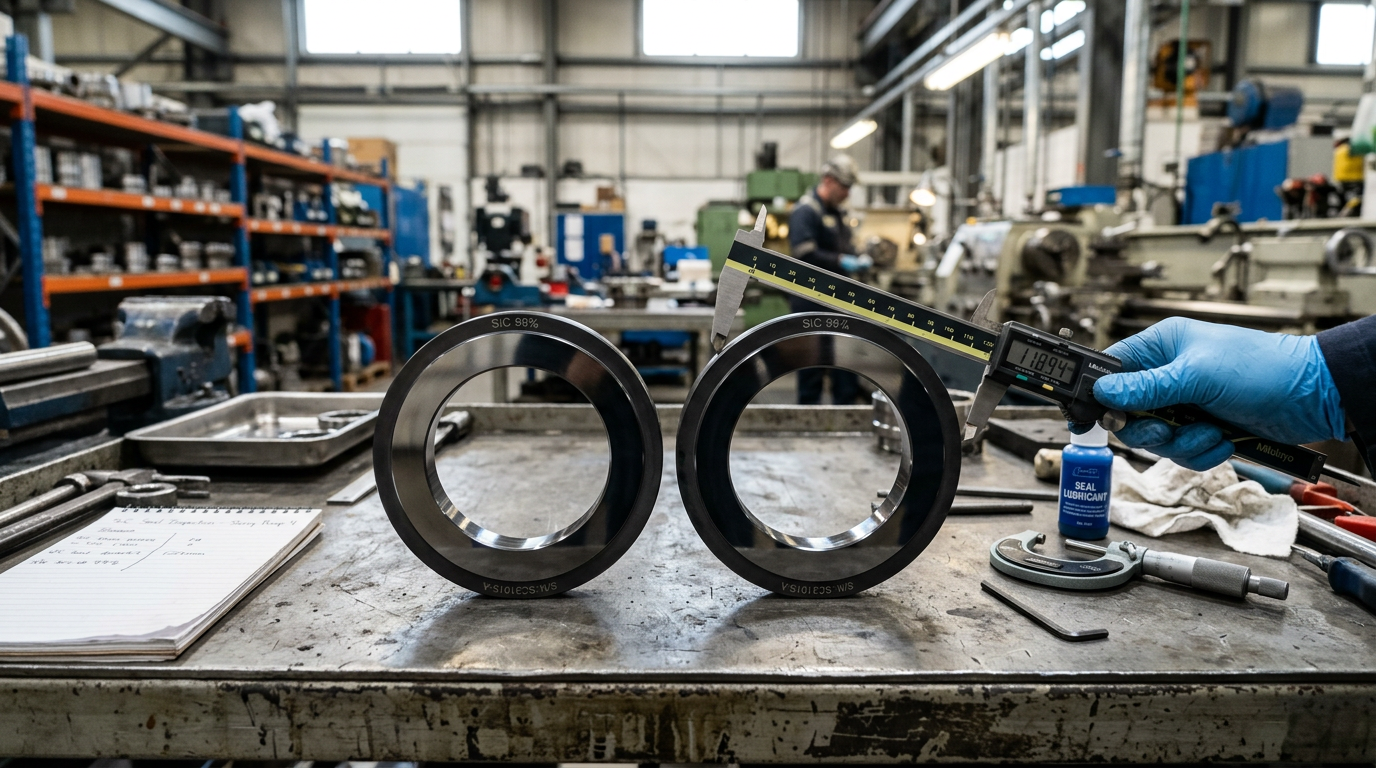
Tungsten carbide is the better choice when large particles and high velocities create impact loading that chips SiC faces. Tungsten carbide absorbs those shock loads without fracturing. The trade-off is a slightly lower hardness profile against fine abrasive particles.
Balance ratio directly affects face life in abrasive service. A ratio between 0.65 and 0.85 distributes closing and opening forces to reduce contact pressure between faces. For slurry applications, run toward the higher end of that range. Lower contact pressure means abrasive particles cause less damage per revolution, extending service intervals measurably.
What the spec sheet doesn’t tell you is that the face material only matters if abrasives never reach the faces in the first place. The best SiC-on-SiC pairing fails fast when the flush system delivers contaminated fluid to the seal chamber.
The 3-Variable Selection Framework
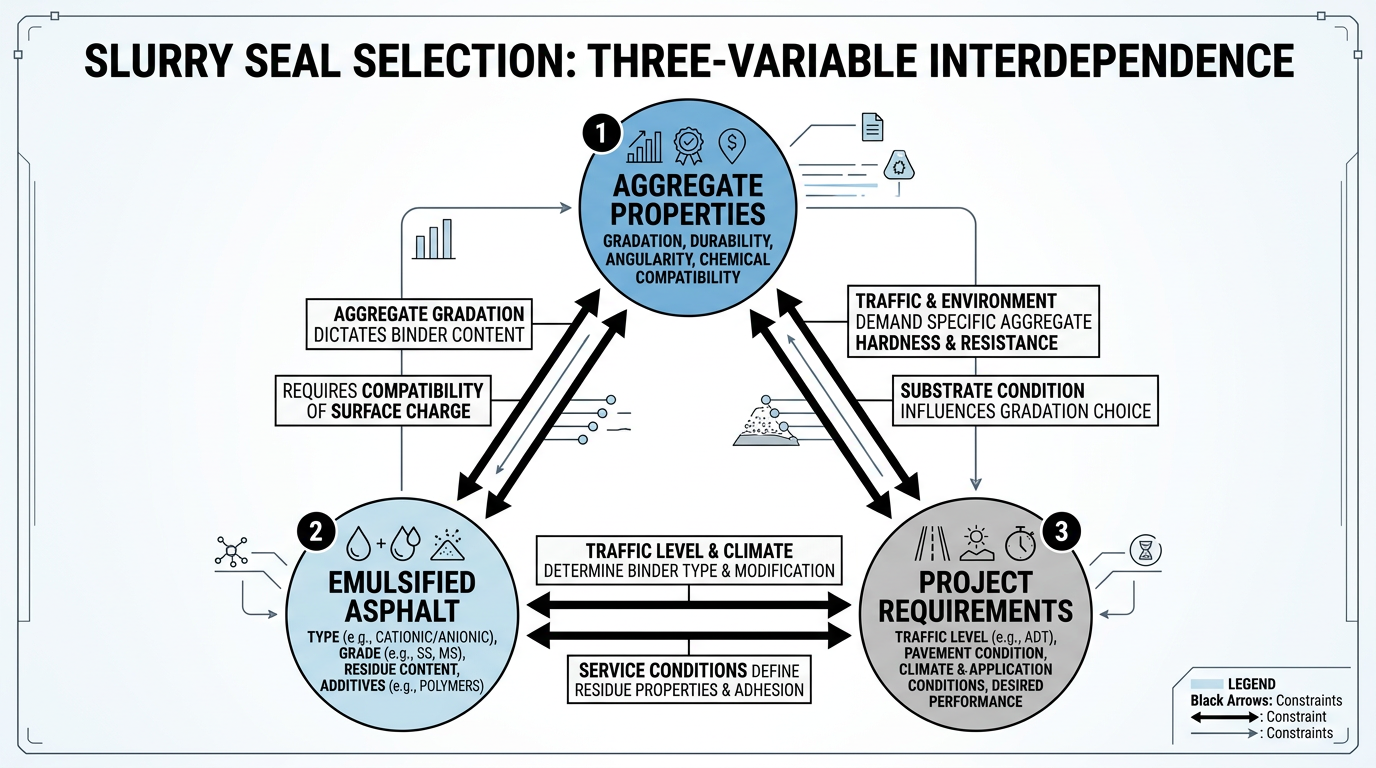
Slurry seal failures remain stubbornly high even when individual components are correctly specified — because particle characteristics, seal arrangement, and flush plan are interdependent decisions, not standalone choices.
Here is the framework I use for every slurry seal application:
Variable 1 — Classify the slurry. Determine particle size (above or below 75 um), Mohs hardness (silica baseline at 5-6, or harder), solids concentration (light below 10%, moderate 10-30%, heavy above 30%), and chemical aggressiveness. This classification constrains everything else.
Variable 2 — Select arrangement based on slurry class AND available infrastructure. Light slurry with available clean flush water: single seal with Plan 32. Moderate slurry with dense particles: single seal with Plan 31 cyclone separation. Heavy slurry with no clean water available: single flushless seal with grease quench. Hazardous or environmentally sensitive fluid regardless of concentration: double seal with dedicated barrier fluid per pump.
Variable 3 — Match the flush plan to BOTH the slurry and the arrangement. Plan 31 only works when particles are dense enough for centrifugal separation — it fails on neutrally buoyant or fine particles. Plan 32 requires chemical compatibility between the external flush fluid and the process. Plan 53A is limited to approximately 100 psi maximum nitrogen pressure — high-pressure slurry applications exceed this ceiling and need Plan 54 with independent circulation instead.
The API 682 standard specifies these plans for a reason: each addresses a specific failure mode. Plan 11 is overused in slurry because it is the simplest option, but it recirculates process fluid — including the abrasives — directly past the seal faces. That is not flushing; that is accelerated wear.
Validate each variable against the other two. If your slurry classification changes (seasonal variation, ore body changes, process upsets), the arrangement and flush plan must be re-evaluated — not just the seal faces.
Flush Plan Selection for Slurry Service
Plan 32 — flooding the seal chamber with external clean fluid — is the most reliable approach for severe slurry when clean water or compatible fluid is available. It completely isolates the seal faces from process abrasives. Flush flow rates typically range from 0.5 to 2 gpm depending on solids loading and seal size. Too little flow and particles migrate past the throat bushing; too much and you dilute the process or waste water.
Plan 31 uses a cyclone separator to remove solids from recirculated process fluid. It works well when particles have sufficient density contrast with the carrier fluid — silica in water separates cleanly, but clay or calcium carbonate in thickened slurry does not. Before specifying Plan 31, verify that your particle density allows effective separation. A filter (Plan 12) is not a substitute; filters clog within hours in slurry service.
For double seal arrangements, Plan 53A provides nitrogen-pressurized barrier fluid — but its approximately 100 psi pressure ceiling constrains application range. High-pressure slurry pumps routinely exceed this. Plan 54, with an independent external circulation system, handles higher pressures and offers pressurization, cooling, and filtration of the barrier fluid in one unit. A single Plan 54 system can serve multiple pumps, but each pump must have an isolated supply — shared headers create the cross-contamination risk that took out those three mining pumps.
I worked on a potash processing facility where everything was correctly specified — the right seals, the right arrangement, the right flush plan. Then an abnormally cold winter froze the water management system. The seals survived the freeze event, but the facility had to retrofit temperature protection across every water line. Environmental controls are not a secondary consideration. They are the system.
Start With the Slurry, Not the Seal
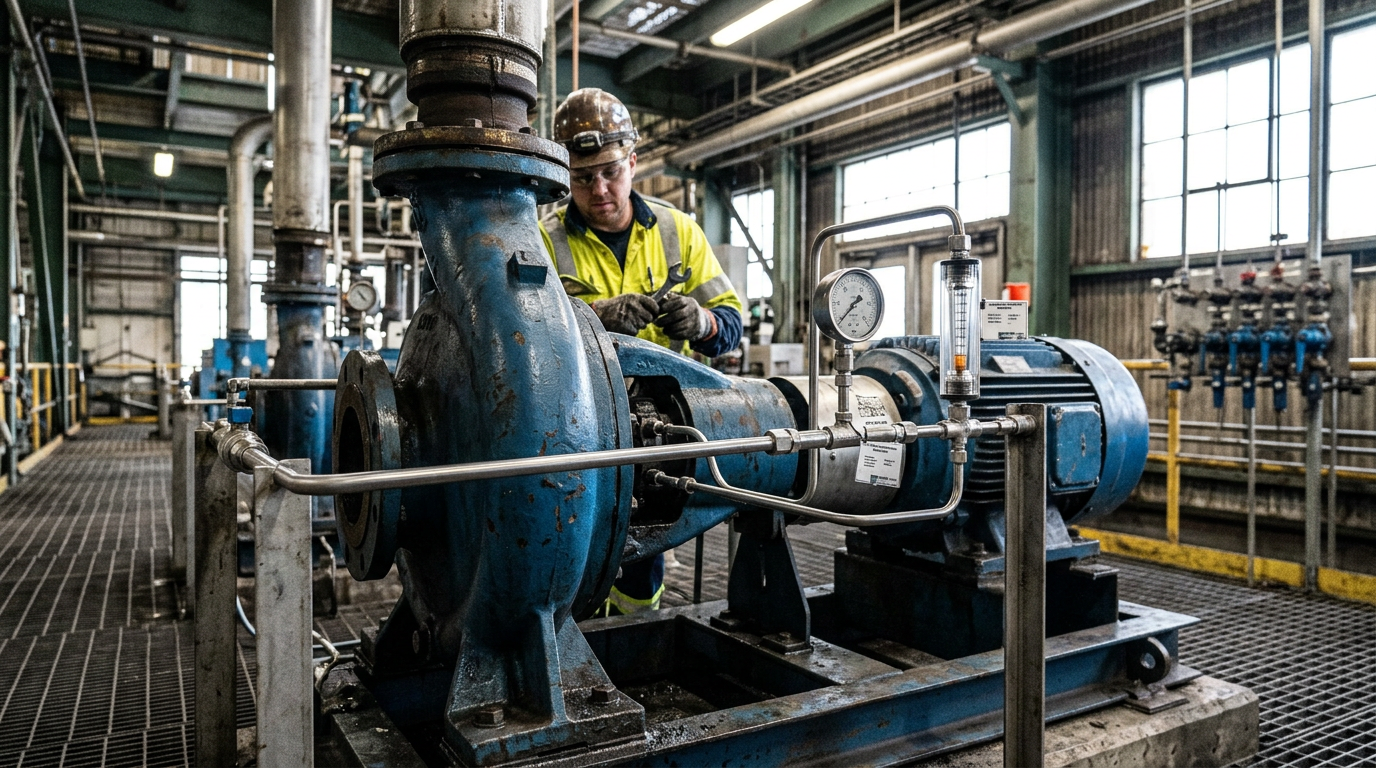
Proper system selection prevents the vast majority of slurry seal failures — but “system” means all three variables working together. The next time a seal fails in slurry service, check the flush line pressure gauge and the barrier fluid quality before pulling the seal apart. The faces will tell you what happened, but the support system will tell you why.
Run a hydrostatic test after every slurry seal installation to establish a leakage baseline. If you cannot quantify normal, you cannot detect abnormal — and in slurry service, the window between “normal” and “catastrophic” is measured in days, not months.