

Swimming Pool Pump Mechanical Seals
OEM-compatible and custom-machined shaft seals for pool, spa and water-feature pumps — supplied at wholesale and private-label scale.
In-house machining · Low MOQ · Silicon carbide & ceramic faces · Ships worldwide from Ningbo
A leaking pool pump almost always traces back to one $15 part: the mechanical shaft seal between the motor and the wet end. We manufacture those seals — direct-fit replacements for the major pool pump brands, plus custom seals for obsolete and non-standard pumps — and supply them to distributors, service companies and pump builders.
$13
typical seal cost vs. a $400–$700 pump swap
9 / 10
shaft leaks are the seal, not the pump
3–5 yrs
service life of a correctly matched seal
Is your pool pump leaking from the shaft?
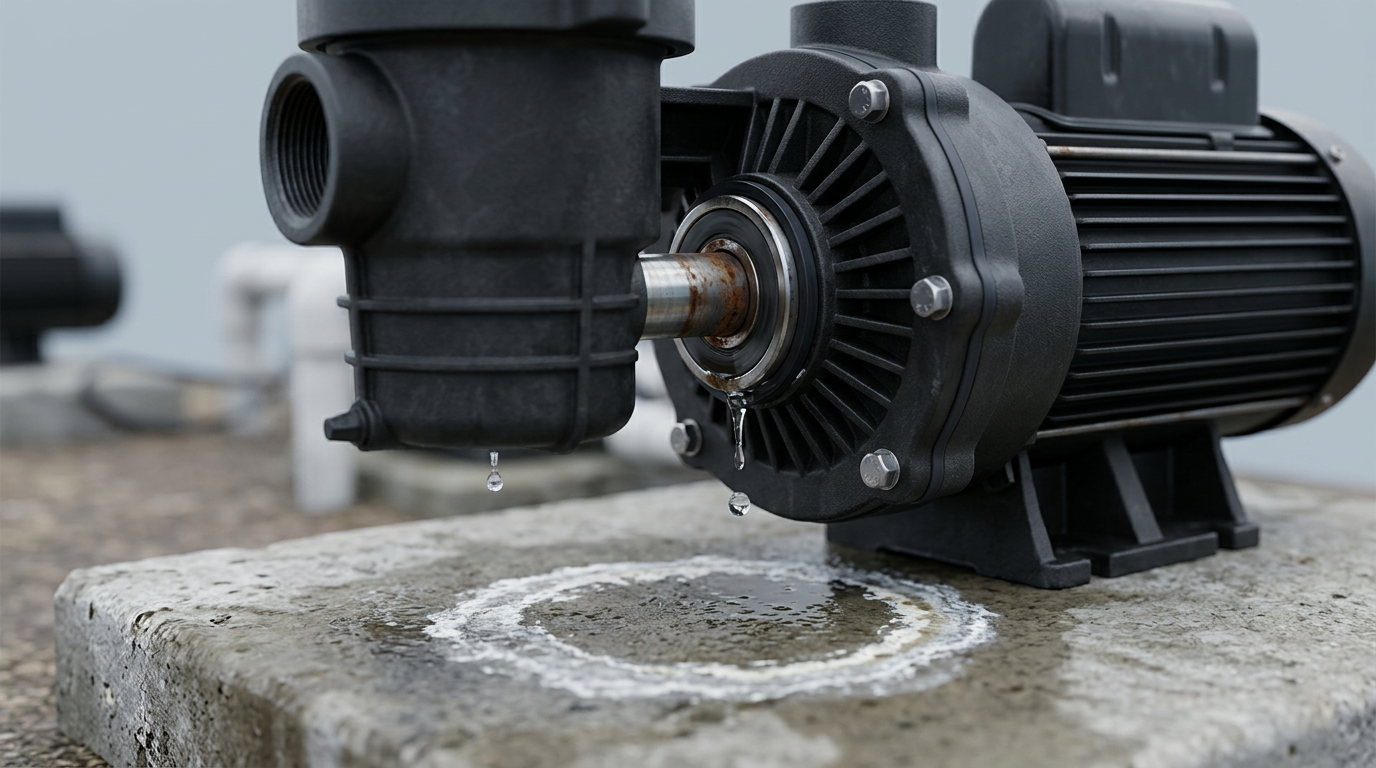
If you see water where the motor bolts to the pump body, the seal has failed. Three signs to check before it rusts the motor bearings:
- Water under the motor — a drip or a wet patch where the motor meets the pump housing.
- A white calcium ring on the pad below the pump — dried, evaporated pool water.
- A squeal at start-up — the seal faces running dry against each other.
Caught early, it is a sub-$25 fix. Left alone, leaking water tracks down the shaft and destroys the motor — a several-hundred-dollar replacement.
Where the shaft seal sits
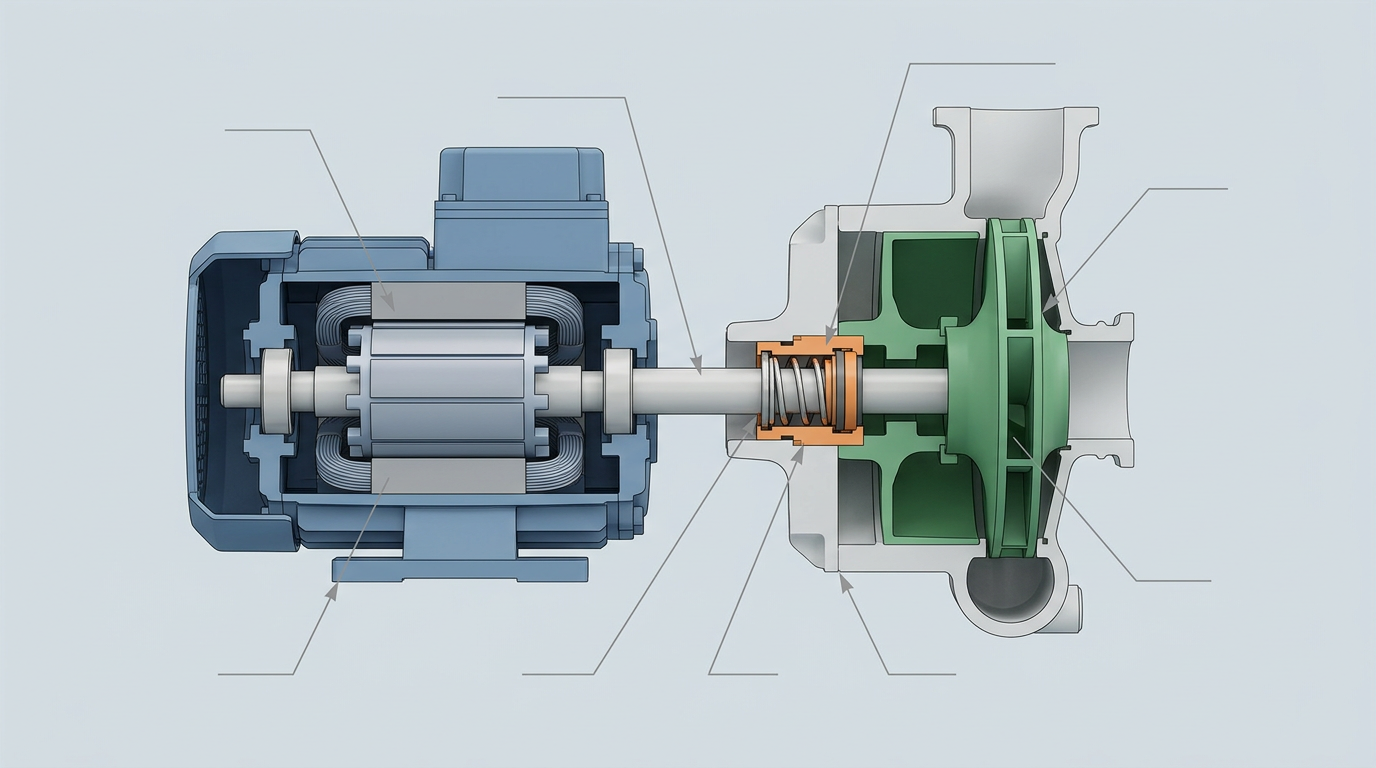
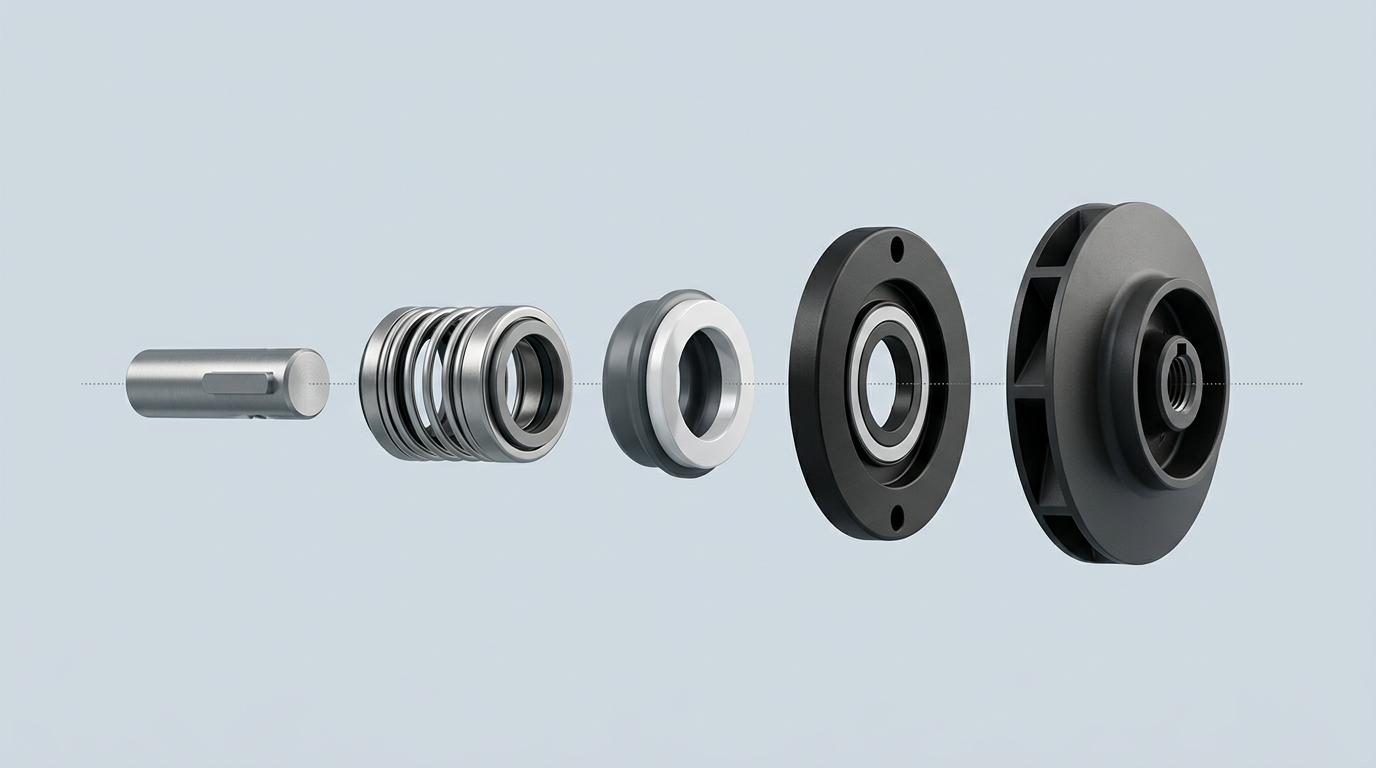
The mechanical seal lives between the motor and the impeller, sealing the spinning shaft where it passes into the wet end. It is two pieces that run face-to-face:
- Rotary element — spring + carbon face, spins with the shaft.
- Stationary seat — a ceramic or silicon-carbide ring pressed into the seal plate.
- Seal plate — the housing the seat sits in, between motor and volute.
- Impeller — threads onto the shaft and holds the rotary half in place.
When the two faces wear or crack, water gets past the shaft — that is the leak.
Find your seal by pump model
Most North-American pool pumps share a 5/8″ shaft and a common two-piece seal footprint. Match your pump family below, then confirm the exact part with us before you order a batch.
| Pump family | Typical OEM seal reference | Shaft Ø | Recommended face set |
|---|---|---|---|
| Hayward Super Pump / Super II | SPX-series shaft seal (PS-201 type) | 5/8 in | Ceramic / Carbon |
| Hayward TriStar / MaxFlo VS | SPX-series shaft seal | 5/8 in | Silicon carbide / Carbon |
| Pentair WhisperFlo / SuperFlo | Pentair shaft seal kit | 5/8 in | Ceramic / Carbon |
| Sta-Rite Max-E-Pro / Dura-Glas | US Seal-type kit | 5/8 in | Ceramic / Carbon |
| Jacuzzi / Carvin Magnum | Shaft seal kit | 5/8 in | Ceramic / Carbon |
| Above-ground (Intex, Bestway) | Cartridge pump seal | varies | Ceramic / Carbon |
What we supply
We are the manufacturer, not a reseller — so the range runs from off-the-shelf replacements to fully custom seals, at quantities that work for a distributor or a pump builder.
Standard two-piece seals
Direct-fit ceramic/carbon seals for Hayward, Pentair, Sta-Rite, Jacuzzi and most North-American pool and spa pumps.
OEM-compatible kits
Built to the original seal’s dimensions and face materials, supplied as complete kits — seal, gaskets and o-rings in one box.
Custom-machined seals
Obsolete or non-standard pump? We reverse-engineer from a sample or drawing and machine the seal to match.
Match the seal to your water
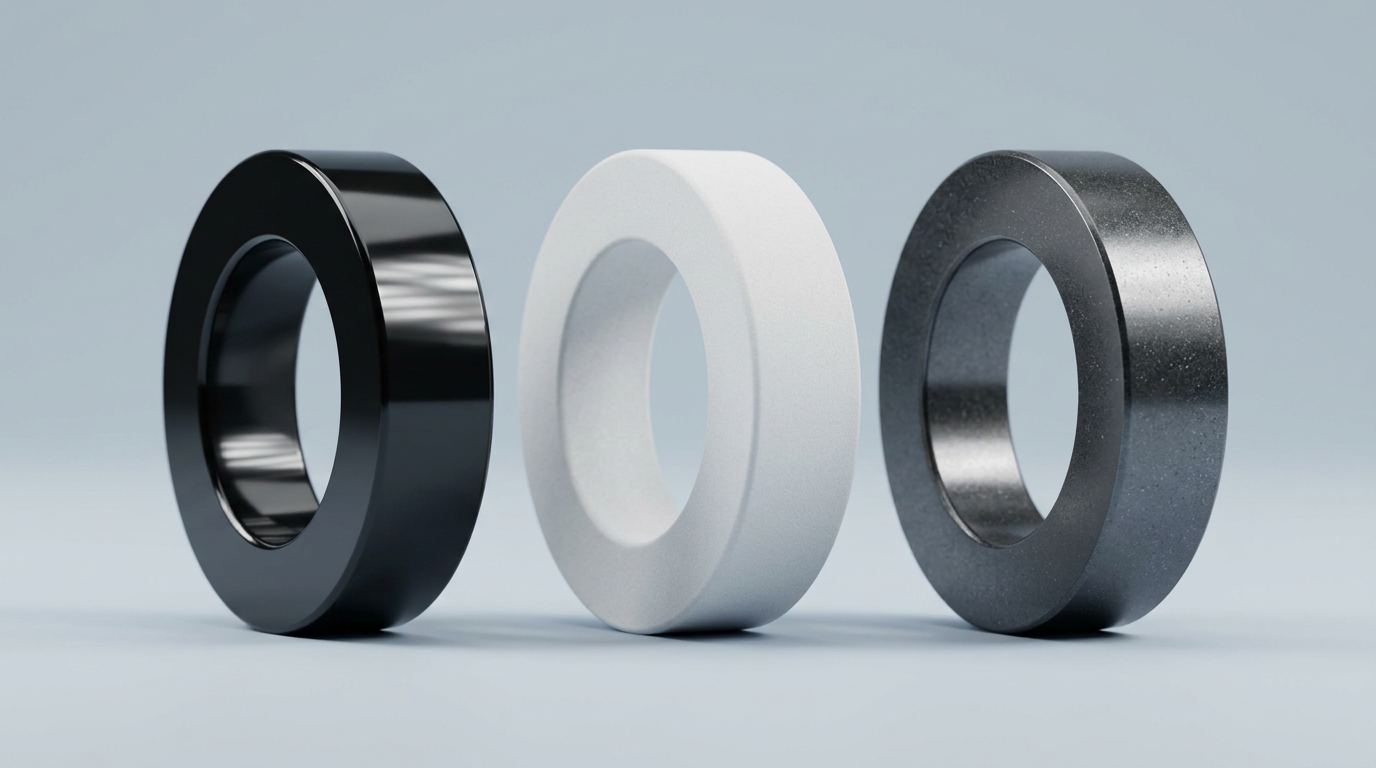
A pool seal does not fail because it is “cheap.” It fails because the face and rubber were wrong for the water. Salt chlorinators, sand carry-over and spa heat each punish a different part of the seal.
This is where a manufacturer beats a parts counter: we pick the face pair and elastomer for the actual duty, not whatever is on the shelf.
| Your water | Face pair | Elastomer | Why it matters |
|---|---|---|---|
| Standard chlorinated pool | Ceramic / Carbon | EPDM | Proven and low-cost for clean water |
| Salt-water pool (chlorinator) | Silicon carbide / Carbon | EPDM | Chloride wears faces — SiC resists pitting |
| Sandy or abrasive water | Silicon carbide / Silicon carbide | EPDM / Viton | SiC-on-SiC survives grit that cracks ceramic |
| Hot spa / high temperature | Ceramic / Carbon | Viton (FKM) | Viton holds up where EPDM softens |
Going deeper: carbon vs ceramic faces.
How a pool pump seal is replaced
- Cut power and drain the pump. Unbolt the motor assembly from the wet end.
- Pull the impeller off the shaft — the rotating half of the seal comes off with it.
- Press the old ceramic seat out of the seal plate and clean the bore.
- Seat the new ceramic with clean hands (finger oil cracks ceramic), then slide the new rotary element onto the shaft.
- Reassemble, refill and run. Check for a dry shaft after ten minutes.
Full walk-through: how to replace a pump mechanical seal. Not sure which seal you have? identify a mechanical seal for replacement.
Pool pump seal FAQ
How much does it cost to replace a pool pump seal?
The seal itself is usually $10–$25. Doing it yourself turns a $400–$700 motor or pump replacement into a sub-$25 repair plus about an hour of labor. A pool service call to swap it runs roughly $80–$150 including the part.
How do I know if my pool pump seal is bad?
Water dripping where the motor meets the pump body, a white calcium ring on the pad under the pump, or a squeal at start-up. Once it leaks onto the shaft it can rust the motor bearings, so replace it as soon as you see moisture.
How often should I replace pool pump seals?
A correctly matched seal lasts three to five years. Always fit a new seal whenever the motor is replaced or the pump is opened — never reuse an old one, because the faces have already worn in to each other and will leak.
How do I replace a swimming pool pump seal?
Drain and open the pump, pull the impeller (the rotary half comes with it), press out the old ceramic seat, fit the new seat and rotary element with clean hands, then reassemble. See our step-by-step replacement guide.
Source pool pump seals at scale
OEM-compatible, custom-machined and private-label pool pump seals — built in-house to your spec, at low minimums, with material options most distributors can’t get from a catalog. Send us a model number or a sample and we’ll quote.