

Hot Tub & Spa Pump Mechanical Seals
Direct-fit and custom shaft seals for Waterway, Balboa, Aqua-Flo, Gecko and most spa pumps — supplied at wholesale and private-label scale.
Heat-rated EPDM/Viton · Ceramic & silicon carbide faces · Low MOQ · Machined in Ningbo
A spa pump runs hot and almost non-stop, so its shaft seal works far harder than a pool pump’s — and fails sooner. When it leaks, water tracks into the motor and the equipment bay. We manufacture the replacement seals for the major spa pump brands, plus custom seals for older units, and supply them at distributor scale.
$15 seal
vs a $300–$500 wet-end or pump swap
Hot 24/7
why spa seals fail faster than pool seals
Any brand
Waterway, Balboa, Aqua-Flo, Gecko matched
Spa pump leaking or screeching?
If your hot tub drips in the equipment bay or throws a flow error, the pump shaft seal is the usual cause. Check for:
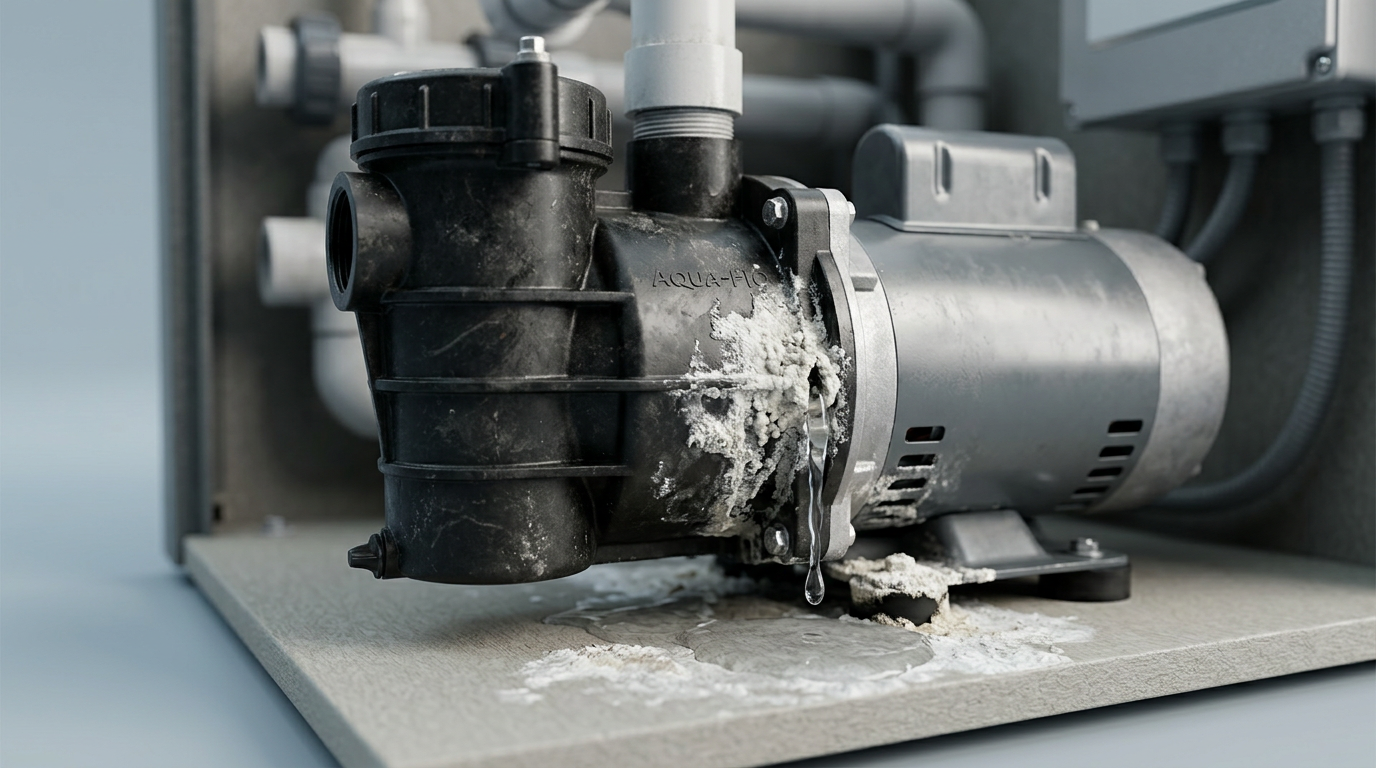
- Water in the equipment bay — a drip or puddle where the motor meets the wet end.
- White calcium crust on the pump body or cabinet floor — dried spa water.
- A screech or whine at start-up — the seal faces running dry.
- A dropping water level or a “FLO” error as air gets drawn in.
Caught early it’s a sub-$20 fix. Left alone, the leak rusts the motor bearings and turns into a wet-end or full pump replacement.
Where the shaft seal sits
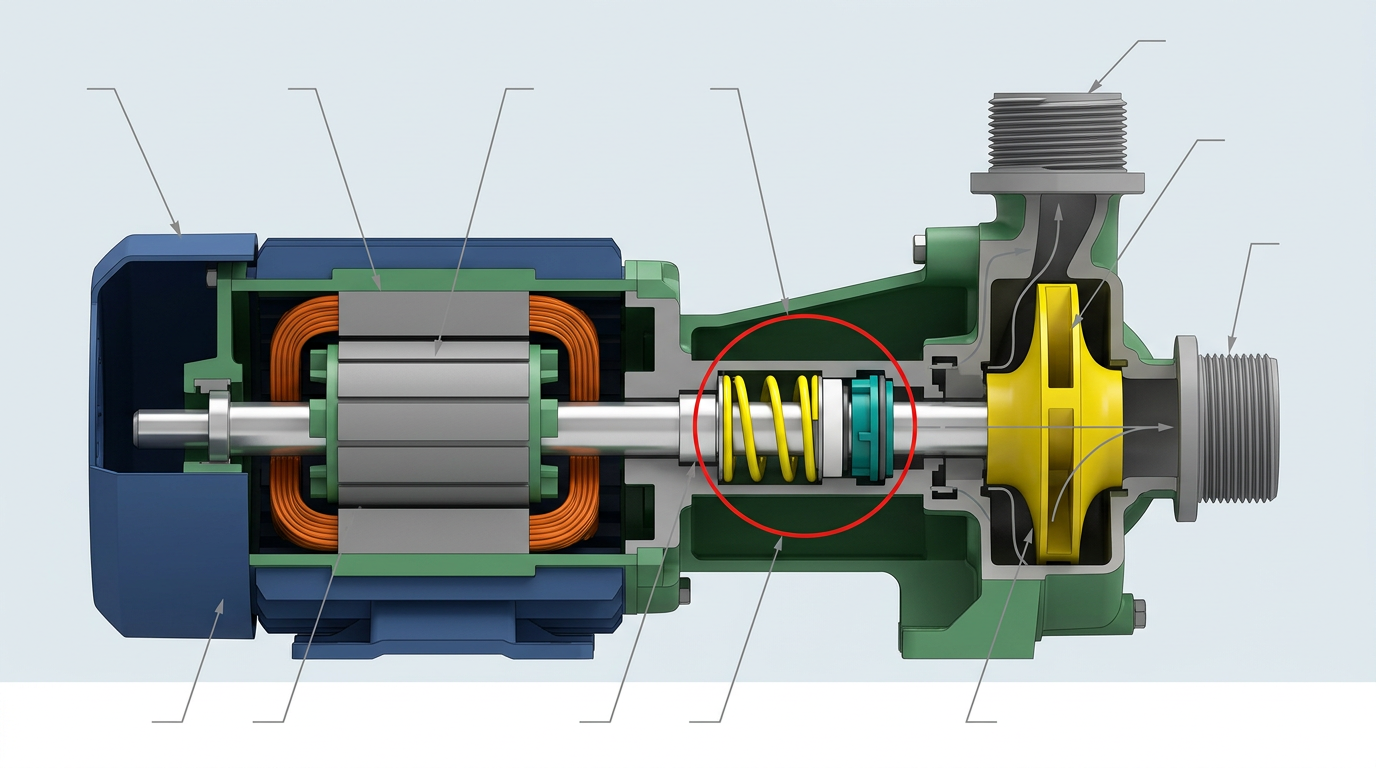
A spa pump is a centrifugal pump, just like a pool pump. The mechanical seal sits between the motor and the impeller, sealing the spinning shaft where it enters the wet end. Two pieces run face-to-face:
- Rotary element — spring + carbon face, spins with the shaft.
- Stationary seat — a ceramic or silicon-carbide ring in the seal plate.
- Seal plate & impeller — the seat sits in the plate; the impeller holds the rotary half on.
Because the spa runs hot continuously, the faces and the rubber wear faster than in a pool pump — which is why material choice matters more here.
Find your seal by pump model
Most spa pumps share a 5/8″ shaft and the same two-piece seal footprint as pool pumps. Match your pump family below, then confirm the exact part with us before a batch.
| Pump family | Typical seal reference | Shaft Ø | Recommended face set |
|---|---|---|---|
| Waterway Executive / Hi-Flo | US Seal PS-201 type | 5/8 in | Ceramic / Carbon |
| Aqua-Flo Flo-Master XP2 | US Seal-type kit | 5/8 in | Ceramic / Carbon |
| Balboa / Vico Ultima | Shaft seal kit | 5/8 in | Ceramic / Carbon |
| Gecko / LX Whirlpool | Shaft seal kit | 5/8 in | Ceramic / Carbon |
| Jacuzzi / Sundance | Shaft seal kit | 5/8 in | Ceramic / Carbon |
| Spa circulation pump (small) | Shaft seal | 1/2 in | Ceramic / Carbon |
What we supply
We are the manufacturer, not a reseller — so the range runs from off-the-shelf replacements to fully custom seals, at quantities that work for a spa dealer or a pump rebuilder.
Standard two-piece seals
Direct-fit ceramic/carbon seals for Waterway, Aqua-Flo, Balboa, Gecko and most North-American spa pumps.
Heat-rated kits
EPDM or Viton secondary seals chosen for continuous hot-water duty, supplied as complete kits with o-rings and gaskets.
Custom & obsolete
Older or non-standard spa pump? We reverse-engineer the seal from a sample and machine it to fit.
Match the seal to the heat
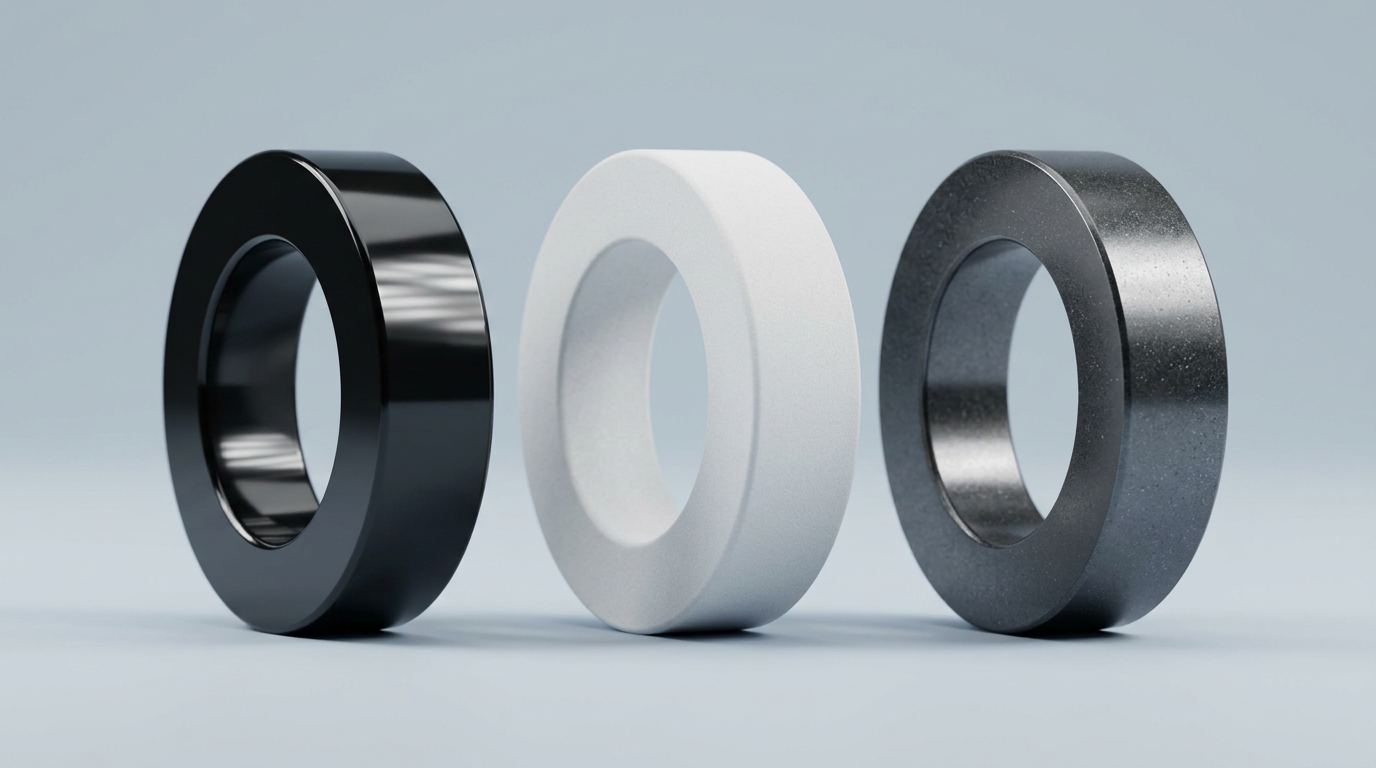
A spa seal does not fail because it is “cheap.” It fails because the rubber and faces weren’t rated for continuous hot water and sanitizer. Heat softens the wrong elastomer; salt and bromine attack the wrong one.
As the manufacturer we pick the face pair and elastomer for the actual duty — not whatever a parts counter has on the shelf.
| Spa condition | Face pair | Elastomer | Why it matters |
|---|---|---|---|
| Standard spa (38–40°C) | Ceramic / Carbon | EPDM | Handles continuous warm water |
| Salt-water spa | Silicon carbide / Carbon | EPDM | Salt wears faces — SiC lasts longer |
| High-temp / heavy use | Ceramic / Carbon | Viton (FKM) | Viton holds up where EPDM softens |
| Bromine sanitation | Ceramic / Carbon | EPDM | Resists bromine — never use Nitrile |
Going deeper: carbon vs ceramic faces.
How a spa pump seal is replaced
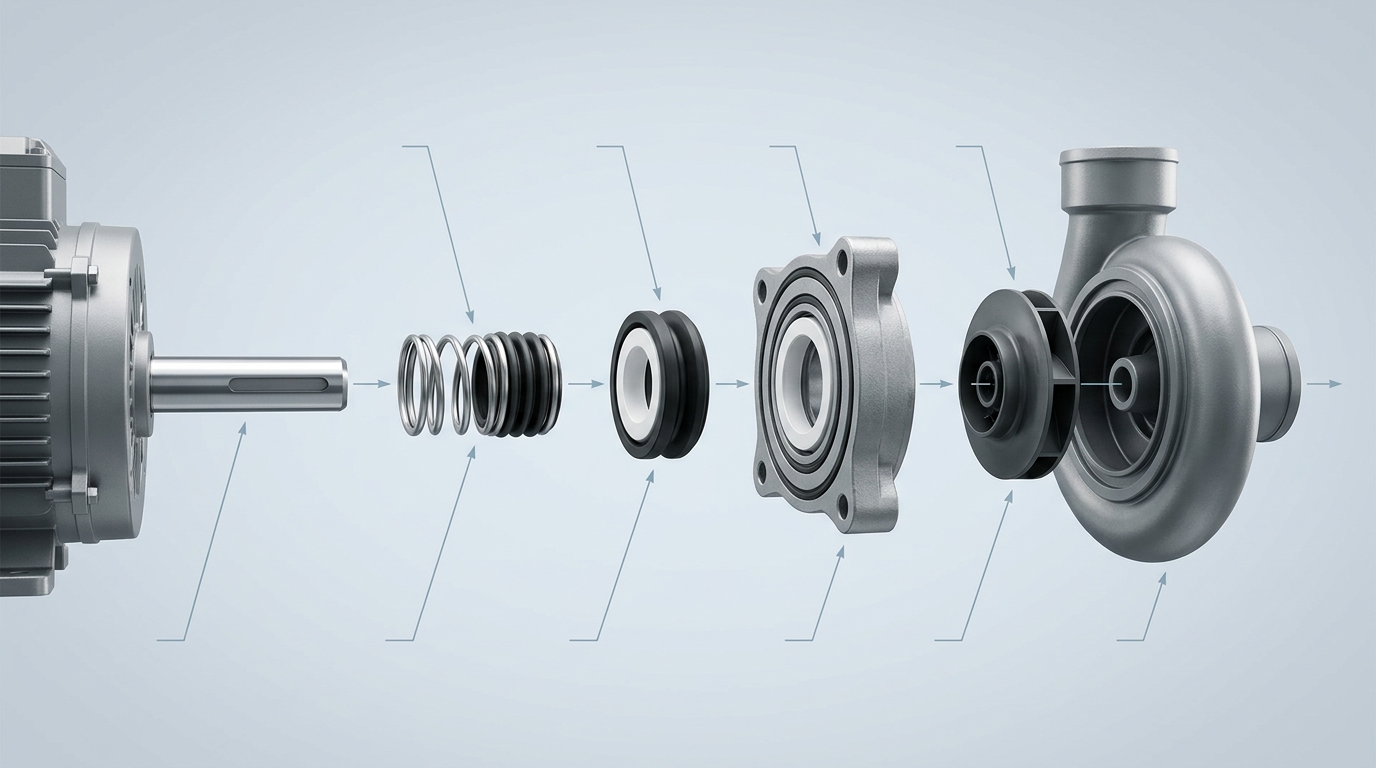
- Cut power, close the gate valves and drain the pump. Unbolt the wet end from the motor.
- Pull the impeller off the shaft — the rotating half of the seal comes off with it.
- Press the old ceramic seat out of the seal plate and clean the bore.
- Seat the new ceramic with clean hands (finger oil cracks ceramic), then slide the new rotary element on.
- Reassemble, refill, open the valves and run. Check for a dry shaft after ten minutes.
Full walk-through: how to replace a pump mechanical seal. Running a pool too? See our swimming pool pump seals.
Hot Tub & Spa Seal FAQ
How much does it cost to replace a hot tub pump seal?
The seal itself is usually $10–$20. Doing it yourself turns a $300–$500 wet-end or pump replacement into a sub-$20 repair plus about an hour. A spa tech doing it runs roughly $90–$150 with the part.
How do I know my spa pump seal is leaking?
Water or a white calcium crust in the equipment bay below the pump, a screech at start-up, or a dropping water level and a flow (“FLO”) error. Replace it before the leak reaches the motor bearings.
Why do hot tub pump seals fail faster than pool seals?
Spas run hot — around 38–40°C — and often nearly non-stop. Heat plus chlorine or bromine degrades the seal faces and the rubber faster than a pool pump sees, so material choice (EPDM or Viton, never Nitrile) matters more.
How do I replace a spa pump seal?
Drain and open the wet end, pull the impeller (the rotary half comes with it), press out the old ceramic seat, fit the new seat and rotary element with clean hands, then reassemble. See our step-by-step guide.
Source Spa Pump Seals At Scale
OEM-compatible, heat-rated and custom-machined spa pump seals — built in-house to your spec, at low minimums, with the material options a parts catalogue can’t match. Send a model number or a sample and we’ll quote.