

Submersible & Wastewater Pump Mechanical Seals
Flygt-, Grundfos-, Tsurumi- and KSB-compatible double seals for submersible sewage, drainage and wastewater pumps — supplied at wholesale and built to your spec.
Double cartridge seals · SiC/SiC faces · Oil-chamber sets · Low MOQ · Machined in Ningbo
A submersible pump sits in the very liquid it is pumping, so the seal is the only thing keeping sewage and grit out of the motor. When it goes, water emulsifies the oil and the motor is next. We build the double seals that protect these pumps — matched to the major brands or machined for obsolete units — and supply them at distributor scale.
Two seals
every submersible runs a stacked upper + lower seal
SiC / SiC
grit-proof lower faces for sewage and sand
Any brand
Flygt, Grundfos, Tsurumi and KSB matched
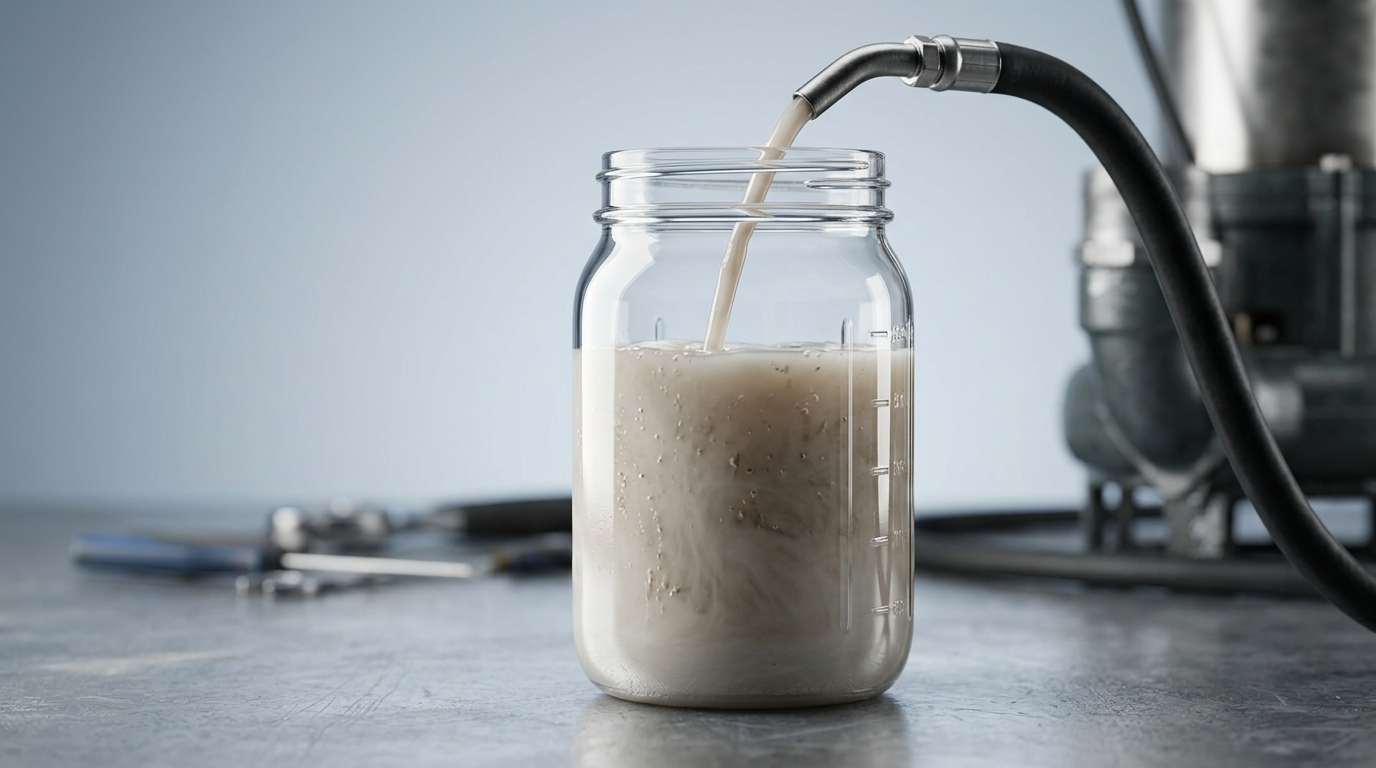
Is the oil chamber milky?
A submersible seal rarely drips where you can see it — it fails inward. The tells:
- Milky, emulsified oil in the seal chamber — water has passed the lower seal.
- The moisture / seal-fail sensor trips and the pump faults out.
- Rising motor temperature or insulation faults as water reaches the windings.
Drain and check the oil at every service. Milky oil means replace both seals now — a $30 seal set saves a flooded motor.
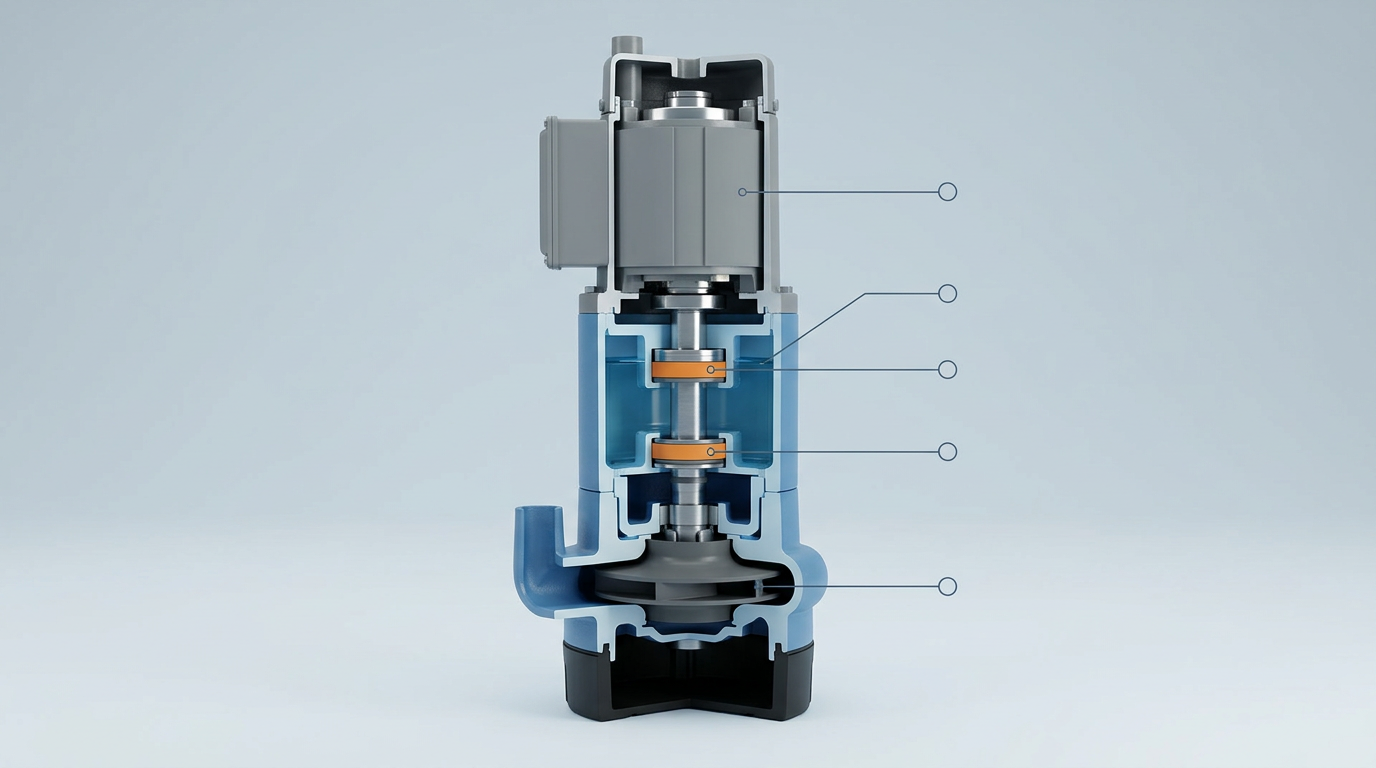
How a submersible pump is sealed
Submersibles don’t use one seal — they use two, stacked on the shaft in an oil-filled chamber between the motor and the impeller:
- Lower seal — runs in the pumpage; silicon-carbide faces to survive grit.
- Oil chamber — lubricates both seals and gives the early warning when it emulsifies.
- Upper seal — the last barrier before the motor; carbon/ceramic in clean oil.
- Motor above, impeller below — the seal pair is what keeps them apart.
This is a classic double mechanical seal arrangement — see how double seals work.
Find your seal by pump model
Most industrial submersibles share a double-seal footprint and a 5/8″–1″ shaft. Match your brand below, then confirm the exact set with us before a batch order.
| Pump brand / series | Typical duty | Seal arrangement | Cowseal face set |
|---|---|---|---|
| Flygt N / DP / CP | Sewage, drainage | Double cartridge | SiC / SiC lower |
| Grundfos SE / SL / SEG | Wastewater | Double | SiC / SiC |
| Tsurumi B / KTZ | Drainage, slurry | Double | SiC / SiC |
| Ebara DL / DS | Sewage | Double | SiC / SiC |
| KSB Amarex | Wastewater | Double | SiC / SiC |
| Sulzer / ABS XFP | Sewage | Double | SiC / SiC |
| Zoeller / Liberty (ejector) | Light sewage ejector | Single or double | Ceramic / Carbon |
What we supply
We are the manufacturer — so the range runs from off-the-shelf brand replacements to fully custom seals, at quantities that work for a distributor or a pump rebuilder.
Brand-compatible double seals
Built to Flygt, Grundfos, Tsurumi, Ebara and KSB dimensions and face materials, supplied as ready-to-fit cartridge sets.
Oil-chamber seal sets
Matched upper + lower seals plus the o-rings and gaskets for a full oil-chamber rebuild in one box.
Custom & obsolete
Discontinued or non-standard submersible? We reverse-engineer the seal from a sample and machine it to fit.
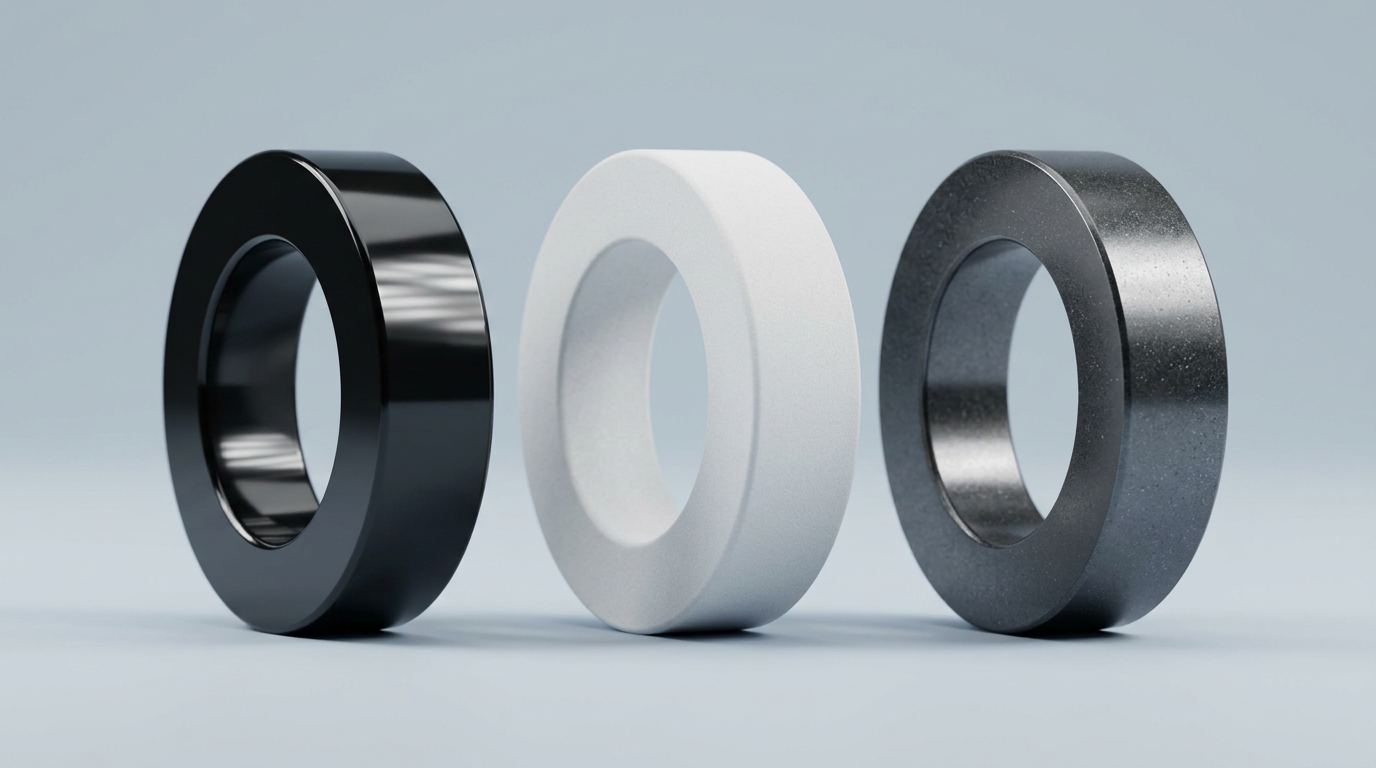
Match the seal to the pumpage
Sewage carries grit, sand and stringy solids that chew up a soft lower face in months. The fix is silicon-carbide on silicon-carbide at the bottom, where the wear happens, and a cheaper face up top in the oil.
As the manufacturer we set the face pair to the duty — not to whatever the catalogue stocks.
| Pumpage | Lower seal | Upper seal | Elastomer |
|---|---|---|---|
| Clean drainage / stormwater | Silicon carbide / Carbon | Ceramic / Carbon | NBR |
| Municipal sewage | Silicon carbide / Silicon carbide | Ceramic / Carbon | NBR |
| Grit / sand-laden | Silicon carbide / Silicon carbide | SiC / Carbon | FKM (Viton) |
| Hot or chemical effluent | SiC / SiC | SiC / Carbon | FKM / FFKM |
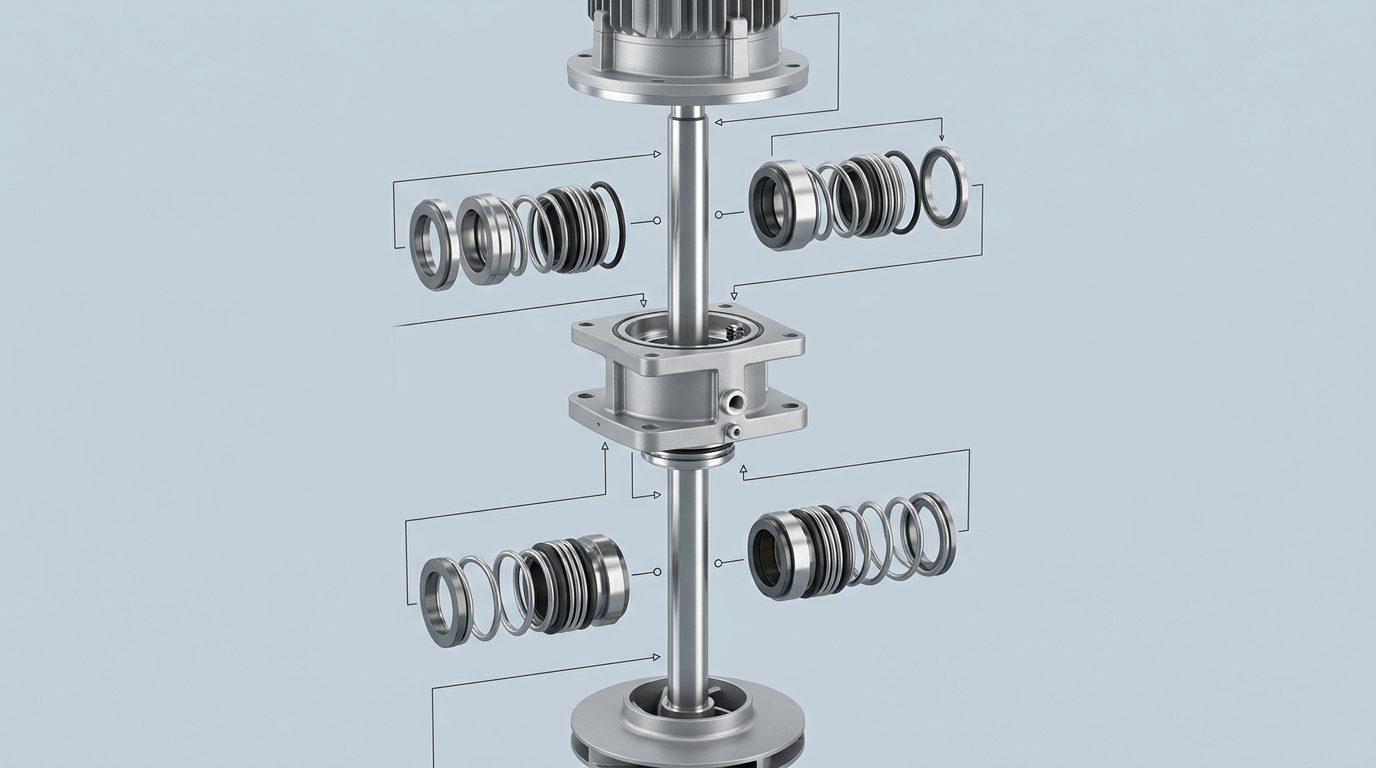
How a submersible seal is replaced
- Lift the pump, drain the oil chamber and inspect the oil — milky oil confirms a failed lower seal.
- Remove the impeller; the lower rotating seal face comes off the shaft with it.
- Press out both stationary seats, clean the chamber and check the shaft sleeve for grooving.
- Fit the new lower seal (SiC/SiC) and upper seal with clean hands, then refill with the correct seal oil.
- Reassemble, reset the moisture sensor and test-run; re-check the oil after the first service interval.
Background: replacing a pump mechanical seal and identifying a seal for replacement.
Submersible Pump Seal FAQ
How do I know a submersible pump seal has failed?
Check the oil in the seal chamber. Clear amber oil is healthy; milky, emulsified oil means water has passed the lower seal. A tripped moisture/seal sensor or a rising motor temperature is the same warning.
Do submersible pumps use one seal or two?
Two. A lower seal runs in the pumpage and an upper seal sits above it, with an oil chamber between them that lubricates both and gives early warning of a leak. It is a double mechanical seal arrangement.
Can I get a Flygt- or Grundfos-compatible seal?
Yes. We build seals to the dimensions and face materials of Flygt, Grundfos, Tsurumi, Ebara and KSB submersibles, supplied as ready-to-fit cartridge sets. Send the pump model or the old seal and we match it.
What face materials should a sewage pump seal use?
Silicon-carbide on silicon-carbide for the lower seal — it is the only pairing that survives the grit and solids in sewage. The upper seal runs in clean oil, so carbon-against-ceramic is enough there.
Source Submersible Pump Seals At Scale
Brand-compatible, custom-machined and private-label double seals for submersible wastewater pumps — built in-house to your spec, at low minimums. Send a model number or a sample and we’ll quote.