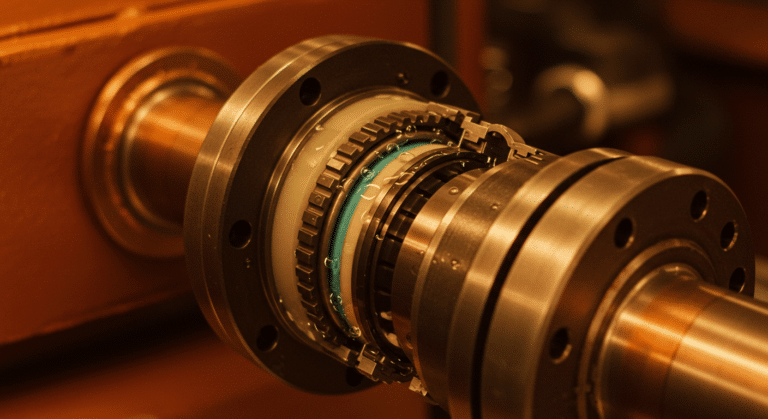
Every year I review seal specifications from plants that have no business specifying API 682. Water treatment facilities, HVAC systems, food-grade processors — all paying a 2-3x premium for a standard designed for refinery pumps handling hydrocarbons at 400 degrees. When API 682 was first published in 1994, even the refining industry pushed back on cost. The standard’s own committee later admitted the 1st Edition was “overkill for low duty application” and restructured the entire category system in response.
The real difference between API and non-API seals is not quality — it is scope. API 682 standardizes seal selection for specific high-risk conditions in petroleum, natural gas, and chemical processing. Outside that scope, a well-selected non-API seal delivers equal reliability at much lower cost.
What API 682 Actually Covers (and What It Does Not)
API 682 applies to centrifugal and rotary pumps in the petroleum, natural gas, and chemical industries, with shaft diameters between 0.75 and 4.3 inches. That scope statement is the most important sentence in the entire standard, and most engineers skip right past it.
The standard explicitly excludes large seals and high-pressure applications, mixer and agitator seals, rotary pump seals with non-standard configurations, outside-mounted seals, split seals, and elastomeric bellows designs. It does not address pumps in water supply, food processing, HVAC, or pharmaceutical applications. The 4th Edition task force members stated this plainly: the standard covers pumps in oil and gas and petrochemistry — “not for water supply or the food sector.”
This scope limitation is deliberate, not a gap. API 682 made specific design choices: O-ring secondary seals over chevron packings, inside-mounted configurations over outside-mounted, cartridge assemblies over component seals. These choices target the hazardous, high-temperature, high-pressure conditions found in refineries. They do not make the seal universally “better” — they make it specifically right for that service environment.
The term “Engineered Seal” — used for applications outside API 682 scope — is widely misused. It does not mean inferior. It means the application falls outside what API 682 was designed to address, and the seal must be selected on its own engineering merits rather than by referencing a standard that was never written for that service.
Real Differences Between API and Non-API Seals
The technical differences are real, but they exist to serve API 682’s specific scope — not to create a universal quality hierarchy.
Design and Construction
API 682 mandates cartridge seal assemblies. The seal arrives as a pre-assembled, pre-set unit that eliminates installation variables. This matters in refinery environments where maintenance teams handle hundreds of different pump configurations and installation errors directly cause seal failures. Non-API seals can be either cartridge or component designs. For a plant running 20 identical pumps with standard conditions, a well-trained technician installing component seals achieves the same reliability at lower cost.
API 682 defines three seal types (A, B, C) based on seal design and three arrangements (1, 2, 3) for single, dual unpressurized, and dual pressurized configurations. The arrangement selection is driven by the hazard level of the pumped fluid. Non-API seals use the same fundamental configurations — single, tandem, double — without the standardized classification system. The engineering is identical; the documentation framework differs.
Testing and Qualification
API 682 requires Seal Qualification Testing (SQT) — a standardized test protocol that verifies performance under defined conditions. The standard’s design objective is a minimum 25,000-hour service life. This testing adds cost and lead time but provides documented proof of performance.
Non-API seals rely on manufacturer testing, field history, and application engineering. A reputable manufacturer’s testing may be equally rigorous, but the test protocol is proprietary rather than standardized. For critical services, the standardized test protocol removes ambiguity. For general industrial service, manufacturer test data is sufficient.
Piping Plans and Support Systems
This is where the gap between API and non-API seals has the most practical impact. API 682 specifies standardized piping plans (Plan 11, 13, 21, 23, 32, 52, 53A/B/C, and others) that define exactly how the seal environment is controlled. A containment seal on a butadiene pump without a proper seal support system is a fire waiting to happen — I have seen exactly that failure mode, and it took four years of luck before the catastrophic event. The piping plan requirement is arguably API 682’s greatest contribution: it forces engineers to think about the seal operating environment, not just the seal itself.
Non-API installations often lack this systematic approach to seal environment control. When plants skip the piping plan analysis, they are not saving money — they are deferring risk.
The Cost Question Nobody Answers Honestly
A basic component seal runs $50-100. A cartridge seal suitable for moderate service costs $200-800. A full API 682-compliant seal with qualification testing and documentation commonly exceeds $2,000. That 3-10x price difference is real, but it tells less than half the story.
When the Premium Pays for Itself
In matched applications — hazardous fluids, temperatures above 260 degrees C, pressures exceeding 315 PSI — properly specified API seals achieve roughly 40% lower lifecycle cost over five years despite a 20% higher upfront price. Fewer replacements, lower maintenance labor, reduced unplanned downtime. One chemical plant documented ROI within 18 months after upgrading to application-matched premium seals. Energy savings from improved seal efficiency alone covered the cost difference within two years at another facility.
When the Premium Is Waste
Specify a full API 682 Category 2 or 3 seal on a cooling water pump running at ambient temperature and 50 PSI, and you have purchased capability you will never use. The seal will last — but so would a properly selected non-API cartridge seal at 40-60% lower cost. You also inherit hidden costs: longer procurement lead times, fewer competitive suppliers, more complex spare parts inventory, and qualification documentation requirements that your maintenance team must manage without adding any reliability benefit.
The 1st Edition of API 682 demonstrated this at industry scale. Refineries — the standard’s target audience — found the cost prohibitive for lighter-duty pumps within their own plants. The industry response was telling: plants began ordering seals “in the spirit of” API 682, following the major design concepts without full compliance. No official definition or standardization existed for this hybrid approach, but it became widespread because full compliance on every pump was economically indefensible.
Four Questions That Determine Which Seal You Need
Stop thinking about API vs non-API as a quality decision. Run your application through these four questions instead.
Question 1: Is the pumped fluid hazardous, toxic, or flammable?
If yes, you need the systematic approach API 682 provides — particularly the piping plan requirements and arrangement selection guidance. The standard was written for exactly this scenario. If no, move to Question 2.
Question 2: Do your operating conditions exceed Category 1 limits?
Category 1 covers temperatures from -40 to 260 degrees C and pressures up to 315 PSI. Category 2 and 3 extend to 399 degrees C and 615 PSI. If your conditions fall within Category 1 limits but the fluid is not hazardous, a well-engineered non-API seal with appropriate materials handles the service. If you exceed Category 1 limits, API 682 design requirements become increasingly relevant regardless of fluid hazard level.
Question 3: Does your industry or insurance carrier require API 682 compliance?
Some plant specifications mandate API 682 for all pumps regardless of service conditions. If compliance is contractually required, the engineering question is moot — specify API and move on. But if you wrote that specification yourself years ago, revisit it. The 2nd Edition introduced categories specifically so plants could stop over-specifying.
Question 4: Can your maintenance team handle component seal installation?
If your plant has trained seal technicians and standardized installation procedures, component seals are viable for non-critical service. If your maintenance is outsourced or your technicians rotate frequently, cartridge seals — API or otherwise — eliminate the installation variable that causes most early seal failures.
The answer rarely comes out as a clean “API” or “non-API.” A typical refinery might run full API 682 Category 3 on reactor feed pumps, Category 1 on moderate-service process pumps, and non-API cartridge seals on cooling water and utility service. That is correct engineering, not cost-cutting.
The Verdict
API 682 is a scope-specific standard that does its job exceptionally well within that scope. Specifying it where the scope matches — hazardous fluids, extreme conditions, petrochemical service — is sound engineering backed by decades of field evidence. Specifying it everywhere because “API means better” is a purchasing decision, not an engineering one, and it costs your plant 40-60% more on every pump where a non-API seal would perform identically.
Match the seal to the service. Use the four questions above before defaulting to any specification. The best seal for any pump is the one engineered for the conditions that pump actually sees — whether that carries an API 682 code or not.