If you just need to know what a seal chamber is (where it sits in a centrifugal pump, what it does, how its condition affects seal life), start with What Is a Seal Chamber in a Pump. This page covers the comparison between the modern seal chamber and the legacy stuffing box — geometry, fluid behavior, and why retrofitting matters.
Mechanical seal failures account for 60-70% of all centrifugal pump downtime, and 80% of those failures are preventable. Most maintenance teams focus on the seal itself — better materials, tighter tolerances, more expensive designs. But after ten-plus years of installing and troubleshooting seals, I can tell you the housing around the seal determines outcome more often than the seal inside it.
The real difference between a seal chamber and a stuffing box is not the components they hold. It is the thermal and hydraulic environment they create. Get that environment wrong, and even a premium seal will fail in months. Get it right, and a standard seal can run for years without adjustment.
What a Stuffing Box and Seal Chamber Actually Do
Packing works by allowing controlled leakage — a few drops per minute — that lubricates and cools the packing material against the shaft. A stuffing box is the cylindrical cavity machined into the pump casing to hold those compression packing rings. That controlled leakage is not a defect. It is the stuffing box’s entire thermal management strategy.
A seal chamber is a redesigned cavity purpose-built for mechanical seals. Where packing needs leakage for cooling, a mechanical seal generates a thin fluid film between two precision-lapped faces. That film provides both lubrication and heat removal — but only if the surrounding environment maintains the right pressure, temperature, and cleanliness at the seal faces.
When you install a mechanical seal into a stuffing box designed for packing, you are forcing a seal that needs contained fluid circulation into a cavity designed for controlled leakage. The seal does not know the difference. But the environment does.
Why the Environment Matters More Than Components
A conventional stuffing box has a tight bore — just enough clearance for packing rings to compress against the shaft. When you remove the packing and drop in a mechanical seal, that tight annular space traps heat. There is not enough liquid volume around the seal faces to absorb and carry away the friction heat those faces generate.
I have installed the same mechanical seal in a tight stuffing box and in a proper seal chamber on identical pump duty. Same seal, same process fluid, same operating pressure. The one in the stuffing box lasted eight months. The one in the seal chamber is still running four years later. The seal did not change — the environment around it did.
An enlarged seal chamber bore acts more like a fluid reservoir than an annulus. That extra radial clearance does two things: it increases the liquid volume available to absorb heat, and it promotes circulation that continuously moves cooler fluid past the seal faces. In applications with solids, the larger bore also gives particles room to migrate away from the seal faces rather than grinding against them.
The same mechanical seal operating at the same duty point will see completely different stuffing box pressure and thermal conditions depending on whether it sits in a tight stuffing box or an engineered seal chamber.
Side-by-Side Comparison
| Parameter | Stuffing Box | Seal Chamber |
|---|---|---|
| Bore design | Tight annulus for packing compression | Enlarged bore for fluid circulation |
| Heat removal | Controlled leakage (drops/min) | Contained fluid circulation |
| Flush requirement | Often needs external flush when running mechanical seals | Many designs operate without flush in clean service |
| Solids handling | Traps particles near seal faces | Larger bore allows particle migration away from faces |
| Typical seal life | Months when running mechanical seals | Years with proper seal selection |
| Maintenance burden | Daily leak-rate monitoring with packing; frequent adjustment | Inspect at scheduled intervals; no routine adjustment |
You are not comparing two containers — you are comparing two environments. Mixing them — putting a mechanical seal in a stuffing box — gives you the worst of both.
When to Keep Your Stuffing Box
Not every pump needs a seal chamber upgrade. I have seen plants spend tens of thousands converting pumps that would have run fine with a properly maintained stuffing box and the right packing or mechanical seal configuration. Before you approve an upgrade, answer these five questions:
1. What is your process fluid? Clean, ambient-temperature water below 80 C with no solids — a standard stuffing box with a discharge flush handles this adequately. Anything with abrasives, chemicals, or temperatures above 80 C pushes you toward a seal chamber.
2. How critical is zero leakage? If environmental regulations or product contamination risk demand zero visible leakage, packing in a stuffing box will not get you there. You need a mechanical seal, which means you need an environment that supports one.
3. What is the pump’s remaining service life? Converting a 25-year-old pump that is due for replacement in three years rarely makes financial sense. Prioritize conversion on newer pumps or those in critical service.
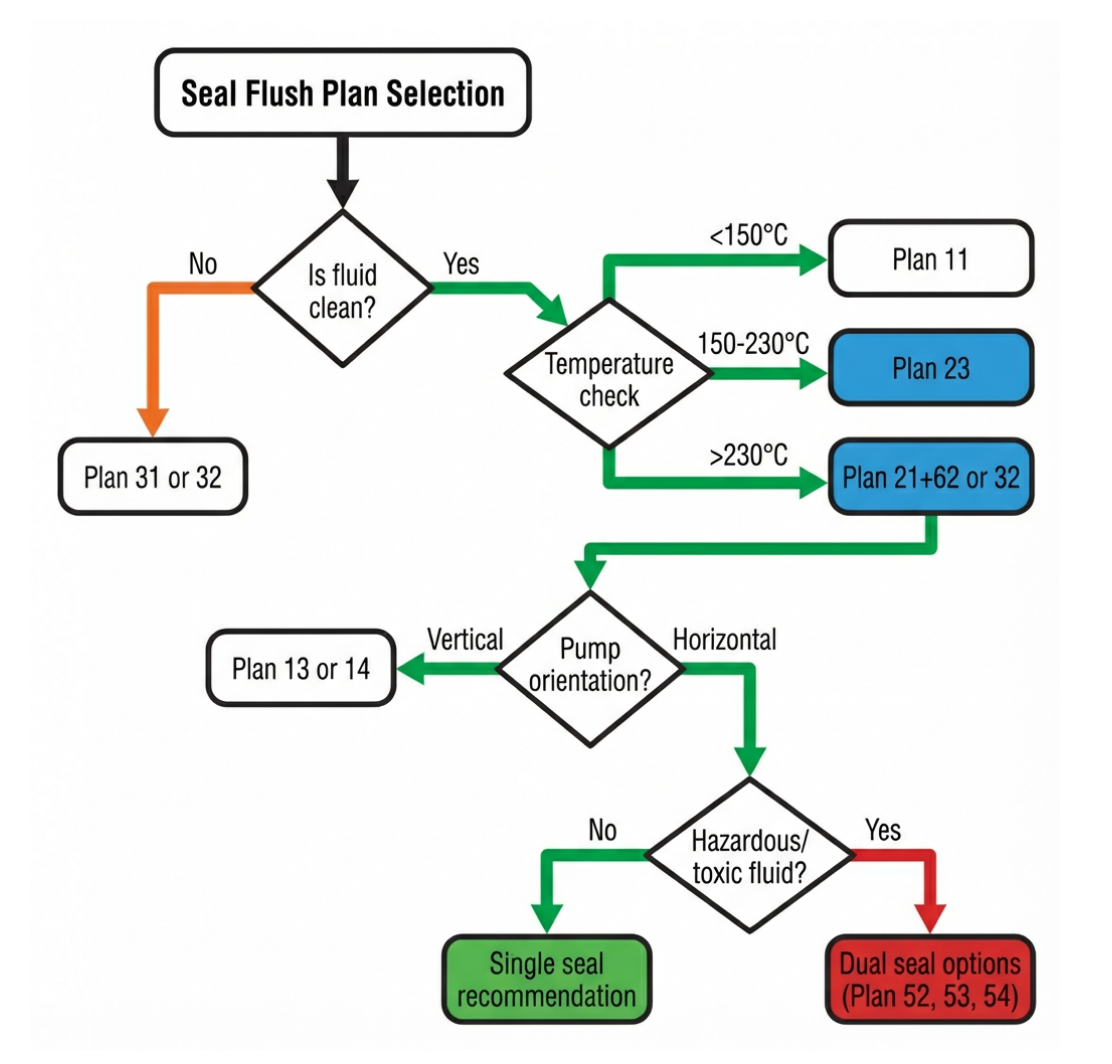
4. Can you add an external flush? Sometimes the cheapest fix is not converting the housing but adding a proper flush plan to the existing stuffing box. A clean external flush can double or triple seal life in a marginal housing by solving the heat removal problem directly.
5. What are your real failure costs? If your seal is failing every six months and each failure costs two shifts of downtime plus the seal, compare that annual cost to a one-time conversion. The housing upgrade often pays for itself within a year on high-failure pumps.
If you answered “clean water, some leakage acceptable, older pump, flush available, low failure cost” — keep your stuffing box. Save the conversion budget for the pumps where heat, solids, or chemical exposure are actually killing seals.
What a Conversion Actually Involves
Converting a stuffing box to a seal chamber is not a catalog swap. One pulp and paper mill I worked with learned this when they upgraded a river water pump from an oil-lubricated packed stuffing box to a seal casing assembly. The project required a new upper column, a modified discharge head, a seal casing, an isolation tube, a deflector, and a switch to product-lubricated bearings. Six major components changed — not just the housing.
The result justified the effort: they eliminated all leakage above the baseplate, stopped the environmental violations that had been triggering government fines, and reduced maintenance to greasing the top bearing every six months. But the scope of work reinforces the point — you are changing the entire environment around the shaft seal, not just dropping in a different part.
If you skip this step, you will be back in a week troubleshooting the same failure. The most common mistake I see is installing a mechanical seal into an unconverted stuffing box and expecting seal chamber performance. A cartridge seal can simplify the mechanical installation — it arrives pre-set and pre-assembled, eliminating measurement errors — but it does not fix the thermal environment. The housing still needs adequate bore clearance and circulation for the seal to survive.
Before you start any conversion, make sure you have confirmed the bore dimensions against the seal manufacturer’s specifications, planned the flush piping, and verified shaft runout. Missing any one of these turns an upgrade into an expensive lesson.
Making the Right Housing Decision
The housing decision comes down to one question: does the environment around your seal support the seal’s thermal and hydraulic needs? A stuffing box running packing on clean cool water is a perfectly valid configuration — do not let anyone tell you otherwise. But a mechanical seal crammed into that same stuffing box is a compromised design from day one.
Start with the five questions above. If the answers point toward an upgrade, budget for the full scope — not just the housing, but the flush plan, the bore clearance check, and the shaft condition verification. The cheapest upgrade is sometimes not a new seal chamber at all, but adding a proper flush system to your existing housing to solve the heat problem where it starts.